PodcastsEconomía y empresaArtificially Intelligent Marketing

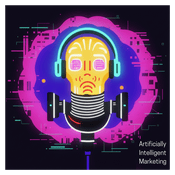
Artificially Intelligent Marketing

Paul Avery and Martin Broadhurst
Artificially Intelligent Marketing
Último episodio

52 episodios

  • Artificially Intelligent Marketing

    AI Predictions for 2026 — Agentic Browsers, In-Chat Purchases, and What Marketers Should Actually Prepare For

    14/01/2026 | 1 h 29 min
    What will AI actually change for marketers this year? Paul and Martin share their predictions for 2026 — from agentic Chrome to buying products without ever seeing them.
    Welcome to the first episode of 2026. Paul and Martin deliver their annual predictions, covering everything from Google's inevitable agentic browser launch to the rise of in-chat purchasing, advertising inside AI conversations, and whether agency headcount will survive the year. This episode cuts through the hype to focus on what marketers should genuinely prepare for — and what they can safely ignore.
    Key Takeaways
    Agentic browsers are coming: Google will likely launch a Gemini-powered agentic Chrome experience in 2026, following Perplexity's Comet and Claude for Chrome. Marketers who learn to brief browser agents now will unlock significant productivity gains.
    GEO interest will surge: Generative engine optimisation will become a mainstream concern as AI chatbot referral traffic grows. Expect platforms to develop better measurement tools, though the fundamentals of quality content remain unchanged.
    No major model number jumps: Neither OpenAI, Google, nor Anthropic will release GPT-6, Gemini 4, or Opus 5 this year. Instead, expect incremental improvements focused on computer use and agentic capabilities.
    In-chat purchasing arrives: Google's Agent Payments Protocol and Microsoft's Copilot Checkout signal that buying products directly within AI conversations will become standard by year-end.
    Ads enter AI chatbots: OpenAI is already testing ad formats internally. Expect sponsored content within conversational AI, though platforms must tread carefully to preserve user trust.
    Anthropic launches agent pricing: A dedicated agent subscription plan for teams — potentially $2,000+ per month — will emerge as the major AI labs seek higher-value enterprise revenue.
    Meta productises Manus: Following Meta's acquisition, expect agentic customer service bots via WhatsApp and Messenger, capable of handling orders, returns, and bookings.
    UK agency headcount may fall: The IPA's agency census showed 26,787 employees in 2024. Increased efficiency through AI could reduce that figure, though demand for AI-literate talent will grow.
    What to Do Now
    Practice with browser agents: Try Claude for Chrome or Perplexity Comet now. Document your repetitive tasks step-by-step to prepare for more capable agentic tools.
    Track AI referral traffic: Monitor traffic from ChatGPT, Gemini, and Perplexity in your analytics. Even 1% today will grow significantly.
    Prepare for in-chat commerce: Ensure your product information is machine-readable with clear names and structured data that AI can parse and recommend.
    Budget for AI advertising: Reserve experimental spend for AI chatbot ad formats as they launch — early movers may find arbitrage opportunities.
    Focus on first-party data: As AI assistants build deeper user profiles, your own customer data becomes more valuable for personalised campaigns.
    Mentioned in This Episode
    Platforms/Features: Claude for Chrome, Perplexity Comet, Claude Cowork, Google Agent Payments Protocol, Microsoft Copilot Checkout, Manus, Do Anything
    Companies: Google, Anthropic, OpenAI, Meta, Microsoft, PayPal, Shopify, Stripe, DeepSeek
    References: IPA Agency Census 2024
    Subscribe and Share
    New episodes of Artificially Intelligent Marketing drop weekly. Subscribe on your favourite podcast platform and share your 2026 predictions with us on LinkedIn — we'd love to hear whether you agree or think we've got it completely wrong.
  • Artificially Intelligent Marketing

    OpenAI's 'Code Red' and the AIO Best-Of Listicle Hack

    16/12/2025 | 51 min
    The AI model race intensifies as OpenAI rushes GPT 5.2 to market, whilst marketers discover a surprisingly effective shortcut to AI search visibility.
    This week, we analyse OpenAI's scramble to compete after Google's Gemini 3 Pro and Anthropic's Claude Opus 4.5 threatened their dominance. We examine GPT 5.2's contested benchmark scores and whether the rushed release has created more problems than it solved. We also explore the resurgence of 2009-era SEO tactics for AI visibility, revealing how "best of" listicles are gaming generative search results—and how long that window might stay open. Plus: OpenAI's enterprise adoption report, Gemini's new native audio translation, and Martin's bricked Limitless pendant.
    Key Takeaways
    OpenAI's defensive launch: GPT 5.2 achieved impressive benchmark scores (53% on ARC-AGI vs 37.6% for Claude Opus), but user reports suggest degraded performance on real-world tasks, with concerns about benchmark optimisation over practical utility.
    AI search visibility follows old playbooks: Publishing "best of" listicles with your company ranked first is proving remarkably effective, with results appearing within 1–2 weeks rather than the 3–12 months typical for SEO.
    Enterprise adoption accelerates: OpenAI reports 8× growth in ChatGPT Enterprise usage, with workers reporting 40–60 minutes of daily time savings. 87% of IT workers report faster issue resolution, 85% of marketers report faster campaign execution.
    Model providers face different futures: OpenAI pursues consumer markets through a Disney partnership for Sora-generated content, whilst Anthropic and Mistral focus explicitly on enterprise solutions, such as on-prem deployments.
    Translation goes universal: Gemini's native audio model now supports real-time translation through any Bluetooth earphones, removing hardware restrictions that previously limited adoption.
    Projects over prompts: OpenAI reports 19× increase in custom GPT and project usage, indicating a shift from casual querying to repeatable workflow automation.
    What to Do Now
    Test GPT 5.2 cautiously: If you have access, compare outputs against 5.1 for your specific use cases before switching workflows. Early reports suggest mixed results.
    Deploy listicle strategy immediately: Create "best of" articles in your category with your company ranked first. Include detailed comparison tables. Speed matters—this window may close as AI providers refine their models.
    Monitor your AI visibility: Check how ChatGPT Search, Gemini, and Claude answer queries about your product category. Track changes weekly to understand which content formats they prioritise.
    Audit your project setup: If you're using ChatGPT Enterprise, review whether your projects contain too much general context. More focused, use-case-specific projects typically perform better.
    Invest in genuine reviews: As AI providers wise up to self-published listicles, review platforms like Clutch, G2, or Google Reviews will likely become more important for AI search visibility.
    Mentioned in This Episode
    Platforms/Features: GPT 5.2, GPT 5.1 Pro, Gemini 3 Pro, Claude Opus 4.5, Nano Banana, ChatGPT Search, Notebook LM, Sora, Microsoft Copilot Pro, Manus
    Companies: OpenAI, Google, Anthropic, Disney, Mistral AI, Limitless, Meta, HSBC, Boston Dynamics, Blend B2B
    Tools: Ahrefs, Clutch, G2
    References: ARC-AGI benchmark, OpenAI Academy, Ethan Mollick's prompt research, Moonshots podcast
  • Artificially Intelligent Marketing

    Model Wars, AI Ads, and Adobe's $2 Billion Bet on Search

    01/12/2025 | 1 h 18 min
    Three major model releases in a single week, ads arriving in AI search results, and a landmark acquisition that signals where SEO is heading. Paul and Martin cut through the noise.
    This week saw an unprecedented flurry of model releases: Google's Gemini 3 Pro stormed the benchmarks, only for Anthropic's Opus 4.5 to arrive days later with superior coding performance. We unpack what these advances mean for marketers, from Nano Banana Pro's near-production-ready image generation to Opus's orchestration capabilities for multi-agent workflows. Beyond the model wars, we examine Gartner's 2026 predictions—including a warning about critical thinking atrophy—and debate the implications of ads appearing in AI overviews. Adobe's $1.9 billion acquisition of SEMrush closes the episode, raising questions about the future of generative engine optimisation.
    Key Takeaways
    Gemini 3 Pro benchmarks: Scored 45.8% on Humanity's Last Exam versus the previous high of 26.5%, and doubled ScreenSpot Pro accuracy to 72%—critical for agent-based computer use.
    Opus 4.5 efficiency: Achieved 81% accuracy on software engineering tasks using 12,000 tokens, while Sonnet 4.5 needed 22,000 tokens for 77% accuracy.
    Nano Banana Pro: Now handles up to 5 consistent characters and 14 objects in a scene, making product imagery workflows increasingly viable.
    Gartner's lazy thinking warning: Predicts 50% of organisations will require AI-free skills assessments by 2026 as critical thinking atrophies.
    B2B procurement shift: Gartner forecasts 90% of B2B buying will be AI-agent intermediated by 2028, pushing $15 trillion through agent exchanges.
    Ads in AI search: Google has begun placing sponsored links in AI overviews; reports suggest ChatGPT may follow.
    Adobe acquires SEMrush: The $1.9 billion deal validates generative engine optimisation as a strategic priority.
    What to Do Now
    Test your own use cases: Benchmarks are directional; run Gemini 3 Pro and Opus 4.5 against your specific workflows before switching daily drivers.
    Experiment with Nano Banana Pro: If you need consistent product imagery, trial multi-character and multi-object prompts to assess production readiness.
    Protect critical thinking: Build review processes where humans form independent judgments before consulting AI—especially for strategic decisions.
    Prepare for agent-readable content: Convert key product documentation from PDFs to markdown to ensure AI procurement agents can parse your information.
    Monitor AI ad placements: Track emerging ad formats in Google AI overviews and prepare to test early for potential first-mover advantages.
    Mentioned in This Episode
    Models: Gemini 3 Pro, Nano Banana Pro, Opus 4.5, Sonnet 4.5, Haiku 4.5, GPT 5.1, DeepSeek 3.2
    Platforms/Features: AI Overviews, AI Mode, Veo 3.1, Claude Code
    Companies: Google, Anthropic, OpenAI, Adobe, SEMrush, Microsoft, HSBC, McKinsey, Gartner
    Benchmarks: Humanity's Last Exam, ScreenSpot Pro, VendingBench, SWE-bench, GPQA Diamond
    Subscribe and Share
    New episodes of Artificially Intelligent Marketing drop weekly. Subscribe on your preferred platform and share your questions or AI experiments with us on LinkedIn—we may feature them in a future episode.
  • Artificially Intelligent Marketing

    AI Agents, $100 Billion Quarters, and Five Futures for Marketing

    03/11/2025 | 59 min
    What's driving Google and Meta's record earnings? Hint: it's AI, not traditional ads.
    In this episode, Paul and Martin unpack the latest earnings calls, HubSpot's strategic acquisition of X Funnel, and then venture into scenario planning for marketing's future. From business-as-usual to AI agent swarms running entire organisations, we map out what you should watch for and what you should do right now.
    Key Takeaways
    Meta's AI-powered advertising suite is now handling $60 billion in annualised ad spend. That's real money, real results: 5% more time on Facebook, 10% on Threads, 30% growth on Instagram video.
    Google posted its first $100 billion quarter, driven by AI features in Search and YouTube. YouTube Shorts now earn more per watch hour than traditional in-stream ads.
    HubSpot acquired X Funnel to double down on Generative Engine Optimisation (GEO) — ensuring your brand shows up in AI chatbot answers. But don't chase FOMO. Focus on brand-building and content quality; those work across all search channels.
    Five plausible futures for marketing:Business as usual
    Niche AI agents handling specific tasks
    Hyper-personalisation at scale
    AI agents driving strategy
    Fully autonomous agent swarms Which scenario emerges depends on technology progress, regulation, and how quickly organisations can rethink workflows.

    The real bottleneck isn't technology — it's human change. AI-first startups will outcompete legacy organisations unless incumbents commit to wholesale rethinking. Disruption ahead.
    Customer preference trumps efficiency. If your audience values human interaction and human-crafted outputs, that changes everything. Personalisation won't win if customers prefer the human touch.
    What to Do Now
    Invest in AI skills training for yourself and your team. The saying holds: marketers aren't replaced by AI; they're replaced by marketers who use AI.
    Get your customer data in order. Clean, structured, first-party data is essential — especially if privacy regulations tighten. If an AI agent needs to draw insights, it needs good data to work with.
    Establish an AI ethics and usage charter. Give customers confidence. Guide employees on responsible AI use.
    Build human-in-the-loop QA processes. Identify where you can safely automate and where humans must review. As niche agents emerge, you'll know exactly where to deploy them.
    Run scenario planning for your business. Use ChatGPT or Claude with your business context to model which scenario matters most to you. Don't just accept our five; build your own.
    Mentioned in This Episode
    Meta: AI recommendations; Vibes (image generation); Advantage+.
    Google: AI Overviews; Performance Max; YouTube Shorts.
    HubSpot: X Funnel acquisition; Loop Marketing; GEO.
    Tools: Zapier; Claude; ChatGPT; Canva; HubSpot; Salesforce.
    Reference: The Last Economy by Emad Mauck.
    New episodes every week on Artificially Intelligent Marketing. For questions, use cases, or scenario disagreements, find us on LinkedIn or reply to our latest episode post.
    Share this with a colleague who needs to hear it.
  • Artificially Intelligent Marketing

    AI SEO, Claude Gets New Skills, and the UK’s Big AI Training Push

    20/10/2025 | 1 h
    What actually matters now in AI for marketers—beyond the hype. Paul and Martin unpack the week’s launches from Anthropic and Google, new Microsoft–Claude tie-ins, and the UK government’s civil-service AI literacy push. They also tackle the practical question: should you chase “AI SEO” today, or double-down on timeless content and distribution?
    Top takeaways
    • AI visibility ≠ old SEO. Generative search is highly personalised; “rank tracking” for LLM answers is shaky. Invest in high-quality, well-structured content and robust distribution over gimmicky “get featured in ChatGPT” checklists.
    • Anthropic’s direction: Haiku 4.5 offers fast, low-cost coding and general tasks; Claude Skills hint at SOP-driven, tool-aware assistants and a future marketplace.
    • Enterprise shift: Claude is deepening its Microsoft 365 integration (SharePoint, Outlook, OneDrive, Teams), making business context more accessible to assistants.
    • Video creation reality: Google’s Veo 3.1 and Flow expand control (reference frames, storyboard timelines). Quality still depends on human editing judgement—AI is an ingredient, not the whole recipe.
    • AI Studio cleanup: Google has unified its playground and simplified keys/settings, making it easier for newcomers to explore models and tune temperature/controls.
    • Public sector skills: The UK’s “One Big Thing: AI for All” aims to boost civil-service confidence via short modules and department case studies—baseline literacy first, then role-specific adoption.
    • Training that sticks: Start with common foundations (what LLMs are/aren’t), then move to function-level workflows. Create “champion” groups and a light governance rhythm so updates translate into process change.
    Chapters
    00:00 Harrison recap; AI in sales needs thoughtful application, not blind scale.
    03:00 Brand presence in LLM answers: content + distribution over hacks.
    10:00 Why LLM personalisation breaks classic rank tracking.
    15:00 Anthropic: Haiku 4.5 and Claude Skills; SOPs for agentic work.
    21:00 Claude ↔ Microsoft 365: the enterprise context advantage.
    25:00 Google Veo 3.1 & Flow: creative control vs. “one-click” video.
    34:00 Google AI Studio: unified playground; why marketers should tune temperature.
    38:00 “Zero-to-magic” tease; what a no-code app path might mean.
    40:00 UK “One Big Thing—AI for All”: literacy at scale; early gov use cases.
    42:00 Good AI training design: baseline, then function-specific change.
    55:00 Reality check: useful today, but still needs steering and review.
    Practical guidance
    • If you’re a marketer: Treat AI outputs as drafts. Edit for voice, accuracy, and distinctiveness. Measure distribution as much as production speed.
    • If you’re a leader: Provide one sanctioned assistant (Copilot/Gemini/Claude), set guardrails, and fund a small “AI council” to turn releases into workflow changes.
    • If you’re experimenting with video: Use Flow (or your editor) to storyboard, trim, and mix assets. Don’t ship raw generations.
    Mentioned in this episode
    • Anthropic: Haiku 4.5; Claude Skills; Microsoft 365 integrations
    • Google: Veo 3.1; Flow storyboard editor; AI Studio updates
    • UK Government: “One Big Thing 2025—AI for All” initiative
    • Discussion: training that works vs. one-and-done workshops
    Subscribe & follow:
    New episodes weekly. Share your questions or use-cases for a chance to be featured.

Más podcasts de Economía y empresa

Acerca de Artificially Intelligent Marketing

Welcome to Artificially Intelligent Marketing, the weekly podcast that explores the intersection of artificial intelligence and marketing. Join your hosts, Paul Avery and Martin Broadhurst, as they dive deep into the latest stories, tools, and applications in AI for marketing and chat with thought leaders in the field to uncover insights about the future of AI in marketing.In each episode, Paul and Martin will bring you fascinating stories about how AI is transforming marketing, from chatbots and personalisation to predictive analytics and voice assistants. They'll share their own experiences and insights, and interview experts and practitioners from across the marketing world to help you understand the potential of AI and how to make the most of it in your own marketing strategy.Whether you're a marketer looking to stay ahead of the curve, a data scientist interested in the latest techniques, or just someone fascinated by the potential of artificial intelligence, The Artificially Intelligent Marketing Podcast has something for you. So tune in every week to stay up to date with the latest developments in AI and marketing, and join the conversation about the future of this exciting field.

Sitio web del podcast

Escucha Artificially Intelligent Marketing, Libros para Emprendedores y muchos más podcasts de todo el mundo con la aplicación de radio.es

Descarga la app gratuita: radio.es

  • Añadir radios y podcasts a favoritos
  • Transmisión por Wi-Fi y Bluetooth
  • Carplay & Android Auto compatible
  • Muchas otras funciones de la app
Aplicaciones
Redes sociales
v8.8.6| © 2007-2026 radio.de GmbH
Generated: 4/5/2026 - 1:27:31 AM