
Escucha gratis este podcast en la aplicación: Descarga gratuita en la App Store
radio.es
Sleep timer
Favoritos
837 episodios
785: We Were Warned About Hot Flashes. Nobody Prepared Us for the Rest Of Perimenopause
27/10/2026 | 42 minIf you've started to feel blindsided [and totally frustrated!] by energy crashes, brain fog, or mood swings in midlife, you're not alone.
But here’s what no one’s talking about… this isn’t something to ignore or just power through. Perimenopause in midlife is a MASSIVE transition.
And the choices you make right NOW will determine your health for the next 40+ years.
In this episode, I’m sharing some science-backed strategies straight from my new book, The Perimenopause Revolution, to help you reclaim your energy, feel more like yourself again, and confidently navigate this powerful midlife transition.
We’re diving into the surprising connections between your current symptoms and your long-term health, why consistency matters more than perfection, and how to future-proof your body with smart, supportive habits.
Don't let another day go by accepting less than you deserve. Listen here for all my tips and join the thousands of women who are already transforming their midlife experience with my perimenopause Freebies!
IN THIS EPISODE
The drastic changes we go through during perimenopause
The knowledge gap in women’s health research
How your choices now impact the quality of the rest of your life
How your hormones can bottom out during perimenopause
Essential biomarkers to monitor in perimenopause and beyond
Non-negotiable lifestyle strategies for optimal health
How to Pre-order The Menopause Revolution book and get tons of FREE bonuses!
QUOTES
“Once you understand what's happening in your body during this profound transition… You can transform perimenopause from something that happens to you to something you navigate with power, knowledge, and most importantly, the right support.”
“8 out of 10 of the most common perimenopausal symptoms are brain-related. We're talking sleep issues, brain fog, rage, mood swings, irritability, night sweats, zero stress tolerance, mental fatigue, anxiety, hot flashes…”
“It's everything you need to get the results that you deserve. Perimenopause isn't the beginning of your decline. It's your wake-up call to step into the most vibrant, confident, unapologetic version of yourself for the next 40+ years.”
RESOURCES MENTIONED
Order my newest book: The Perimenopause Revolution
http://drmariza.com/book
Thriving in Perimenopause FREE Survival Guide
https://go.drmariza.com/lp/perimenopause-survival-guide/
Melani Sanders We Do No Care Club on TikTok
https://www.tiktok.com/discover/melani-sanders-we-do-not-care
Dr. Mariza on Facebook
RELATED EPISODES
#648: This Changes Everything: The Perimenopause Revolution Every Woman Needs Now
#646: The Number One Exercise Hack I’m Doing Daily In Peri To Burn Fat, Build Lean Muscle and Boost Energy & Mental Clarity
#576: How to Build Bone, Muscle, Tendon, and Metabolic Resilience in Perimenopause and Menopause with Dr. Vonda Wright784: How to Feel Like Yourself Again When Life Won't Let Up, Or Slow Down with Mona Sharma
22/10/2026 | 53 minWhat happens when the version of you who could always push harder suddenly isn’t available anymore?
For Mona Sharma, perimenopause arrived in a way she never expected. After navigating mold exposure, long COVID, gut issues, disrupted sleep, hair loss, and an experience with testosterone pellet therapy, an unexpected frozen shoulder became one of the clues that made her finally consider declining estrogen and perimenopause.
But this conversation goes much deeper than hormones.
Mona and Dr. Mariza explore the emotional reckoning that can happen when your old capacity changes, the routines that once worked stop working, and the high-functioning woman you’ve known for decades starts asking for a completely different way of living.
They talk about HRT, stress, gut health, morning rituals, embodiment, intuition, sisterhood, aging, self-criticism, and the grief that can come with letting go of an earlier version of yourself.
Most importantly, Mona reframes perimenopause as a metamorphosis: a season that asks for more grace, deeper self-trust, and the courage to come home to the body you’re in now.
MONA SHARMA
Mona Sharma is a nutritionist, wellness practitioner, entrepreneur, and host of the Rooted in Wellness podcast.
Her approach blends nutrition and lifestyle practices with mindfulness, embodiment, Eastern traditions, and a deeply personalized approach to healing.
In this conversation, Mona shares her own experience navigating perimenopause while raising children, growing businesses, supporting aging parents, healing her gut, managing significant stress, and learning how to listen to a body that no longer responds the way it once did.
IN THIS EPISODE
The unexpected symptoms that first made Mona realize she might be in perimenopause
What her experience with testosterone pellet therapy taught her about individualized hormone care
Why HRT is not a cookie-cutter solution and may require patience, experimentation, and self-awareness
How chronic stress and gut health can complicate the way you feel during perimenopause
Why protecting one grounding ritual can matter more than creating a perfect wellness routine
How to approach prevention from possibility and purpose instead of fear
Why embodiment and intuition can become powerful tools when your mind feels scattered or overwhelmed
The grief of letting go of the high-capacity woman you used to be
How perimenopause can become a rite of passage into deeper wisdom, self-trust, and a new identity
QUOTES
“Finding the practice or the ritual every day that brings you home to your body is key.”
“This transition is metamorphosis.”
“It’s okay to drift, it’s part of life, but you always have to remember how to anchor yourself home in your body.”
RESOURCES MENTIONED
Stop surviving and start thriving, join Midlife on Fire Collective now
https://drmariza.com/trial
Mona Sharma Website
https://www.monasharma.com/
Rooted in Wellness Podcast
https://www.monasharma.com/podcast
Join Rooted Academy with Mona Sharma
https://www.monasharma.com/rooted-academy
Mona Sharma Instagram
RELATED EPISODES
777: What We Know Now: The Midlife Lessons No One Taught Us with Jenn Pike
776: What Changes When Your Body Can’t Keep Pushing Like It Used To? with Dr. Taz Bhatia
774: Training for Your Grandma Self: How to Build a Body That Lasts with Dr. Stephanie Estima
717: “I Don’t Feel Like Myself Anymore”: The Mental & Emotional Reality of Perimenopause783: Why Your Vaginal Health Changes After 40 (And What You're Missing) with Wendy Strgar
20/10/2026 | 1 hRecurring UTIs. Vaginal dryness. Burning. Painful sex. BV that comes back again and again.
So many women are dealing with these symptoms, especially during perimenopause and menopause, yet vaginal health remains one of the least discussed areas of women’s healthcare.
In this episode, Dr. Mariza sits down with Good Clean Love founder Wendy Strgar for a candid conversation about the vaginal microbiome, what can disrupt it, and why declining estrogen can leave vaginal and urinary tissues more vulnerable to dryness, irritation, pain, and recurrent symptoms.
Wendy shares how her own experience with painful sex and severe irritation after pelvic surgery led her to begin investigating the ingredients in common personal care products and eventually build Good Clean Love.
They unpack the importance of vaginal pH, protective bacteria, the vaginal epithelial barrier, and why simply treating every recurrence as another yeast infection or prescribing the same medication repeatedly may not address what is actually happening.
They also explore what happens as estrogen declines, why symptoms can become especially severe after cancer treatment or chemical menopause, and why women deserve better language, education, testing, treatment options, and clinicians willing to take vaginal pain seriously.
Because vaginal discomfort, recurrent infections, painful sex, and dryness should never simply be dismissed as the inevitable price of getting older.
WENDY STRGAR
Wendy Strgar is the founder of Good Clean Love, a women’s intimate and vaginal health company that grew out of her own search for products she could comfortably use after experiencing significant pain and irritation following childbirth and pelvic surgery.
Over the years, Wendy has focused her work on vaginal microbiome health, product formulation, education, clinical research, and expanding access to vaginal healthcare.
In this conversation, she shares what she has learned from working with researchers, clinicians, and women struggling with chronic vaginal symptoms and why she believes vaginal microbiome health deserves a much larger role in women’s healthcare.
IN THIS EPISODE
How Wendy’s own experience with painful sex and irritation led to the creation of Good Clean Love
Why the vaginal microbiome deserves the same attention we increasingly give the gut microbiome
How declining estrogen can contribute to dryness, irritation, pain, and changes in vaginal and urinary health
Why recurrent BV, yeast symptoms, and UTIs may require a deeper look at what organisms are actually present
The role vaginal pH and the epithelial barrier play in maintaining a healthy vaginal environment
Why some personal lubricants and vaginal products may aggravate already-sensitive tissue
What women should know about vaginal changes during perimenopause, postpartum, and chemical menopause
Why recurrent symptoms deserve more than another round of the same treatment
How better language, testing, and access to knowledgeable clinicians could transform vaginal healthcare
QUOTES
“The problem is that you need to create the environment for that healthy bacteria to survive.”
“We like to say restore and maintain.”
“Quality of life after you go through something like that, we deserve that.”
RESOURCES MENTIONED
Find inspiration, connection, and meaningful reads. Join the Book Club now!
https://drmariza.com/bookclub
Use code DRMARIZA and get 10% off on your Womeness Order
https://www.womaness.com/DRMARIZA
Improve your Vaginal Health: Subscribe to Wendy Strgar Substack
https://wendystrgar.substack.com/
Good Clean Clinical Care
goodcleanclinicalcare.com?ref=MARIZA
Use code MARIZA for 20% off
Good Clean Love
https://goodcleanlove.com/MARIZA
Use code MARIZA for 15% off
Good Clean Love Instagram
Wendy Strgar Instagram
RELATED EPISODES
779: How Did We Get Hormones So Wrong? The HRT Story Every Woman Should Know with Dr. Louise Newson
769: Is It Perimenopause or Something Else? How to Finally Connect the Dots with Dr. Mariza
661: When “Normal” Isn’t Normal: How to Be Heard (and Taken Seriously) at the Doctor’s Office
572: How to Know You Are in Perimenopause Including the 40+ Symptoms Associated with Declining Hormones782: Your Eyes Are Fine. So Why Is Your Brain So Exhausted? with Dr. Bryce Appelbaum
15/10/2026 | 55 minHave you ever gotten to the end of a long day on your computer and felt like your brain was simply done?
Your eyes are tired. You can’t focus. Light feels irritating. Reading takes more effort. Maybe you even start avoiding your phone because you cannot look at another screen.
Most of us assume that means our eyesight is getting worse.
But in this episode, Dr. Mariza sits down with neuro-optometrist Dr. Bryce Appelbaum to explain why eyesight and vision are not the same thing.
Eyesight describes how clearly you see. Vision involves how your brain receives, filters, processes, coordinates, and responds to the information coming through your eyes. And when that eye-brain connection isn’t functioning efficiently, symptoms can show up as headaches, motion sickness, dizziness, trouble focusing, sensory overload, brain fatigue, and even ADHD-like behaviors.
Dr. Bryce also explains why screens place such unusual demands on the visual system, why functional vision issues can become more noticeable during midlife, and how concussion and other brain injuries can disrupt vision even when standard eye exams look normal.
The encouraging part?
The brain remains adaptable.
Through targeted vision training and the right evaluation, Dr. Bryce explains that the eye-brain connection can often be retrained and strengthened at almost any age.
DR. BRYCE APPELBAUM
Dr. Bryce Appelbaum is a neuro-optometrist specializing in vision performance and helping people improve how their eyes, brain, and body work together.
His work focuses on functional vision, visual processing, traumatic brain injury, concussion recovery, learning challenges, screen-related visual stress, and vision performance training.
In this conversation, Dr. Bryce explains why a traditional eye exam may miss important functional vision problems and why improving vision can involve far more than simply changing a glasses or contact lens prescription.
IN THIS EPISODE
Why eyesight and vision are two very different things
How functional vision problems can cause brain fog, headaches, motion sickness, and sensory overload
Why visual processing problems can sometimes look like ADHD
How changing hormones and screen exposure can increase visual strain in midlife
Why screen time places unusual demands on the eye-brain connection
The childhood signs that may point to an undiagnosed functional vision problem
Why concussion and traumatic brain injury can affect vision even when eyesight appears normal
How vision performance training uses neuroplasticity to retrain the brain
Practical ways to reduce screen strain and support healthier visual development
QUOTES
“Any brain at any age has the opportunity to be trained and rewired.”
“There’s neuroplasticity for vision at every age.”
“If we’re testing, we’re not guessing.”
RESOURCES MENTIONED
Stop surviving and start thriving, join Midlife on Fire Collective now
https://drmariza.com/trial
Get $200 off ScreenFit™ with code DRMARIZA: https://checkout.screenfit.com/screenfit-vision-foundations/?coupon=DRMARIZA
Get 10% off Digital Performance Lenses™ and more in the MyVisionFirst™ Shop with code DRMARIZA: https://shop.myvisionfirst.com/discount/DRMARIZA
Try ScreenFit™ for free: https://www.screenfit.com/preview
Take the free online vision assessment: https://www.myvisionfirst.com/quiz
Get the free guide, 5 Steps to Better Vision: https://www.screenfit.com/5-proven-secrets-to-relieve-eye-strain
Learn more about MyVisionFirst™: https://www.myvisionfirst.com
Learn more about ScreenFit™: https://www.screenfit.com
Follow Dr. Bryce Appelbaum on Instagram and YouTube: @drbryceappelbaum
RELATED EPISODES
744: The Midlife Brain Reset: How to Protect Your Memory, Focus, and Mental Sharpness Starting Now
668: Your Brain on Perimenopause: The Hidden Neurological Transition No One Warns You About
728: Why Brain Fog Isn’t Random: The Hormone Shift Behind It
769: Is It Perimenopause or Something Else? How to Finally Connect the Dots with Dr. Mariza781: What If It’s Not Anxiety, Burnout, or “Just Your Hormones”? The Hidden Signs of ADHD in Women with Dr. Jolene Brighten
13/10/2026 | 1 h 2 minWhat if the brain fog, overwhelm, time blindness, racing thoughts, and shorter emotional fuse showing up in your 40s aren’t just perimenopause?
For many women, ADHD has been hiding in plain sight for decades.
In this episode, Dr. Mariza sits down with women’s hormone expert and author Dr. Jolene Brighten to unpack why ADHD looks so different in women, why so many girls learn to mask their symptoms, and why changing estrogen levels during perimenopause can make those coping strategies suddenly stop working.
Dr. Brighten explains how ADHD in women may look less like the stereotypical hyperactive child and more like people-pleasing, perfectionism, constantly running mental lists, interrupting because you’re afraid you’ll forget your thought, chronic overwhelm, and appearing completely put together while internally struggling.
They also dive into the fascinating overlap between ADHD, perimenopause, PMDD, sleep, mitochondrial function, glucose metabolism, neuroinflammation, and emotional regulation.
And perhaps most importantly, they discuss what women can actually do: how movement can support brain energy, why sleep matters so much for the ADHD brain, how to build habits that work with your executive function instead of against it, and exactly how to advocate for a proper evaluation when your concerns are dismissed.
Because if your brain suddenly feels harder to manage in midlife, there may be more going on than “just hormones.”
DR. JOLENE BRIGHTEN
Dr. Jolene Brighten is a board-certified naturopathic endocrinologist, women’s hormone expert, educator, and bestselling author whose work focuses on helping women better understand the relationship between their hormones, brain, and overall health.
Her newest book, ADHD and Women: A Guide to Optimizing Your Hormones and Thriving with ADHD, explores how female hormones can influence ADHD symptoms throughout puberty, the menstrual cycle, pregnancy, postpartum, and perimenopause.
In this conversation, Dr. Brighten brings both clinical expertise and personal experience to the complicated intersection of ADHD, hormonal transitions, PMDD, emotional regulation, sleep, and women finally receiving answers after decades of believing they simply needed to try harder.
IN THIS EPISODE
Why ADHD in women can hide behind people-pleasing, perfectionism, and looking “high-functioning”
How declining estrogen in perimenopause can make masking ADHD symptoms much harder
Why girls with ADHD are often diagnosed with anxiety or depression instead
The connection between ADHD, mitochondrial function, brain glucose metabolism, and neuroinflammation
Why movement can temporarily improve focus and cognitive performance in the ADHD brain
How sleep disruption can compound brain fog, emotional dysregulation, and ADHD symptoms
Why ADHD and PMDD so often overlap and may worsen during perimenopause
How hormones may influence impulsivity, mood, executive function, and premenstrual ADHD symptoms
What to track and say to your doctor if you suspect ADHD but keep getting dismissed
QUOTES
“Build pleasure into your day.”
“It is not just a hormone story.”
“High functioning is the label that society puts on women so that they can feel comfortable asking for more from her.”
RESOURCES MENTIONED
Stop surviving and start thriving! Join the Midlife on Fire Collective and get 30 days free:
https://drmariza.com/trial
Join my brand-new Substack: for the woman everyone depends on who is wondering why everything feels harder in midlife:
https://drmariza.substack.com/
ADHD and Women by Dr. Jolene Brighten:
https://amzn.to/4zxqcq0
Dr. Jolene Brighten Website
https://drbrighten.com/
Dr. Jolene Brighten Substack:
https://drbrighten.substack.com/
Dr. Jolene Brighten Instagram
RELATED EPISODES
769: Is It Perimenopause or Something Else? How to Finally Connect the Dots with Dr. Mariza
763: Why So Many High-Functing and Achieving Women Miss the Signs of Hormone Imbalance with Anastasia Sartan
744: The Midlife Brain Reset: How to Protect Your Memory, Focus, and Mental Sharpness Starting Now
661: When “Normal” Isn’t Normal: How to Be Heard (and Taken Seriously) at the Doctor’s Office
Más podcasts de Medicina alternativa





Podcasts a la moda de Medicina alternativa






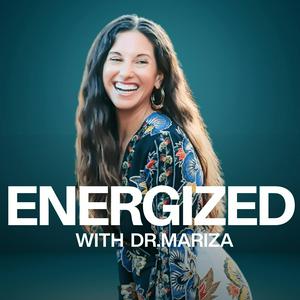
Acerca de Energized with Dr. Mariza
Energized host and bestselling author Dr. Mariza Snyder puts the power back in your hands so that you can age powerfully and live life to the fullest. Get ready to navigate your hormone and metabolic journey with wisdom and grace throughout your forties and beyond.
Each episode will leave you feeling empowered with the knowledge of how your body actually works by providing root-cause explanations for the symptoms you’re facing (with a side of real talk) along with proven, research-driven solutions to reset your metabolism, fatigue, and hormones. In each information-packed episode, you will discover solutions designed to reclaim your energy and aliveness so that you can feel ENERGIZED in your body and become the CEO of your health.
Visit www.drmariza.com for hundreds of free recipes and resources, plus game-changing programs, products, and incredible support designed to optimize your metabolism, energy, and brain function as you powerfully navigate the second half of your life.
This podcast was formerly named "Essentially You with Dr. Mariza".
Sitio web del podcastEscucha Energized with Dr. Mariza, ASMR en Español | Leslie ASMR y muchos más podcasts de todo el mundo con la aplicación de radio.es
Descarga la app gratuita: radio.es
- Añadir radios y podcasts a favoritos
- Transmisión por Wi-Fi y Bluetooth
- Carplay & Android Auto compatible
- Muchas otras funciones de la app
Descarga la app gratuita: radio.es
- Añadir radios y podcasts a favoritos
- Transmisión por Wi-Fi y Bluetooth
- Carplay & Android Auto compatible
- Muchas otras funciones de la app
Energized with Dr. Mariza
Escanea el código,
Descarga la app,
Escucha.
Descarga la app,
Escucha.
 España

