

Escucha gratis este podcast en la aplicación: Descarga gratuita en la App Store
radio.es
Sleep timer
Favoritos
275 episodios
276. Calorie Deficits, Hating Exercise, and the Health Benefits of Intuitive Eating (Q&A)
14/10/2026 | 24 min“If someone believes that the body they have today, at this very moment, is a good body that deserves kindness and respect and care, then they’re more likely to make choices nutritionally that help their body feel good or engage in movement to feel good in their body without punishment.”
What if some of the things you’ve been taught about weight loss, movement, and health aren’t quite as straightforward as they seem? In this episode, I’m answering three juicy intuitive eating and anti-diet questions from my Rebel listeners, covering calorie deficits and the risks of restriction, finding movement you actually enjoy, and whether intuitive eating and body positivity can support physical health. My answers might surprise you, but my goal is always to give you the information and tools to feel more empowered in the choices you make around food, movement, and your body.
✅ What You'll Learn:
Why a calorie deficit isn’t as simple or risk-free as diet culture makes it seem
How restriction can affect hunger, food thoughts, energy, and disordered eating behaviors
What might be underneath a negative relationship with movement
How to shift exercise away from punishment, guilt, shame, and body control
How intuitive eating and a more neutral relationship with your body can support physical health
Why it’s important to release the expectation that there’s one “right” way to eat, move, or care for your body
🔗 Resources:
Episode 246: What If You Just Try? Jessamyn Stanley on Yoga and Body Acceptance
Episode 249: Movement Shouldn’t Feel Like Punishment with Coach Tyler Bramlett
Grab the Hunger & Fullness Scale Guide at DietCultureRebel.com/hungerfullnessscale and take your next step toward building trust with your body and food
Connect with me over on Instagram at @diet.culture.rebel
Struggling with food, but not sure where to start?
You don’t have to feel 100% ready to get support. If you're tired of obsessing over food or feeling stuck in the diet cycle, my team of Registered Dietitians is here to help. We offer one-on-one nutrition counseling—and we accept insurance! Spots are limited, so head to https://dietculturerebel.com/insurance to see if we’re covered in your state and learn how to get started.275. Can You Love Fitness But Hate Fitness Culture?
07/10/2026 | 28 min“Taking the first step is always intimidating, whether it’s to therapy, or whether it’s to finding a non-traditional fitness space for you to feel safe, heard, and acknowledged in.”
You can love fitness, but hate the anti-fat bias and weight stigma that is baked into so much of it. Today I’m talking with Wendy Welsher, a USA Weightlifting Level Two coach, masters athlete, and founder of My Jam, about finding your way back to fitness and building a healthier relationship with movement. Wendy shares her experiences with weight stigma, anti-fat bias, diet culture, and eating disorder recovery, and how she created a safe fitness space for people who have felt excluded or harmed by traditional fitness environments. Wendy reminds us that there isn’t a single right way to move your body, and showing curiosity instead of judgment is the first step toward building strength.
✅ What You'll Learn:
How anti-fat bias and weight stigma can affect your relationship with exercise and fitness spaces
Why movement doesn't have to be punishment
Using rest, recovery, fueling, and body awareness to better support your relationship with movement
How strength training can help you feel strong, capable, and more connected to your body
Why there is no single "right" way for movement to look, and how to experiment with what works for your body
Practical ways to find fitness spaces and practitioners that align with your values and help you feel safe, supported, and welcome
🔗 Resources:
Regain Chastain
Wendy’s Fat Athlete Journal
Grab the Hunger & Fullness Scale Guide at DietCultureRebel.com/hungerfullnessscale and take your next step toward building trust with your body and food
Connect with me over on Instagram at @diet.culture.rebel
Struggling with food, but not sure where to start?
You don’t have to feel 100% ready to get support. If you're tired of obsessing over food or feeling stuck in the diet cycle, my team of Registered Dietitians is here to help. We offer one-on-one nutrition counseling—and we accept insurance! Spots are limited, so head to https://dietculturerebel.com/insurance to see if we’re covered in your state and learn how to get started.274. How to Read a Nutrition Label Without It Feeling Diet-y
30/09/2026 | 21 min“A nutrition facts label for one particular food cannot take the context of your meal or day of eating into account.”
Nutrition labels can provide useful information, but they can also become a source of food rules, guilt, and shame when diet culture takes over. In this episode, I’m breaking down where the 2,000-calorie reference point came from, why serving sizes are not recommendations for how much you should eat, and how to use nutrition labels in a way that supports nourishment rather than restriction. We’ll also talk about when nutrition labels can be helpful, when they may be doing more harm than good, and how to let your body’s hunger, fullness, and energy cues have a say in how you eat.
✅ What You'll Learn:
Why the 2,000-calorie reference point on nutrition labels does not represent the individual energy needs of most people
Why a serving size is a reference amount, not a rule or recommendation for how much you should eat
How to use nutrition labels to help you add nutrition, energy, fiber, or protein instead of focusing on what you should restrict
How to recognize when nutrition labels are overriding your hunger and fullness cues or contributing to guilt, shame, and food rules
Why the information on a nutrition label lacks the context of your individual needs, hunger, fullness, and overall meal or day of eating
How food neutrality and body attunement can help you decide whether nutrition labels are actually supportive for you right now
🔗 Resources:
Read the article about Nutrition Facts Labels
Grab the Hunger & Fullness Scale Guide at DietCultureRebel.com/hungerfullnessscale and take your next step toward building trust with your body and food
Connect with me over on Instagram at @diet.culture.rebel
Struggling with food, but not sure where to start?
You don’t have to feel 100% ready to get support. If you're tired of obsessing over food or feeling stuck in the diet cycle, my team of Registered Dietitians is here to help. We offer one-on-one nutrition counseling—and we accept insurance! Spots are limited, so head to https://dietculturerebel.com/insurance to see if we’re covered in your state and learn how to get started.273. How to Set Realistic Expectations When Healing Your Relationship with Food with Dr. Rachel Millner
23/09/2026 | 38 min“As human beings, we’re complex. There’s lots of nuance in all of this. Healing takes time, it’s not linear.”
In this replay episode, I’m joined by Dr. Rachel Millner to talk about setting realistic expectations about what healing your relationship with food and your body can really look like. As a psychotherapist and fat activist helping others recover from chronic dieting, disordered eating, and eating disorders, she explains why healing often isn’t linear, and why letting go of food rules can feel so uncomfortable. She also shares what to look for when choosing a therapist, and the three things that were most helpful in her own recovery from food struggles. It’s a realistic but encouraging conversation that will help you see what’s possible when food no longer takes up so much mental space!
✅ What You'll Learn:
Why healing your relationship with food is not a linear process
How letting go of food rules can feel uncomfortable, even when it’s helping you heal
What realistic expectations for healing your relationship with food and your body can look like
What to look for when choosing a therapist or dietitian
The three things that were most helpful in Dr. Rachel’s own recovery
What becomes possible when food no longer takes up so much mental space
🔗 Resources:
Connect with Dr. Rachel Millner at rachelmillnertherapy.com or on IG @drrachelmillner
Grab the Hunger & Fullness Scale Guide at DietCultureRebel.com/hungerfullnessscale and take your next step toward building trust with your body and food
Connect with me over on Instagram at @diet.culture.rebel
Struggling with food, but not sure where to start?
You don’t have to feel 100% ready to get support. If you're tired of obsessing over food or feeling stuck in the diet cycle, my team of Registered Dietitians is here to help. We offer one-on-one nutrition counseling—and we accept insurance! Spots are limited, so head to https://dietculturerebel.com/insurance to see if we’re covered in your state and learn how to get started.272. Food Noise, Food Tracking, and Social Eating: Your Questions Answered
16/09/2026 | 24 min“The goal is not to never think about food. Food is a part of life, we have to think about food sometimes. The goal instead is for food thoughts to take up an appropriate amount of space in your brain, instead of feeling constant, urgent, critical, or all-consuming.”
In this Q&A episode, I’m answering three questions that come up often when people are trying to break free from diet culture: Can you reduce food noise without medication? How do you let go of weighing, measuring, and tracking your food? And how can you navigate anxiety and overeating when you’re eating around other people? I’m breaking down how restriction and food rules can contribute to constant thoughts about food, why stepping away from tracking can feel so uncomfortable, and how to begin rebuilding trust in your hunger and fullness cues. I also share practical strategies for social situations, including how to get curious about what’s driving overeating and challenge the beliefs that keep you stuck in the cycle.
✅ What You'll Learn:
Why food noise can be connected to restriction, inconsistent nourishment, and deeply ingrained food rules
How to distinguish normal thoughts about food from food noise that feels constant, critical, or all-consuming
Practical steps for gradually moving away from weighing, measuring, and tracking food while rebuilding trust with your body
How hunger and fullness check-ins can help you develop the skills needed for more intuitive eating
Why you might overeat or experience food anxiety in social situations, and how to identify what is driving it
Mindset shifts and practical strategies for eating around other people with more confidence and less pressure to control your food
🔗 Resources:
Grab the Hunger & Fullness Scale Guide at DietCultureRebel.com/hungerfullnessscale and take your next step toward building trust with your body and food
Connect with me over on Instagram at @diet.culture.rebel
Struggling with food, but not sure where to start?
You don’t have to feel 100% ready to get support. If you're tired of obsessing over food or feeling stuck in the diet cycle, my team of Registered Dietitians is here to help. We offer one-on-one nutrition counseling—and we accept insurance! Spots are limited, so head to https://dietculturerebel.com/insurance to see if we’re covered in your state and learn how to get started.
Más podcasts de Medicina alternativa





Podcasts a la moda de Medicina alternativa






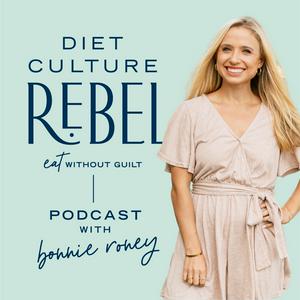
Acerca de Diet Culture Rebel Podcast
Ready to eat without guilt, support your actual health, and start giving diet culture the middle finger? You’re in the right place.
The Diet Culture Rebel podcast is your trusted space for breaking free from food rules, healing your relationship with your body, and learning how to eat without shame, stress, or obsession - while honoring your health in a way that actually feels good.
Hosted by Registered Dietitian and Certified Intuitive Eating Counselor Bonnie Roney, each episode delivers straightforward, no-BS guidance to help you ditch diets for good. Through expert interviews and solo deep dives, Bonnie brings you health-promoting, mindset-shifting insights that leave you feeling empowered - not overwhelmed.
“I’ve learned what’s happening inside my brain and body, and [Bonnie] gives incredible suggestions and insights on how to start the process of healing my relationship with food.”
- Diet Culture Rebel listener
With over 200 episodes and thousands of weekly listeners, this podcast is your permission slip to trust your body, reject diet culture, and take your power back - one episode at a time.
Subscribe now and listen every Wednesday.
👉 Connect with Bonnie on Instagram @DietCultureRebel
👉 Learn more about working with the DCR team at DietCultureRebel.com
Sitio web del podcastEscucha Diet Culture Rebel Podcast, Palabra viva: Centro online de Escritura Terapia/mindfulness, formación personal y liderazgo estoico y muchos más podcasts de todo el mundo con la aplicación de radio.es
Descarga la app gratuita: radio.es
- Añadir radios y podcasts a favoritos
- Transmisión por Wi-Fi y Bluetooth
- Carplay & Android Auto compatible
- Muchas otras funciones de la app
Descarga la app gratuita: radio.es
- Añadir radios y podcasts a favoritos
- Transmisión por Wi-Fi y Bluetooth
- Carplay & Android Auto compatible
- Muchas otras funciones de la app
Diet Culture Rebel Podcast
Escanea el código,
Descarga la app,
Escucha.
Descarga la app,
Escucha.
 España
