

Escucha gratis este podcast en la aplicación: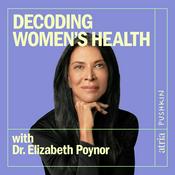 Descarga gratuita en la App Store
radio.es
Sleep timer
Favoritos
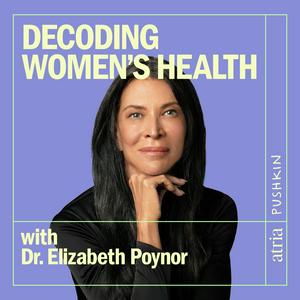
Decoding Women's Health with Dr. Elizabeth Poynor
Pushkin Industries
Último episodio
28 episodios
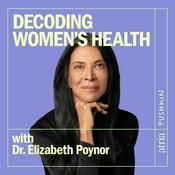
Decoding Cardiovascular Health with Dr. Anu Lala
22/09/2026 | 56 minHeart disease is the number one killer of women, but unlike many other major diseases, there’s no single screening test that can tell you if you’re at risk. So how do you know where you stand? Dr. Poynor is joined by cardiologist Dr. Anuradha (Anu) Lala-Trindade (Lala), the program director for the Advanced Heart Failure and Transplant Fellowship at Mount Sinai and a professor of cardiology, population health, and obstetrics and gynecology.
Together, they unpack the many factors that can shape a woman’s cardiovascular risk and break down why midlife is an especially important time to start paying attention to them.
Resources mentioned during this episode:
Dr. Anu Lala’s 14-part framework for an initial cardiology assessment:
1. Family history
2. Gynecologic history — pregnancy journey, fertility journey, and gynecologic surgeries, including fibroid surgeries
3. Laboratory results — genetic risk markers plus microalbuminuria (protein in the urine, as an early marker of cardiovascular-relevant kidney health)
4. History of high blood pressure — personal history, in-office reading, and family history
5. Cholesterol panel
6. Insulin resistance and inflammation biomarkers
7. History of autoimmune disease or inflammatory conditions
8. An EKG to check for any abnormalities
9. Weight and weight redistribution
10. Sleep
11. Movement (her preferred term over "exercise")
12. Diet — specifically processed food intake, alcohol, and food timing
13. Tobacco use and cessation
14. Mindfulness and well-being, or mind-body medicine
Here are the numbers Dr. Lala wants women to know.
1. Blood pressure
2. Cholesterol panel
3. Lp(a) — a genetic marker of atherosclerosis, checked at least once
4. Hemoglobin A1c — a marker of insulin resistance, metabolic risk, or diabetes
5. Microalbuminuria
For some women, she also recommends:
1. ApoB — not for everyone; informative specifically when LDL is elevated
2. Coronary artery calcium score — not for everyone; useful for those at intermediate-to-high risk, with high LDL, or with a relevant family history
About Dr. Lala: https://profiles.mountsinai.org/anuradha-lala-trindade#about
CDC overview of women and heart disease: https://www.cdc.gov/heart-disease/about/women-and-heart-disease.html
National Heart, Lung, and Blood Institute resources for women and heart disease: https://www.nhlbi.nih.gov/health/coronary-heart-disease/women#How-do-symptoms-differ-for-women?
A Harvard Health article on the heart attack gender gap: https://www.health.harvard.edu/blog/understanding-heart-attack-gender-gap-201604159495
Systolic Blood Pressure Intervention Trial (SPRINT) Study: https://www.nhlbi.nih.gov/science/systolic-blood-pressure-intervention-trial-sprint-study
Hypertensive disorders of pregnancy and peripartum cardiomyopathy: A nationwide cohort study: https://journals.plos.org/plosone/article?id=10.1371%2Fjournal.pone.0211857
Increased risk of cardiovascular disease in women with endometriosis: A systematic review and meta-analysis: https://www.sciencedirect.com/science/article/pii/S0301211525003574
The 2022 hormone therapy position statement of The North American Menopause Society: https://menopause.org/wp-content/uploads/professional/nams-2022-hormone-therapy-position-statement.pdf
If you're interested in using a risk calculator you can toggle to the left on the American Heart Association tool: https://professional.heart.org/en/guidelines-and-statements/prevent-calculator
Auditory stimuli and heart rate variability: the role of music in cardiovascular regulation: https://pmc.ncbi.nlm.nih.gov/articles/PMC13229774/
Adjuvant music therapy for patients with hypertension: a meta-analysis and systematic review: https://link.springer.com/article/10.1186/s12906-023-03929-6
Effects of music in exercise and sport: A meta-analytic review: https://pubmed.ncbi.nlm.nih.gov/31804098/
Association between spirituality/religiousness and quality of life among healthy adults: a systematic review: https://pmc.ncbi.nlm.nih.gov/articles/PMC8529786/
Spirituality in Serious Illness and Health: https://jamanetwork.com/journals/jama/article-abstract/2794049
Acupuncture in persons with an increased stress level—Results from a randomized-controlled pilot trial: https://pmc.ncbi.nlm.nih.gov/articles/PMC7377446/
Effects of sleep deprivation and 4‐7‐8 breathing control on heart rate variability, blood pressure, blood glucose, and endothelial function in healthy young adults: https://pmc.ncbi.nlm.nih.gov/articles/PMC9277512/
Effects of voluntary slow breathing on heart rate and heart rate variability: A systematic review and a meta-analysis: https://pubmed.ncbi.nlm.nih.gov/35623448/
Note: In this show, we use “women” as shorthand for people with XX chromosomes. We understand sex and gender are more complex, and acknowledge the experiences we describe reach beyond that word.
See omnystudio.com/listener for privacy information.Decoding Intermittent Fasting with Dr. Chris Rhodes
08/09/2026 | 49 minHow can the research behind intermittent fasting help us rethink the way we approach our nutrition and our daily habits? Dr. Chris Rhodes has spent much of his career studying the science of fasting. He joins the show to unpack how fasting works in the body and what the research tells us about its potential benefits.
Dr. Rhodes earned his PhD in Nutritional Biochemistry at UC Davis and is also the co-founder of Mimio. We discuss why someone might try intermittent fasting - from longevity to weight loss - as well as the importance of strength training and personalized nutrition.
Links to resources mentioned in this episode:
For more studies on autophagy, check out: https://physoc.onlinelibrary.wiley.com/doi/full/10.1113/JP287938
and https://pubmed.ncbi.nlm.nih.gov/41372565/
Here's a meta-analysis looking at the effects of time restricted eating: https://pubmed.ncbi.nlm.nih.gov/41586347/
Note: the glycine data we mention is only in mice: https://pmc.ncbi.nlm.nih.gov/articles/PMC6516426/
Important caveat for this episode: the evidence is strongest in animal studies and human markers of aging. No intermittent fasting regimen has been shown to extend human lifespan or reduce mortality in humans.
Note: In this show, we use “women” as shorthand for people with XX chromosomes. We understand sex and gender are more complex, and acknowledge the experiences we describe reach beyond that word.
See omnystudio.com/listener for privacy information.Decoding Preventive Care with Dr. Jennifer McGugins Hill
25/08/2026 | 59 minWhat can you do to make the most of your annual medical visit? Dr. Poynor is joined by Dr. Jennifer McGugins Hill, an internal medicine specialist at the Atria Health and Research Institute, to discuss how preventive care can help identify health concerns early. Plus, we unpack which labs and screenings are worth discussing with your primary care physician, why it's important to know your calcium score, and how to advocate for the care you need.
Links to resources mentioned in this episode:
Boston Heart Diagnostics offers specialty labs that your doctor can order for you, usually at a cost. They are not available as direct to consumer products, so if you're interested in them, talk with your care team. https://bostonheartdiagnostics.com/
For expert advice on how to properly log your blood pressure at home, please see this helpful article: https://content.atria.org/article/blood-pressure-cuffs-for-home-monitoring/
You can see the product she mentions here (no affiliate link): https://omronhealthcare.com/blood-pressure-monitors
An ECG or EKG stands for an electrocardiogram, which is a quick, safe, and painless medical test that records the electrical activity of your heart.
DEXA stands for dual-energy X-ray absorptiometry. It is an imaging test that uses low-dose X-rays to measure bone mineral density and body composition. They can be ordered by a physician in an academic medicine system and are also offered at standalone centers.
Cologuard is a stool test that looks for existing cancer. Colonoscopies look for cancer as well as polyps, which can be pre-cancerous and are removed during the colonoscopy procedure.
Note: In this show, we use “women” as shorthand for people with XX chromosomes. We understand sex and gender are more complex, and acknowledge the experiences we describe reach beyond that word.
See omnystudio.com/listener for privacy information.Decoding Medical Marijuana with Dr. Staci Ann Gruber
11/08/2026 | 51 minMany women are turning to cannabis to help with sleep, anxiety, chronic pain, and other major health concerns. But figuring out what actually works for your individual needs can be surprisingly complicated.
Dr. Poynor speaks with neuroscientist and world-renowned medical cannabis expert Dr. Staci Ann Gruber about the science behind THC, CBD, and other cannabinoids. Together, they break down the potential benefits of cannabis for women’s health, how to navigate different products safely, and best practices for first-time users.
Links to resources mentioned in this episode:
Marijuana Investigations for Neuroscientific Discovery (MIND) Program at McLean Hospital
Women’s Health Initiative at Mind (WHIM)
Medicinal Cannabis: History, Pharmacology, And Implications for the Acute Care Setting
The Health Effects of Cannabis and Cannabinoids: The Current State of Evidence and Recommendations for Research
Marijuana impacts mood in bipolar disorder: a pilot study
Note: In this show, we use “women” as shorthand for people with XX chromosomes. We understand sex and gender are more complex, and acknowledge the experiences we describe reach beyond that word.
See omnystudio.com/listener for privacy information.Decoding Longevity with Dr. Eric Verdin of the Buck Institute
28/07/2026 | 1 h 6 minWhat if aging isn't something that simply happens to us, but something we can actually influence? Dr. Poynor is joined by Dr. Eric Verdin - the President and CEO of the Buck Institute for Research on Aging, the world's first institution dedicated solely to understanding why we age and how to do it better.
We break down the science behind why we age, the role of NAD in cellular energy and repair, how inflammation quietly accelerates decline, and what metabolism has to do with how long and how well we live.
Dr. Verdin also walks us through what the latest research says about what we can actually do today—from how we eat and exercise, to the emerging interventions that may one day change the trajectory of aging altogether. He also shares which interventions he’s tried himself and what he’s chosen to skip altogether.
Links to resources mentioned in this episode:
Although epigenetics has been studied for decades, a major breakthrough came in 2013, when geneticist Steve Horvath, PhD, developed the first widely applicable epigenetic clock—a DNA methylation-based biomarker that estimates biological age across multiple human tissues. https://link.springer.com/article/10.1186/gb-2013-14-10-r115
A landmark 2026 Science study found that human lifespan heritability is roughly 50%, more than double earlier estimates — once researchers separated deaths from external causes (accidents, infections) from deaths driven by intrinsic aging biology. https://www.science.org/doi/10.1126/science.adz1187
Senescent cells promote tissue NAD+ decline during ageing via the activation of CD38+ macrophages: https://www.nature.com/articles/s42255-020-00328-w
CD38 inhibitor 78c increases mice lifespan and healthspan in a model of chronological aging: https://pubmed.ncbi.nlm.nih.gov/35263032/
CD38 Inhibition Ameliorates Age-Related CognitiveDecline via a Choroid Plexus-Cerebrospinal Fluid-Hippocampus Axis: (This refers to preclinical (meaning animal model) research that was published as a pre-print and has not yet been peer reviewed.) https://pubmed.ncbi.nlm.nih.gov/41542058/
Healthy aging and muscle function are positively associated with NAD+ abundance in humans: https://www.nature.com/articles/s43587-022-00174-3
Pilot Study Evaluates Weekly Pill to Slow Ovarian Aging, Delay Menopause: https://www.nyp.org/advances/article/womens-health/pilot-study-evaluates-weekly-pill-to-slow-ovarian-aging-delay-menopause
Dr. Yousin Suh at the Department of Genetics and Development at Columbia University - you can read more about Dr. Suh’s work here: https://www.crs.northwestern.edu/about/news/2025/nbs-2025.html
Ageing in Drosophila: The role of the insulin/Igf and TOR signalling network: https://pmc.ncbi.nlm.nih.gov/articles/PMC3087113/
NIA Interventions Testing Program: Investigating Putative Aging Intervention Agents in a Genetically Heterogeneous Mouse Model: https://pmc.ncbi.nlm.nih.gov/articles/PMC5514387/
Publications from the NIA Interventions Testing Program: https://www.nia.nih.gov/research/dab/interventions-testing-program-itp/publications
The use of semaglutide medicines and risk of non-arteritic anterior ischemic optic neuropathy (NAION): https://www.who.int/news/item/27-06-2025-27-06-2025-semaglutide-medicines-naion
Dr. Eric Verdin LinkedIn page: https://www.linkedin.com/in/eric-verdin-490212
Dr. Eric Verdin on Substack: https://substack.com/@verdinlabbuck
Dr. Eric Verdin on Instagram: @ericverdinmd
Dr. Elizabeth Poynor substack: https://poynorhealth.substack.com/
Dr. Elizabeth Poynor on Instagram: @poynorhealth
Atria Health Library: content.atria.org
Note: In this show, we use “women” as shorthand for people with XX chromosomes. We understand sex and gender are more complex, and acknowledge the experiences we describe reach beyond that word.
See omnystudio.com/listener for privacy information.
Más podcasts de Ciencias
 Coffee Break: Señal y RuidoAstronomía, Ciencias
 The Rest Is ScienceCiencias, Cultura y sociedad, Filosofía, Física, Tecnología
 Horizonte – Iker JiménezCiencias
 Hablando con Científicos - Cienciaes.comCiencias, Ciencias naturales, Cultura y sociedad
 A hombros de gigantesCiencias
 Date Un Vlog OficialCiencias
 Podcast de Juan Ramón RalloCiencias, Ciencias sociales, Economía y empresa, Inversión, Noticias, Política
 Heavy MentalCiencias
 Materia OscuraCiencias
 Espacio en blancoCiencias
Podcasts a la moda de Ciencias
 RAIZ DE 5 - El podcast más hipotenusoCiencias
 Camaleón: Animales para niños curiososCiencias, Ciencias de la vida, Educación para niños, Niños y familia
 CardioPODCASTCiencias
 The Naked Scientists PodcastCiencias, Ciencias de la vida, Ciencias naturales, Medicina, Salud y forma física
 Sean Carroll's Mindscape: Science, Society, Philosophy, Culture, Arts, and IdeasCiencias, Cultura y sociedad, Filosofía, Física
 Short WaveCiencias, Ciencias de la vida, Noticias, Noticias diarias
 A Ciencia CiertaCiencias
 Hablando de psicologíaCiencias
 El sueño de LaikaAstronomía, Ciencias
 Cruce de cablesCiencias, Cultura y sociedad
 KI verstehenCiencias
 Supersónicos AnónimosAstronomía, Ciencias
 Podcast Radio SkylabCiencias
 Der KI-PodcastCiencias
 La aventura de la vidaCiencias
 IQ - Wissenschaft und ForschungCiencias
 Live Like a Girl with Dr. Mindy PelzCiencias, Medicina alternativa, Nutrición, Salud y forma física
 En Clave RuralCiencias
 Astrum SpaceAstronomía, Ciencias
 The Great Simplification with Nate HagensCiencias, Ciencias de la tierra, Ciencias naturales
 Órbita Laika. El podcastCiencias
 EmonthebrainCiencias
 Podcast Desde el Sur: explorando el CosmosCiencias
 Science VsCiencias, Educación, Salud y forma física
 SternengeschichtenAstronomía, Ciencias, Cultura y sociedad, Educación, Física
 La Tertulia de CómicosCiencias, Humor
 Ático Primera con Laia CastelCiencias, Ciencias sociales
 Esto no ha pasadoCiencias
 More or LessCiencias, Comentando la noticia, Cultura y sociedad, Matemáticas, Noticias
Acerca de Decoding Women's Health with Dr. Elizabeth Poynor
Why is it still so hard for women to find reliable, modern health information about their own bodies? On Decoding Women's Health, Dr. Elizabeth Poynor, chair of women’s health & gynecology at the Atria Health Institute, shares expert insights on women’s health, hormones, and longevity science to help you thrive at any stage of midlife and beyond.
Dr. Poynor, a world-renowned gynecologic oncologist and advanced pelvic surgeon, speaks with leading physicians, researchers, and educators to share the latest science on women’s wellness, disease prevention, and what it really means to age on your own terms. Each episode explores a different aspect of how to improve your health during midlife—from heart disease and genetic risks to metabolism, hormones nutrition, cognitive health, and beyond.
Whether you're in perimenopause, postmenopause, or simply looking for tools to prepare for the next chapter, take charge of your health—now and for the future—with expert guidance and practical advice to help you thrive.
Sitio web del podcastEscucha Decoding Women's Health with Dr. Elizabeth Poynor, Coffee Break: Señal y Ruido y muchos más podcasts de todo el mundo con la aplicación de radio.es
Descarga la app gratuita: radio.es
- Añadir radios y podcasts a favoritos
- Transmisión por Wi-Fi y Bluetooth
- Carplay & Android Auto compatible
- Muchas otras funciones de la app
Descarga la app gratuita: radio.es
- Añadir radios y podcasts a favoritos
- Transmisión por Wi-Fi y Bluetooth
- Carplay & Android Auto compatible
- Muchas otras funciones de la app

Decoding Women's Health with Dr. Elizabeth Poynor
Escanea el código,
Descarga la app,
Escucha.
Descarga la app,
Escucha.
Decoding Women's Health with Dr. Elizabeth Poynor: Podcasts del grupo



 España