
Escucha gratis este podcast en la aplicación: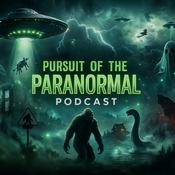 Descarga gratuita en la App Store
radio.es
Sleep timer
Favoritos
326 episodios
Creature of the Pines: Horror, Alien Abductions & Paranormal Filmmaking | Tyler Transue | Doc Side Media
20/10/2026 | 1 h 6 minWhat happens when paranormal documentary makers turn their attention to fictional horror?
Greg and Ash welcome back Tyler Transue from Doc Side Media, the independent production company behind a growing collection of UFO, Sasquatch and paranormal documentaries.
This time, Tyler joins us to discuss two very different productions: Creature of the Pines, a new found-footage horror film set in the New Jersey Pine Barrens, and Stolen by the Stars, a documentary exploring extraordinary accounts of alien abduction and contact.
Following a successful cinema screening of Creature of the Pines, Tyler shares the story of how he and fellow filmmaker Chris Ruppert moved from interviewing paranormal witnesses to creating their own terrifying fictional investigation, taking inspiration from the documentary realism of films such as The Blair Witch Project.
We explore the challenges of independent filmmaking, stepping in front of the camera, creating convincing horror and the business of getting films distributed.
The conversation also examines how Doc Side Media approaches genuine paranormal testimony. How do they identify experiencers? What happens when somebody shares an almost unbelievable story? And should documentary makers decide what audiences are prepared to believe?
Perhaps most interestingly, we discuss the sometimes controversial relationship between paranormal investigation and entertainment. Can filmmakers produce factual investigations and fictional horror without undermining their credibility?
We also look back over five years of Doc Side Media productions, from Conscious Contact: Full Disclosure and Secrets of the Sasquatch to Surrounded by Spirits and Stolen by the Stars.
www.docsidemedia.com
Creature of the Pines is available through Amazon Prime Video, Apple TV and Screambox, while Stolen by the Stars is available through Tubi and Apple TV, subject to regional availability.
WATCH CREATURE OF THE PINES – SPECIAL OFFER
Want to check out Tyler and Chris's new found-footage horror film?
Creature of the Pines is available on Screambox, and new subscribers can use the promotional code COPINES to get their first three months for just $2.99 per month.
A separate 7-day free trial may also be available.
The film is also available through Amazon Prime Video and Apple TV.
Offers and availability may vary by region and are subject to change.
Find out more about Pursuit of the Paranormal: https://pursuitoftheparanormal.co.uk/
Strange Places. Real Conversations.
Got a strange story to tell us?
Drop us a voicemail and it may appear on an up coming episodePentagon UFO Revelations, Mystery Space Debris & a VERY Cheeky Ghost! | Paranormal News
17/10/2026 | 9 min👽 Alien bodies recovered at Roswell? Mystery debris discovered in a cornfield? And a ghost with wandering hands?!
Welcome to another UFO & Paranormal News Roundup from Pursuit of the Paranormal, where we explore the latest strange stories making headlines around the world.
This week, we're covering three fascinating stories from the worlds of UFOs, unexplained phenomena and ghostly encounters.
🛸 PENTAGON UFO REVELATIONS
Former Pentagon UAP Task Force director Jay Stratton has made extraordinary claims in his new book, Out of the Shadows. From alleged recovered alien spacecraft and non-human bodies at Roswell to mysterious triangular UFO footage, we examine what he's saying, his intelligence background and, crucially, where the evidence stands.
☄️ MYSTERY OBJECT DISCOVERED IN MINNESOTA
An enormous metallic object measuring approximately 11 feet across has been discovered in a Minnesota cornfield. Authorities are investigating its origin, with space debris a possible explanation. But what exactly is it, and where did it come from?
👻 A VERY CHEEKY YORKSHIRE GHOST
A woman visiting the Haunted Objects Museum in Rotherham claims an unseen presence pulled and released her bra strap inside the notorious Demon Room! We examine the reported encounter, the CCTV reaction and whether there's a more down-to-earth explanation.
🔎 Three stories. Plenty of questions. But what does the evidence actually tell us?
At Pursuit of the Paranormal, we approach the unexplained with curiosity, an open mind and healthy scepticism.
#UFO #UAP #Paranormal #Roswell #UFODisclosure #JayStratton #GhostStories #ParanormalNews #PursuitOfTheParanormal
Got a strange story to tell us?
Drop us a voicemail and it may appear on an up coming episodeThe Cartography of High Strangeness: UFOs, Consciousness and the Paranormal | Richard Monck
13/10/2026 | 1 h 1 minWhat if UFO encounters, paranormal experiences, strange coincidences and altered states of consciousness aren't separate mysteries, but different parts of the same phenomenon?
In this episode of Pursuit of the Paranormal, Greg and Ash welcome Fortean writer and researcher Richard Monck, whose work explores the fascinating intersections between UFOs, consciousness, folklore and high strangeness.
Richard's personal journey into the unexplained began with extraordinary childhood experiences, including an apparent UFO sighting in 1980 that would influence his understanding of reality for decades to come.
Through his writing, including The Cartography of High Strangeness for UAPedia, Richard explores whether unusual experiences might form part of a much bigger picture.
Drawing on the ideas of researchers and thinkers such as John Keel, Jacques Vallée and Patrick Harpur, we explore the boundaries between the physical world, human perception and experiences that seem to defy conventional explanations.
Could certain individuals be more susceptible to extraordinary experiences? Are synchronicities simply coincidences, or could they suggest something deeper? And might the UFO phenomenon have more in common with traditional paranormal experiences than we realise?
From mysterious encounters to the possibility that consciousness plays a fundamental role in our understanding of reality, this conversation takes us into the fascinating territory of high strangeness.
Join Greg, Ash and Richard Monck as we venture beyond conventional explanations and explore the mysteries connecting the paranormal, UFOs and human consciousness.
Find out more about Richard Monck:
The Cartography of High Strangeness – UAPedia https://www.uapedia.ai/wiki/the-cartography-of-high-strangeness/
Pursuit of the Paranormal
Website: https://pursuitoftheparanormal.co.uk/
Discover more interviews, investigations and conversations exploring the unexplained.
Pursuit of the Paranormal – Strange Places. Real Conversations.
Got a strange story to tell us?
Drop us a voicemail and it may appear on an up coming episodeSpooky Britain: Haunted Places, Dark Tourism & a Sceptic’s Own Haunting | Peter Naldrett
06/10/2026 | 1 h 3 minGreg and Ash are joined by Peter Naldrett, author of Spooky Britain: The 100 Most Eerie and Mysterious Places to Visit, for a journey through some of Britain’s strangest locations, ghost stories and supernatural legends.
Peter describes himself as a sceptic — but during his university days in Lancaster he experienced something he still struggles to explain. Mysterious black ash repeatedly appeared on his pillow before he eventually witnessed the substance apparently materialising above him and falling onto his desk. Later experiences in the same house included moving curtains and the terrifying sensation of an unseen presence approaching his bedroom.
That experience changed the way Peter thinks about paranormal testimony and ultimately forms part of the story behind Spooky Britain.
We explore the process of choosing 100 locations from across Britain and hear stories involving haunted pubs, cursed objects, castles, prisons, theatres, witchcraft, Cannock Chase, nuclear bunkers, strange voices inside underground caverns and some of the country’s lesser-known supernatural legends.
The conversation also explores dark tourism, whether paranormal stories are sometimes deliberately monetised, why some locations embrace their haunted reputations while others avoid them, and why Britain’s centuries of history have created such a rich landscape of ghosts, folklore and mystery.
Spooky Britain by Peter Naldrett: Buy the book on Amazon UK
Pursuit of the Paranormal: pursuitoftheparanormal.co.uk
Pursuit of the Paranormal — Strange Places. Real Conversations.
Got a strange story to tell us?
Drop us a voicemail and it may appear on an up coming episodeThis Week in the Unexplained: UFO Disclosure, SpaceX and A Ghosts Voice?
03/10/2026 | 13 minThis week on the Pursuit of the Paranormal Weekly News Round-Up, Greg looks at three of the biggest stories from the world of UFOs, UAP and the paranormal.
David Grusch has returned to The Joe Rogan Experience and says he believes a form of UAP disclosure could happen before Donald Trump leaves office. During the same conversation, Joe Rogan also revealed that White House Deputy Chief of Staff Stephen Miller allegedly told him that information about UFOs was “going to come out”.
We also look at the strange blue-white object spotted during SpaceX’s historic Starship Flight 14. The footage quickly sparked UFO speculation online, but a closer look at the livestream may offer a much more conventional explanation.
And finally, we head to Castletown on the Isle of Man, where the Sixth Senses Paranormal Society investigated the Vintage Tea Room and reported recording what they believe could have been the voice of a child.
Three very different stories, but all raising the same question: where does the evidence end, and interpretation begin?
The Pursuit of the Paranormal Weekly News Round-Up is produced in association with Beyond Our Ordinary and UFO Identified.
Got a strange story to tell us?
Drop us a voicemail and it may appear on an up coming episode
Más podcasts de Ciencias





Podcasts a la moda de Ciencias












Acerca de Pursuit of the Paranormal
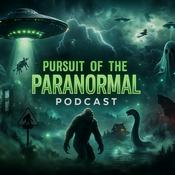
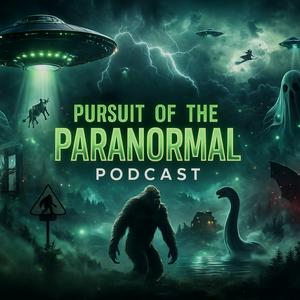
Pursuit of the Paranormal is a UK‑based paranormal podcast where Ash and Greg explore the strange, unexplained, and unknown. Each week, they investigate ghost sightings, hauntings, UFO and UAP encounters, cryptids, poltergeist activity, and government‑covered mysteries that challenge our understanding of reality.
Ash and Greg dive into real paranormal investigations, credible witness encounters, historic and forgotten cases, and modern high‑strangeness events, bringing listeners thoughtful analysis, open‑minded discussion, and evidence‑based research.
Each episode includes:
Paranormal news — the latest updates in UFO, UAP, and supernatural phenomena
Deep‑dive investigations into historic, obscure, and overlooked cases
Cryptid and haunting discussions exploring Bigfoot, shadow figures, poltergeists, and more
Expert interviews with investigators, researchers, experiencers, and authors in the paranormal field
Whether you’re fascinated by true ghost stories, real paranormal encounters, alien sightings, cryptozoology, UFO/UAP disclosure, or the science behind unexplained phenomena, Pursuit of the Paranormal delivers credible research, compelling storytelling, and open‑minded exploration.
If you’re searching for a paranormal podcast, UFO podcast, UAP podcast, or a show that investigates the mysteries of the unknown, this is the podcast for you.
Sitio web del podcastEscucha Pursuit of the Paranormal, A hombros de gigantes y muchos más podcasts de todo el mundo con la aplicación de radio.es
Descarga la app gratuita: radio.es
- Añadir radios y podcasts a favoritos
- Transmisión por Wi-Fi y Bluetooth
- Carplay & Android Auto compatible
- Muchas otras funciones de la app
Descarga la app gratuita: radio.es
- Añadir radios y podcasts a favoritos
- Transmisión por Wi-Fi y Bluetooth
- Carplay & Android Auto compatible
- Muchas otras funciones de la app
Pursuit of the Paranormal
Escanea el código,
Descarga la app,
Escucha.
Descarga la app,
Escucha.
 España