

Escucha gratis este podcast en la aplicación: Descarga gratuita en la App Store
radio.es
Sleep timer
Favoritos
608 episodios

William Gaunitz: The Truth About Hair Loss, Regrowth & Why Most Treatments Fail
09/10/2026 | 1 h 8 minWhat if everything you've been told about hair loss is missing the most important piece of the puzzle? What if expensive hair transplants, injections, miracle shampoos, and even prescription medications aren't addressing the actual reasons your hair is falling out?
In this episode of the SuperLife Podcast, Darin Olien sits down with certified trichologist and hair loss specialist William Gaunitz, who has spent more than two decades studying the science of hair and scalp health. After experiencing aggressive hair loss himself at just 17 years old, William began searching for answers that conventional approaches weren't providing. His personal journey led him to study trichology internationally and open his first hair clinic at 23.
William shares his approach to understanding hair loss through three major factors: DHT (dihydrotestosterone), nutritional deficiencies, and inflammation. Rather than treating every case with the same product or procedure, he explains why identifying the underlying contributors is essential, especially when multiple issues are occurring simultaneously.
The conversation reveals why hair loss isn't just a men's issue. William estimates that approximately 65% of his clients are women, many dealing with hormonal fluctuations, postpartum changes, low ferritin, nutritional deficiencies, and chronic inflammation. He shares the story of a young woman who spent thousands on unsuccessful treatments before testing revealed a significant iron deficiency.
Darin and William also explore the science behind low-level laser therapy, saw palmetto extracts, scalp health, PRP, hair transplants, and other emerging treatments. They discuss why more aggressive treatment isn't necessarily better, why hair growth requires patience, and how microscopic imaging may help identify changes before they're visible to the naked eye.
William introduces Katya, his developing AI-powered hair and scalp health platform, designed to combine health history, bloodwork, and at-home microscopic scalp images to help users track progress and better understand their options.
Beyond hair loss, the conversation expands into regenerative medicine, stem cells, joint injuries, and the importance of creating the right conditions for the body to recover.
Ultimately, this episode challenges the quick-fix mentality dominating the hair loss industry and makes the case for a more personalized, evidence-informed approach that begins with understanding the problem before choosing a treatment.
What You'll Learn
The three major contributors to hair loss that William focuses on: DHT, nutritional deficiencies, and inflammation
Why hair loss affects so many women, particularly during postpartum and hormonal transitions
How ferritin, zinc, copper, vitamin B12, and vitamin D levels can influence hair health
The differences between prescription DHT blockers and certain saw palmetto extracts
Why low-level laser therapy requires appropriate dosing, consistency, and realistic expectations
How scalp inflammation, product buildup, and environmental exposures may complicate hair loss
Why hair transplants, PRP, exosomes, and other treatments may not address ongoing underlying problems
How microscopic scalp imaging can help track changes before visible regrowth
How William's AI-powered Katya platform aims to make hair and scalp assessments more accessible
Why Darin and William believe foundational health, patience, and individualized care matter more than chasing miracle products
Chapters
00:00:03 – Welcome to SuperLife
00:00:34 – Sponsor: Bite
00:02:49 – Introducing William Gaunitz and the science of hair loss
00:03:16 – The three major contributors to hair loss
00:03:40 – Laser therapy, hair transplants, and the problem with quick fixes
00:04:27 – Darin's personal experience with William's hair care approach
00:05:20 – William's hair loss journey begins at age 17
00:06:28 – Trying minoxidil and watching his hair disappear
00:07:21 – What is trichology, and why is it important?
00:08:10 – William's international training in hair and scalp science
00:08:53 – Discovering the missing pieces in conventional hair treatments
00:09:21 – William's first experience with low-level laser therapy
00:10:10 – An unexpected scalp reaction and the search for answers
00:11:00 – Understanding William's inflammatory hair loss
00:11:44 – Opening his first hair clinic at 23
00:12:10 – Why more laser diodes don't necessarily mean better results
00:12:57 – Finding the right treatment intensity
00:13:22 – Why bloodwork and nutritional foundations come first
00:13:42 – Ferritin, zinc, copper, B12, vitamin D, and DHT
00:14:03 – William's approach to gradually increasing laser treatment
00:14:49 – Combining the right tools for hair regrowth
00:15:40 – The problem with miracle hair loss products
00:16:59 – How DHT contributes to genetic hair loss
00:17:34 – Finasteride, dutasteride, and potential side effects
00:18:26 – The research behind specific saw palmetto extracts
00:19:29 – Comparing approaches to DHT management
00:19:57 – Why approximately 65% of William's clients are women
00:20:22 – Hormones, estrogen, and the complexity of female hair loss
00:21:34 – A young woman's overlooked iron deficiency
00:22:08 – Sponsor: Fatty15
00:25:49 – How identifying low ferritin changed one client's treatment
00:26:21 – Darin's perspective: the body responds for a reason
00:27:18 – Why a holistic assessment matters more than a quick fix
00:27:44 – Darin discovers the effects of scalp oil buildup
00:28:36 – How changing his scalp care routine affected his hair
00:29:20 – Why consumers are losing faith in hair loss marketing
00:30:19 – The importance of diagnostics before choosing products
00:30:49 – William's plans to expand internationally
00:31:13 – The biggest misconceptions about hair loss
00:31:41 – DHT, nutrition, and inflammation: William's three-part framework
00:32:26 – Recognizing different patterns of hair shedding
00:32:47 – Nutritional versus inflammatory hair loss symptoms
00:33:08 – Why multiple underlying contributors need attention
00:33:34 – Environmental chemicals and chronic exposure concerns
00:34:36 – Darin discusses the cumulative effects of everyday stressors
00:35:19 – Why one supplement cannot replace foundational health
00:35:40 – The complexities of postpartum hair loss
00:36:21 – Hormonal shifts, ferritin, and nutritional demands after pregnancy
00:36:53 – How inherited susceptibility can complicate female hair loss
00:37:18 – Hair extensions, breakage, and masking thinning hair
00:38:05 – Hair products, fragrances, and chemical exposure
00:38:40 – William's approach to simplifying topical ingredients
00:39:17 – Why people respond differently to hair care treatments
00:39:43 – The relationship between lifestyle, nutrition, and hair health
00:40:13 – William's vision for making hair loss diagnostics accessible
00:40:41 – Bloodwork, scalp microscopy, and the development of Katya
00:41:28 – Using an affordable microscope to examine your scalp at home
00:41:45 – How the AI-powered Katya platform is designed to work
00:42:15 – Building consistent habits and tracking progress
00:42:34 – Why visible hair growth takes time
00:43:01 – Detecting microscopic changes before they become obvious
00:43:23 – When patients think nothing is working but new hairs are growing
00:44:04 – Expanding access to William's knowledge and expertise
00:44:52 – Helping people understand their options before treatment
00:45:17 – Why diagnostics can prevent wasted time and money
00:45:43 – Taking action before hair thinning becomes severe
00:46:20 – William's online hair loss assessment
00:46:40 – Why different people need different levels of intervention
00:47:09 – The young actor who wanted to prevent inherited hair loss
00:47:48 – How William uses a hair pull test
00:48:22 – Identifying shedding before it becomes visually noticeable
00:49:01 – The emotional impact of finding an effective treatment
00:49:24 – A client whose hair loss involved mold exposure and inflammation
00:49:46 – Why commitment and consistency matter
00:50:30 – Hair transplants, PRP, exosomes, and other procedures
00:51:02 – Why hair transplants don't necessarily stop future hair loss
00:51:31 – The limitations of donor hair and growth-stimulating treatments
00:51:55 – Why William prioritizes nutritional status before stimulation
00:52:20 – Building a foundation before adding advanced treatments
00:52:46 – Different approaches to PRP and scalp injections
00:53:20 – Combining treatments and setting realistic expectations
00:53:52 – When a hair transplant may still have a role
00:54:37 – Why hair treatments require the same patience as fitness
00:55:01 – The problem with expecting results after three weeks
00:55:20 – Understanding the timeline for visible hair regrowth
00:55:39 – William reflects on more than two decades of teaching the same principles
00:56:24 – Why foundational approaches are gaining attention
00:56:47 – Changing your mindset about hair loss and recovery
00:57:07 – Darin's philosophy of possibility and problem-solving
00:57:34 – Darin opens up about his old ACL injury
00:58:22 – His personal experience exploring regenerative treatments
00:59:10 – William's experience with PRP and joint injuries
00:59:52 – Cartilage regeneration and emerging procedures
01:00:42 – Discussing prolotherapy and joint rehabilitation
01:01:44 – Meniscus injuries and the desire to avoid replacement surgery
01:02:35 – The possible effects of surgery and antibiotics on overall health
01:03:05 – Why regenerative medicine requires careful oversight
01:03:42 – Stem cells, healing signals, and emerging theories
01:04:15 – Darin discusses electrical signaling and tissue recovery
01:05:08 – Nutrition, lifestyle, and preparing for regenerative treatments
01:05:50 – Blueberries, algae, and claims about endogenous stem cells
01:06:40 – Exploring historical research into stem cell biology
01:07:31 – Could regenerative approaches eventually complement hair treatments?
01:07:54 – Why Darin values whole foods alongside advanced interventions
01:08:17 – Returning to practical, foundational health principles
01:08:40 – Final thoughts and closing
Thank You to Our Sponsors
Bite Toothpaste: Go to trybite.com/DARIN20 or use code DARIN20 for 20% off your first order.
Fatty15: Get an additional 15% off their 90-day subscription Starter Kit by going to fatty15.com/DARIN and using code DARIN at checkout.
Find More from William Gaunitz
Website: thetrichologist.com
Instagram: @advancedtrichology
Subscribe on YouTube: @WilliamGaunitzTrichologist
Find More from Darin Olien:
Website: darinolien.com
Instagram: @darinolien
Book: Fatal Conveniences
Platform & Products: superlife.com
New Show: Roadmap to Happiness
Key Takeaway
"Hair loss is not always one problem with one solution. It's a signal that deserves to be understood. You can spend thousands of dollars on injections, transplants, laser devices, supplements, and miracle products, but if you haven't identified what's contributing to the hair loss in the first place, you may be treating the wrong thing. Genetics matter. Hormones matter. Nutrition matters. Inflammation matters. And sometimes several of these factors are happening at once. The goal isn't to throw every possible treatment at your scalp and hope something works. It's to understand your individual situation, investigate what needs attention, and build a thoughtful plan around that information. Real change takes patience, consistency, and the willingness to address your health as a whole. Stop chasing shortcuts. Start asking better questions. The more you understand about what's happening in your body, the better equipped you are to make decisions that actually support it."The Most Ignored Muscle in Your Body Could Be Affecting Your Sleep, Breathing & Health
08/10/2026 | 25 minWhat if one of the most overlooked parts of your body was influencing far more than your ability to speak, chew, and taste?
Right now, without changing anything, notice where your tongue is resting. Is it pressed against the roof of your mouth? Sitting behind your bottom teeth? Is your jaw clenched? Are your lips apart?
Most people have never consciously thought about their tongue's resting position. Yet in this solo episode of the SuperLife Podcast, Darin Olien explores the surprising connections between the tongue, breathing, facial development, sleep, blood pressure, posture, and even the way we experience food.
Darin argues that four modern conveniences have fundamentally changed how we use our tongues: soft processed foods, habitual mouth breathing, antiseptic mouthwash, and forward-head posture from excessive screen use. He explores research into jaw development, the oral microbiome, nitric oxide production, sleep apnea, and the intricate muscular and fascial connections throughout the body.
From the long-debunked tongue taste map to the relationship between oral bacteria and blood pressure, Darin reveals how much we still have to learn about this remarkable muscular structure. He also discusses why chewing real food matters, how nasal breathing supports normal airway function, and why tongue exercises are being investigated as a complementary approach to certain breathing and sleep problems.
Most importantly, this episode is about taking action. Darin shares practical habits for improving tongue awareness, supporting oral health, reducing unnecessary jaw tension, and becoming more conscious of how you breathe throughout the day.
He finishes with a guided two-minute tongue exercise routine that you can begin practicing immediately.
Your tongue works for you every single day. Maybe it's time to start paying attention to it.
What You'll Learn
Why your tongue's resting position matters for breathing, swallowing, and oral function
The four modern conveniences Darin believes have changed how we use our tongues
How softer, highly processed diets may influence chewing habits and jaw development
Why mouth breathing and tongue posture are important considerations in growing children
How bacteria on the tongue help convert dietary nitrates into compounds involved in blood pressure regulation
Why frequent antiseptic mouthwash use may interfere with beneficial oral bacteria
The relationship between tongue function, airway obstruction, snoring, and sleep apnea
Why the traditional tongue taste map is wrong and how taste preferences can change
Practical ways to support tongue function through food, posture, breathing, and oral hygiene
Darin's guided two-minute tongue exercise routine for building awareness and movement
Chapters
00:00:03 – Welcome to SuperLife
00:00:34 – Sponsor: Bite
00:02:49 – Where is your tongue resting right now?
00:03:14 – The overlooked connections between your tongue, face, and airway
00:03:36 – Why the tongue deserves more attention
00:03:47 – Introducing the two-minute tongue routine
00:04:01 – Four modern conveniences that changed how we use our tongues
00:04:14 – #1: How soft processed foods changed the way we chew
00:04:49 – Why your face was built to chew
00:05:01 – #2: Mouth breathing and facial development
00:05:19 – #3: Antiseptic mouthwash and beneficial tongue bacteria
00:05:51 – #4: Screen posture and its effects on the jaw and neck
00:06:21 – The science and myths surrounding the tongue
00:06:26 – Why the tongue taste map you learned in school was wrong
00:06:45 – The remarkable anatomy of the tongue
00:07:20 – How the tongue functions as a muscular hydrostat
00:07:54 – The hyoid bone and the body's deep front fascial line
00:08:36 – The surprising discovery of taste receptors in the airways
00:09:10 – How tongue bacteria help produce nitric oxide
00:09:30 – Sponsor: Fatty15
00:13:11 – What studies suggest about antiseptic mouthwash and blood pressure
00:13:26 – Dietary nitrates, oral bacteria, and cardiovascular health
00:14:05 – Tongue fat, airway obstruction, and sleep apnea
00:14:37 – Can tongue exercises and didgeridoo playing improve breathing?
00:15:06 – Why tongue posture matters during childhood development
00:15:24 – What mewing can and cannot do for your jawline
00:15:40 – How your taste preferences can be retrained
00:16:08 – Why awareness matters more than another health gadget
00:16:26 – How to improve your tongue's resting posture
00:16:31 – Lips closed, teeth apart, tongue resting against the palate
00:16:54 – Nasal breathing and recognizing airway obstructions
00:17:22 – Why chewing real, fibrous foods matters
00:17:48 – Supporting beneficial bacteria on your tongue
00:18:20 – Tongue scraping and the ancient Ayurvedic tradition
00:18:59 – Why you want a healthy oral ecosystem, not a sterile mouth
00:19:25 – When snoring and suspected sleep apnea need professional evaluation
00:19:52 – Releasing tension in the jaw, face, and surrounding muscles
00:20:21 – Resetting your taste preferences and supporting tongue health
00:20:51 – How to recognize possible tongue-tie symptoms
00:21:19 – Darin's guided two-minute tongue exercise routine
00:21:46 – Exercise 1: Tongue suction holds
00:22:12 – Exercise 2: Tongue clicks and palate slides
00:22:40 – Exercise 3: Tongue stretches and directional movements
00:23:12 – Exercise 4: Cheek resistance and humming
00:23:31 – Feeling the vibration and returning to your resting position
00:23:37 – How to incorporate tongue exercises into your daily routine
00:24:03 – Why this hardworking muscle is so often ignored
00:24:32 – Four simple habits to begin practicing today
00:24:41 – Reclaiming the function modern conveniences have neglected
00:24:57 – Final thoughts and closing
Practical Takeaways: Supporting Your Tongue Every Day
1. Become Aware of Your Resting Position
Notice where your tongue naturally sits throughout the day. Darin recommends practicing a relaxed resting position with the tongue against the palate, lips gently closed, and teeth slightly apart, without clenching or forcing the position.
2. Pay Attention to Your Breathing
Become conscious of habitual mouth breathing and whether your nasal passages are consistently obstructed. Persistent difficulty breathing through the nose deserves evaluation rather than simply forcing the mouth closed.
3. Chew Real, Fibrous Foods
Incorporate foods that require normal chewing, including apples, carrots, nuts, seeds, and fibrous vegetables, as appropriate for your individual dental and swallowing needs.
4. Support Your Oral Microbiome
Eat a variety of vegetables, including nitrate-rich foods such as beets, arugula, spinach, and celery. Discuss routine antiseptic mouthwash use with your dental professional, particularly if it was prescribed for a specific condition.
5. Practice Gentle Tongue Hygiene
Darin recommends gentle tongue scraping to help remove surface buildup associated with bad breath. Avoid aggressive scraping or irritating the tongue.
6. Release Jaw and Facial Tension
Notice when you clench your teeth or tense your jaw, particularly during stressful situations or extended screen use. Gentle relaxation and posture awareness may help reduce unnecessary muscle tension.
7. Try the Two-Minute Tongue Routine
Darin demonstrates a short sequence involving tongue placement, gentle suction holds, tongue clicks, palate slides, directional stretches, cheek resistance, and humming.
Practice gently and stop if anything causes pain or breathing difficulty. These exercises are not a substitute for assessment or treatment of sleep apnea or other airway conditions.
Thank You to Our Sponsors:
Bite Toothpaste: Go to trybite.com/DARIN20 or use code DARIN20 for 20% off your first order.
Fatty15: Get an additional 15% off their 90-day subscription Starter Kit by going to fatty15.com/DARIN and using code DARIN at checkout.
Join the SuperLife Patreon:
This is where Darin now shares the deeper work:
- weekly voice notes
- ingredient trackers
- wellness challenges
- extended conversations
- community accountability
- sovereignty practices
Join now for only $7.49/month at https://patreon.com/darinolien
Connect with Darin Olien:
Website: darinolien.com
Instagram: @darinolien
Book: Fatal Conveniences
Platform & Products: superlife.com
New Show: Roadmap to Happiness
Key Takeaway
"One of the hardest-working muscles in your body is also one of the most ignored. We spend so much time thinking about what we eat, how we exercise, how we sleep, and which supplements we take, but how often do we stop to consider the muscle that helps us chew, swallow, speak, taste, and maintain normal oral function? Modern life has changed so much about the way we use our bodies. Our food has become softer, our attention has moved toward screens, and many of us have developed habits we barely notice anymore. But awareness is where change begins. Pay attention to where your tongue rests. Notice how you breathe. Chew real food. Take care of your oral microbiome. Practice gentle movement and release unnecessary tension. You don't need another expensive gadget to begin reconnecting with your body. Sometimes improving your health starts with noticing something that has been there all along."
Bibliography/Sources
Here is the fully formatted bibliography for "The Most Ignored Muscle in Your Body.docx" . It is organized by the core physiological topics discussed in your script, formatted in strict APA Style (7th Edition), and includes the relevant, verifiable scientific studies :
Taste Receptors, Cells & Adaptation
Beauchamp, G. K., & Engelman, K. (1982). Long-term reduction in dietary sodium alters the taste of salt. The American Journal of Clinical Nutrition, 36, 1134–1144. https://doi.org/10.1093/ajcn/36.6.1134
Cited by: 543
Beidler, L. M., & Smallman, R. L. (1965). RENEWAL OF CELLS WITHIN TASTE BUDS. The Journal of Cell Biology, 27, 263–272. https://doi.org/10.1083/jcb.27.2.263
Cited by: 858
Chandrashekar, J., Hoon, M. A., Ryba, N. J. P., & Zuker, C. S. (2006). The receptors and cells for mammalian taste. Nature, 444, 288–294. https://doi.org/10.1038/nature05401
Cited by: 2295
Wise, P. M., Nattress, L., Flammer, L. J., & Beauchamp, G. K. (2016). Reduced dietary intake of simple sugars alters perceived sweet taste intensity but not perceived pleasantness. The American Journal of Clinical Nutrition, 103, 50–60. https://doi.org/10.3945/ajcn.115.112300
Cited by: 210
Oral Bacteria, Nitric Oxide & Blood Pressure
Bondonno, C. P., Liu, A. H., Croft, K. D., et al. (2014). Antibacterial Mouthwash Blunts Oral Nitrate Reduction and Increases Blood Pressure in Treated Hypertensive Men and Women. American Journal of Hypertension, 28, 572–575. https://doi.org/10.1093/ajh/hpu192
Cited by: 263
Joshipura, K., Muñoz-Torres, F., Fernández-Santiago, J., Patel, R. P., & Lopez-Candales, A. (2019). Over-the-counter mouthwash use, nitric oxide and hypertension risk. Blood Pressure, 29, 103–112. https://doi.org/10.1080/08037051.2019.1680270
Cited by: 99
Kapil, V., Haydar, S. M. A., Pearl, V., et al. (2013). Physiological role for nitrate-reducing oral bacteria in blood pressure control. Free Radical Biology and Medicine, 55, 93–100. https://doi.org/10.1016/j.freeradbiomed.2012.11.013
Cited by: 561
Airway Anatomy, Sleep Apnea & Respiration
Camacho, M., Certal, V., Abdullatif, J., et al. (2015). Myofunctional Therapy to Treat Obstructive Sleep Apnea: A Systematic Review and Meta-analysis. Sleep, 38, 669–675. https://doi.org/10.5665/sleep.4652
Cited by: 637
Harvold, E. P., Tomer, B. S., Vargervik, K., & Chierici, G. (1981). Primate experiments on oral respiration. American Journal of Orthodontics, 79, 359–372. https://doi.org/10.1016/0002-9416(81)90379-1
Cited by: 792
Wang, S. H., Keenan, B. T., Wiemken, A., et al. (2020). Effect of Weight Loss on Upper Airway Anatomy and the Apnea–Hypopnea Index. The Importance of Tongue Fat. American Journal of Respiratory and Critical Care Medicine, 201, 718–727. https://doi.org/10.1164/rccm.201903-0692oc
Cited by: 294
Tongue Cleaning, Senses & Immunity
Bach-y-Rita, P., Collins, C. C., Saunders, F. A., White, B., & Scadden, L. (1969). Vision Substitution by Tactile Image Projection. Nature, 221, 963–964. https://doi.org/10.1038/221963a0
Cited by: 1256
Lee, R. J., Kofonow, J. M., Rosen, P. L., et al. (2014). Bitter and sweet taste receptors regulate human upper respiratory innate immunity. Journal of Clinical Investigation, 124, 1393–1405. https://doi.org/10.1172/jci72094
Cited by: 499
Lee, R. J., Xiong, G., Kofonow, J. M., et al. (2012). T2R38 taste receptor polymorphisms underlie susceptibility to upper respiratory infection. Journal of Clinical Investigation, 122, 4145–4159. https://doi.org/10.1172/jci64240
Cited by: 670
Pedrazzi, V., Sato, S., de Mattos, M. d. G. C., Lara, E. H. G., & Panzeri, H. (2004). Tongue‐Cleaning Methods: A Comparative Clinical Trial Employing a Toothbrush and a Tongue Scraper. Journal of Periodontology, 75, 1009–1012. https://doi.org/10.1902/jop.2004.75.7.1009
Cited by: 168Dr. Max Butterfield: Why Modern Relationships Are Becoming Harder Than Ever
02/10/2026 | 1 h 28 minDating apps. Social media. Attachment styles. Pheromones. Love languages. AI. Phones. Trauma. Conflict avoidance. We have more information about relationships than any generation before us, yet all of that information may actually be making relationships harder to navigate.
In this return conversation, Darin sits down with psychologist, professor emeritus, and relationship expert Dr. Max Butterfield to cut through the noise surrounding modern love, dating, marriage, parenting, and human connection. Max brings a research-backed perspective to everything from whether pheromones really influence attraction to why physical touch can feel electric, why dating apps cannot fully recreate organic connection, and why we may be overcomplicating relationships that ultimately depend on a few surprisingly simple things.
But the conversation goes much deeper than dating. Darin and Max explore why unresolved conflict can quietly erode a relationship, why learning to tolerate discomfort may be one of the most important skills we can develop, and why self-regulation has to come before conflict resolution. They discuss trauma, attachment styles, the danger of turning psychological labels into identities, and why understanding your past matters only if it helps you move forward.
They also turn toward the next generation. After two decades in college classrooms, Max shares what he has witnessed as technology and AI rapidly reshape education, attention, independence, and problem-solving. They explore why children need safe opportunities to struggle, why parents can't eliminate every uncomfortable experience, and why changing a child's relationship with technology often requires parents to change their own behavior first.
Ultimately, this is a conversation about returning to something increasingly rare: real human connection. Looking someone in the eyes. Having the uncomfortable conversation. Letting children solve problems. Knowing your neighbors. Spending time with people who think differently from you. And remembering that beneath all the algorithms, labels, disagreements, and screens, we may have far more in common than the modern world encourages us to believe.
What You'll Learn
Why social media has magnified misinformation and confusion around relationships
What the research actually suggests about pheromones, attraction, and physical touch
The three questions Max uses to simplify romantic relationships
Why dating apps can never completely replace real-world connection and accountability
Why unresolved conflict can quietly destroy relationships over time
How self-regulation changes the way couples navigate difficult conversations
Why attachment styles and love languages can become harmful when treated as fixed identities
How safe discomfort helps children build confidence, independence, and problem-solving skills
Why AI forced Max to radically rethink how he taught college students
How rebuilding real-world community could restore trust and genuine human connection
Chapters
00:00:03 – Welcome to SuperLife
00:00:34 – Sponsor: Fatty15
00:04:16 – Welcome back to the podcast
00:04:18 – Introducing Dr. Max Butterfield
00:05:42 – Part two begins
00:06:42 – What has become so strange about modern dating?
00:07:10 – How Instagram became a dating app
00:07:30 – Social media's endless stream of relationship misinformation
00:08:18 – When personal experience becomes universal advice
00:09:06 – The problem with turning anecdotes into relationship rules
00:09:27 – What's actually true about pheromones?
00:10:19 – Why the size of an effect matters more than whether it exists
00:10:57 – Max's surprising research into smell and human behavior
00:11:40 – What happens when science corrects itself
00:12:17 – Attraction, smell, physical appearance, and kindness
00:12:50 – What men and women say they want versus who they actually choose
00:13:32 – Why physical touch can feel electric
00:14:25 – Is our response to touch physical or psychological?
00:15:33 – Why everyone experiences touch differently
00:16:20 – How modern life interferes with our instincts
00:17:42 – How do you figure out what you actually need?
00:18:32 – Why relationships need the equivalent of "whole foods"
00:18:51 – We are massively overthinking relationships
00:19:10 – Max's three fundamentals of a relationship
00:19:31 – What gets lost when communication moves onto a screen
00:20:20 – Why emojis can't recreate face-to-face connection
00:20:57 – Are we becoming too interconnected?
00:21:14 – How constant connection fuels overthinking
00:21:40 – What modern relationships lost when community disappeared
00:22:44 – Are dating apps helping or hurting us?
00:23:18 – Dating apps as a modern solution to a modern problem
00:23:38 – Getting back to the "sweet potatoes" of relationships
00:24:09 – Why being introduced by someone you trust feels different
00:25:00 – When algorithms replace your community's matchmaking
00:25:22 – Sponsor: Shakeology
00:27:09 – Why ghosting is easier when there's no accountability
00:27:49 – What healthy relationships do differently with conflict
00:29:06 – The two foundations of a good relationship
00:29:52 – Why cooling down isn't the same as resolving the problem
00:30:13 – You have to become willing to tolerate discomfort
00:31:09 – Discomfort is a skill you can train
00:31:57 – Why Darin chooses to have the conversation he doesn't want to have
00:32:27 – Passive aggression and the hidden conflict underneath it
00:33:20 – Don't assume unresolved problems simply disappear
00:33:59 – The difference between healthy confrontation and being a jerk
00:34:18 – Self-regulation comes before conflict resolution
00:34:43 – Why your partner may not be ready just because you are
00:35:20 – Being married for decades doesn't mean you've learned relationship skills
00:36:08 – Teaching emotional awareness from childhood
00:36:29 – Trauma, triggers, and what we bring into relationships
00:38:22 – Big-T trauma versus everyday emotional wounds
00:39:11 – Why different approaches work for different people
00:39:52 – Darin opens up about his childhood and family
00:41:12 – How childhood abandonment can reappear in adult relationships
00:42:09 – When healing turns into endless rumination
00:42:50 – Stop studying the bus and start healing the broken leg
00:43:31 – What does the science actually say about attachment styles?
00:43:55 – The danger of putting yourself inside a psychological box
00:44:45 – Why labeling your partner "avoidant" can stop self-reflection
00:45:08 – How information overload creates oversimplified answers
00:46:38 – What 25 years of marriage taught Max about relationships
00:47:22 – Growing together instead of expecting perfection
00:47:42 – Why influencer relationship advice can be misleading
00:48:26 – How infinite choices are reshaping our brains
00:49:14 – Why nobody fully knows what technology is doing to the next generation
00:50:01 – Are "digital natives" actually better with technology?
00:50:54 – Max becomes a psychology professor emeritus
00:51:37 – How AI instantly changed the classroom
00:52:21 – The life skills traditional education isn't teaching
00:53:10 – Why young people are struggling with basic social interactions
00:54:09 – Are children reaching independence later than previous generations?
00:54:33 – Why protecting children from discomfort can backfire
00:54:55 – How Max deliberately lets his children struggle
00:55:52 – Safe discomfort and building confidence early
00:56:13 – Why achievement creates self-confidence
00:57:06 – Parents have to tolerate watching their children fail
00:57:51 – Teaching children to make decisions instead of making every decision for them
00:58:27 – What happens when young adults can't resolve simple conflicts
00:59:26 – Frustration isn't always something to escape
00:59:57 – When should children get phones and tablets?
01:00:49 – Teaching healthy technology use instead of pretending it doesn't exist
01:01:41 – Why every child needs a different approach to technology
01:02:23 – What to do when your child is already addicted to their phone
01:03:27 – Why removing technology without replacing it doesn't work
01:04:05 – Finding replacement behaviors your child actually enjoys
01:04:57 – Parents have to model the behavior they expect
01:05:41 – If you want to change your child, change yourself first
01:06:00 – Max's first book and what's coming next
01:06:21 – Why content creation feels like a pie-eating contest
01:06:50 – You won the internet today. Now do it again tomorrow.
01:07:31 – Why Max never wanted to become famous
01:08:20 – Combining education and entertainment
01:09:21 – Bots, online negativity, and the illusion of the internet
01:10:16 – You may be arguing online with a fifth grader
01:11:02 – Max's upcoming book on healthy relationships
01:12:26 – Creating without knowing whether people will love it
01:13:23 – Why education works better when it's entertaining
01:13:50 – The battle for human attention
01:14:30 – How Max learned to keep students engaged
01:15:39 – The sleeping student Max moved an entire classroom away from
01:16:14 – How AI forced Max to completely redesign his classes
01:17:13 – Going backward technologically to move education forward
01:17:44 – Why students performed better when the classroom went low-tech
01:18:06 – Technology as the junk food we struggle to resist
01:18:50 – Why Max still has faith in the next generation
01:19:12 – Trusting people in an age of concentrated technological power
01:19:52 – Happiness, kindness, and the importance of trust
01:21:22 – Why trust in your community matters
01:22:10 – Have we lost part of the fabric of humanity?
01:22:35 – What disappears when accountability disappears
01:22:56 – Being neighbors with someone whose politics you disagree with
01:23:41 – We have more in common than algorithms make us believe
01:24:06 – Disagreement doesn't have to divide us
01:24:29 – Rebuilding "village" communities in modern life
01:25:01 – Are people fundamentally good?
01:25:41 – Why the worst behavior gets the most attention
01:26:12 – What traveling taught Darin about humanity
01:26:44 – Meeting people different from you can change everything
01:27:25 – How travel changed Max's worldview
01:27:47 – Different cultures, common humanity
01:28:16 – Creating without knowing what tomorrow brings
01:28:31 – Closing
Thank You to Our Sponsors:
Fatty15: Get an additional 15% off their 90-day subscription Starter Kit by going to fatty15.com/DARIN and using code DARIN at checkout.
Shakeology: Get 15% off with code DARINO1BODI at Shakeology.com.
Join the SuperLife Community:
Get Darin's deeper wellness breakdowns, beyond social media restrictions:
Weekly voice notes
Ingredient deep dives
Wellness challenges
Energy + consciousness tools
Community accountability
Extended episodes
Join for $7.49/month → https://patreon.com/darinolien
Find More from Dr. Max Butterfield:
Instagram: @drmaxbutterfield
Website: drmaxwellness.co
Download his Long-Distance Relationship Survival Guide
Find More From Darin Olien:
Website: darinolien.com
Instagram: @darinolien
Book: Fatal Conveniences
Platform & Products: superlife.com
New Show: Roadmap to Happiness
Key Takeaway
"We have more information about relationships, psychology, parenting, and human behavior than ever before, but information isn't the same thing as wisdom. We can label ourselves avoidant, analyze every text, outsource dating to an algorithm, avoid every uncomfortable conversation, and protect our children from every struggle, but eventually we still have to learn how to be human with each other. Healthy relationships require discomfort. They require self-regulation, accountability, honesty, presence, and the willingness to repair what has been damaged instead of pretending it disappeared. Our children need the freedom to struggle safely enough to discover that they are capable. And all of us need real communities where people know us beyond a profile, a political belief, or an algorithm. Technology can connect us to almost everyone, but the deeper challenge is remembering how to truly connect with the person standing right in front of us."The 5 Things That Matter More Than Every Health Hack
01/10/2026 | 26 minWellness has become a full-time job.
Cold plunges. Red light panels. Supplements. Glucose monitors. Smart rings. Watches. New powders, protocols, influencers, and optimization trends arriving every week. With so much information coming from every direction, getting healthy can start to feel so complicated that people become overwhelmed before they even begin.
In this solo episode of the SuperLife Podcast, Darin strips wellness back to the five fundamentals he believes do the most work: sleep, light, movement, real food, and human connection. After decades studying exercise physiology, nutrition, kinesiology, movement, superfoods, and longevity cultures around the world, Darin says his own approach to health has become simpler than ever.
The message is simple: supplements, wearables, and biohacking tools can have value, but they aren't the foundation. They're the paint and furniture. Sleep, light, movement, food, and connection are the foundation holding the house up.
Darin walks through the research behind each fundamental and, more importantly, gives you something practical you can begin doing tomorrow. From consistent sleep and morning sunlight to one-minute movement bursts, eating recognizable whole foods, and spending actual face-to-face time with people you love, this episode is a recalibration for anyone drowning in wellness advice.
You don't need to optimize everything. Start by getting the basics right.
What You'll Learn
Why wellness has become unnecessarily complicated and anxiety-inducing
The five fundamentals Darin believes matter most for long-term health
Why sleep consistency may matter as much as how many hours you get
How bright days and dark nights help support your body's natural rhythms
Why you don't need a gym to meaningfully increase daily movement
How small bursts of vigorous activity can add up throughout the day
Why ultra-processed food can make it easier to consume more without realizing it
How adding more whole plants can naturally crowd out less nutritious foods
Why human connection belongs alongside sleep, movement, and nutrition
Five simple actions you can begin tomorrow without buying another health gadget
The 5 Fundamentals
1. Sleep
Darin's first principle is simple: be boring with your sleep. He discusses research suggesting that sleep regularity is meaningfully associated with health outcomes and explains why maintaining a consistent wake time can help reinforce the body's circadian rhythm.
SuperLife Upgrade: Pick one wake time and keep it seven days a week. Make your bedroom cool, dark, and quiet, limit late caffeine and large meals, and reduce unnecessary technology around your sleep environment.
2. Light
Your biology evolved around bright days and dark nights, but modern life has largely reversed that relationship. Darin discusses research connecting daytime and nighttime light exposure with mental health outcomes and explains why getting outdoors early in the day is one of his foundational practices.
SuperLife Upgrade: Get outside within the first hour after waking. Take your morning coffee or tea outside, walk the dog, or simply spend a few minutes under the morning sky before checking your messages.
3. Movement
You don't need a perfect workout program to start moving more. Darin discusses research on short bursts of vigorous activity and explains why walking, carrying, climbing, squatting, stretching, and occasionally breathing hard can all be incorporated into normal life.
SuperLife Upgrade: Think in terms of "exercise snacks." Take the stairs, walk after eating, stand up regularly, carry something heavy, play hard with your kids or dog, or find a few moments throughout the day to deliberately move.
4. Real Food
Darin breaks down research comparing ultra-processed and minimally processed diets and explains why his nutrition philosophy keeps returning to a straightforward principle: eat food your great-grandmother would recognize.
SuperLife Upgrade: Make real, minimally processed food the majority of what you eat. Add more vegetables, fruits, beans, nuts, seeds, herbs, and spices, aim for greater plant diversity, and slow down while eating.
5. Connection
The final fundamental may be one of the most overlooked. Darin discusses research linking strong social relationships with longevity and argues that human beings can optimize their food, sleep, and training while still being starved for genuine connection.
SuperLife Upgrade: Call someone instead of texting them. Share a phone-free meal. Walk with a friend. Join a recurring group. Volunteer. Help someone. Spend time face-to-face with people who matter to you.
Chapters
00:00:03 – Welcome to SuperLife
00:00:34 – Sponsor: Alkemis
00:03:26 – The five health fundamentals that do the most work
00:03:50 – Why human connection belongs on the list
00:04:01 – Cold plunges, red light, supplements, wearables, and the basics
00:04:18 – When wellness becomes a full-time job
00:04:46 – How optimization can create anxiety and confusion
00:05:10 – Darin's decades studying health, nutrition, and movement
00:05:26 – Why Darin's own approach has become simpler than ever
00:06:03 – What traveling to more than 30 countries taught Darin about health
00:06:26 – The healthiest people Darin met didn't need gadgets
00:06:43 – The five things most of your health comes down to
00:07:20 – The fatal convenience hiding inside wellness
00:07:50 – Supplements and biohacks are not the foundation
00:08:19 – Why getting the basics right changes everything
00:08:46 – #1: Sleep – be boring with consistency
00:09:06 – Are we asking the wrong question about sleep?
00:09:45 – Why your body wants rhythm
00:10:30 – Are you giving yourself weekend jet lag?
00:10:50 – Make your bedroom a cave
00:11:01 – Caffeine, late meals, phones, and nighttime technology
00:11:22 – The one sleep habit to start tomorrow
00:11:50 – #2: Light – bright days and dark nights
00:12:34 – Daytime light, nighttime light, and mental health
00:13:13 – How modern life flipped our light exposure upside down
00:13:45 – How much morning outdoor light should you get?
00:14:07 – Rebuilding bright days and dark nights
00:14:37 – Let the sky be the first screen you look at
00:15:03 – Sponsor: Manna Vitality
00:16:58 – #3: Movement – you don't need a gym
00:17:14 – The potential power of one-minute bursts of vigorous activity
00:17:34 – The surprising origin of the 10,000-step target
00:18:03 – Four minutes of breathing hard throughout your day
00:18:28 – How modern convenience engineered movement out of life
00:18:50 – Turn movement into "exercise snacks"
00:19:08 – Why Darin walks after eating
00:19:14 – Get up, stand, stretch, and walk
00:19:35 – Carry and lift something heavy
00:19:56 – Darin's unconventional approach to moving his body
00:20:20 – #4: Real food – eat what your great-grandmother would recognize
00:20:54 – What happened when people ate more ultra-processed food
00:21:21 – Why ultra-processed food can push you beyond fullness
00:22:02 – Food built for the shelf instead of your life
00:22:22 – Simplifying your grocery shopping
00:22:37 – Don't start by banning foods
00:22:48 – Eat the rainbow and aim for 30 different plants
00:23:17 – Slow down and actually experience your food
00:23:44 – #5: Connection – the health fundamental we keep forgetting
00:24:13 – The extraordinary relationship between social connection and longevity
00:24:48 – You can optimize everything and still be starving
00:25:18 – Why texting isn't the same as being together
00:25:32 – Build recurring community into your life
00:25:43 – Movement, light, and connection in one habit
00:26:06 – The foundational habits no gadget can replace
Your Five Steps for Tomorrow
Sleep: Wake up at the same time.
Light: Get outside before checking your messages.
Movement: Find opportunities to move hard and move often.
Food: Make at least half your plate whole plants.
Connection: Call, meet, walk with, eat with, or help another person.
Thank You to Our Sponsors
Alkemis: Go to https://alkemispaint.com/ and use code DARIN10 for 10% off your order.
Manna Vitality: Go to mannavitality.com/ and use code DARIN12 for 12% off your order.
Join the SuperLife Patreon:
This is where Darin now shares the deeper work:
- weekly voice notes
- ingredient trackers
- wellness challenges
- extended conversations
- community accountability
- sovereignty practices
Join now for only $7.49/month at https://patreon.com/darinolien
Find More from Darin Olien:
Website: darinolien.com
Instagram: @darinolien
Book: Fatal Conveniences
Platform & Products: superlife.com
New Show: Roadmap to Happiness
Key Takeaway
"We've turned health into shopping. There's always another powder, gadget, supplement, wearable, protocol, or person online telling you that you're doing everything wrong. But none of those things can replace the foundation. Sleep. Light. Movement. Real food. Connection. That's the house. Everything else is paint and furniture. If your foundation is cracked, the most expensive optimization in the world isn't going to hold you up. So before you buy another gadget or chase another trend, come back to what your biology has always needed. Sleep consistently. Get outside. Move your body. Eat real food. Spend time with people you love. Health doesn't have to become another full-time job. Sometimes the most powerful thing you can do is return to the basics."
Bibliography/Sources:
1. Sleep
Windred, D. P., et al. (2024). Sleep regularity is a stronger predictor of mortality risk than sleep duration: A prospective cohort study. Sleep, 47(1), zsad253 .
https://academic.oup.com/sleep/article/47/1/zsad253/7221302
2. Light
Burns, A. C., et al. (2023). Day and night light exposure are associated with psychiatric disorders: An objective light study in >85,000 UK Biobank participants. Nature Mental Health, 1, 853–864 .
https://www.nature.com/articles/s44220-023-00135-8
3. Movement
Paluch, A. E., et al. (2022). Daily steps and all-cause mortality: A meta-analysis of 15 international cohorts. The Lancet Public Health, 7(3), e219-e228 .
https://www.thelancet.com/journals/lanpub/article/PIIS2468-2667(21)00302-9/fulltext
Stamatakis, E., et al. (2022). Association of wearable device-measured vigorous lifestyle physical activity with mortality. Nature Medicine, 28, 2521–2529 .
https://www.nature.com/articles/s41591-022-02100-x
4. Real Food
Hall, K. D., et al. (2019). Ultra-processed diets cause excess calorie intake and weight gain: An inpatient randomized controlled trial of ad libitum food intake. Cell Metabolism, 30(1), 67-77.e3 .
https://www.cell.com/cell-metabolism/fulltext/S1550-4131(19)30248-7
Lane, M. M., et al. (2024). Ultra-processed food exposure and adverse health outcomes: Umbrella review of epidemiological meta-analyses. BMJ, 384, e077310 .
https://www.bmj.com/content/384/bmj-2023-077310
McDonald, D., et al. (2018). American Gut: An open platform for citizen science microbiome research. mSystems, 3(3), e00031-18 .
https://journals.asm.org/doi/10.1128/msystems.00031-18
5. Connection
Holt-Lunstad, J., Smith, T. B., & Layton, J. B. (2010). Social relationships and mortality risk: A meta-analytic review. PLoS Medicine, 7(7), e1000316 .
https://journals.plos.org/plosmedicine/article?id=10.1371/journal.pmed.1000316Nimai Delgado: I Walked Away From $200K a Year to Follow My Purpose as a Vegan Bodybuilder
25/09/2026 | 58 minbWhat happens when you stop living the life that looks safe on paper and start following the life that actually feels true to you?
In this episode of the SuperLife Podcast, Darin sits down with vegan bodybuilder, entrepreneur, and former engineer Nimai Delgado for a conversation about spirituality, plant-based performance, purpose, community, and having the courage to walk away from a life that no longer aligns with who you are.
Nimai's story begins in an unlikely place: a Hare Krishna spiritual community in rural Mississippi. Born to Argentinian parents who devoted themselves to their spiritual practice, Nimai grew up vegetarian, surrounded by community, faith, and a worldview radically different from the culture outside of it. After his family left the community, financial hardship, Hurricane Katrina, and the struggle to survive in the modern world eventually pushed him toward what seemed like the safest possible path: engineering.
But despite earning a strong salary in the oil and gas industry, Nimai knew almost immediately that the career wasn't for him. Fitness became an escape, and after transitioning from vegetarian to fully vegan, he entered his first natural bodybuilding competition and won every category he entered. The victory challenged one of bodybuilding's most deeply ingrained assumptions: that building an elite physique requires eating meat.
Then one interaction changed everything. After speaking at an event in London, a man approached Nimai in tears and told him that discovering plant-based eating through Nimai had helped his mother regain her health. Days later, Nimai walked out of a meeting, entered his boss's office, and quit his nearly $200,000-a-year engineering career to pursue his purpose full-time.
Darin and Nimai go far beyond diet, exploring why money can never replace time, how spiritual intuition can guide decisions that don't make logical sense, why social media is losing its appeal, the growing importance of real human connection, and why Nimai's definition of impact has shifted from reaching millions of strangers toward deeply affecting the people directly in front of him.
This is a conversation about questioning the stories you've inherited, becoming an example rather than preaching, and building a life that aligns your actions with your values.
What You'll Learn
What it was like growing up inside a Hare Krishna spiritual community in Mississippi
How Nimai learned to question inherited beliefs and make spirituality his own
Why financial instability pushed him toward a career in engineering
How bodybuilding became an unexpected escape from a career that felt soul-crushing
How Nimai built and competed with a completely vegan physique
The encounter that convinced him to walk away from a nearly $200K engineering career
Why Nimai believes time is ultimately more valuable than financial security
How spiritual intuition has guided some of the biggest decisions of his life
Why his definition of impact has shifted from millions of followers toward real-world community
How leading by example can open people to plant-based living without dogma or perfectionism
Chapters
00:00:02 – Welcome to SuperLife
00:00:32 – Sponsor: MYCO Dog
00:02:03 – Introducing Nimai Delgado
00:03:17 – From spiritual upbringing to bodybuilding and finding his own path
00:03:47 – Growing up with Argentinian parents in rural Mississippi
00:04:31 – Why Nimai's parents renounced their former lives and joined an ashram
00:05:19 – The beauty and challenges of growing up in an unconventional community
00:05:49 – Why outsiders thought Nimai was growing up in a cult
00:06:13 – Standing out in Mississippi wearing traditional spiritual clothing
00:06:49 – Learning to question beliefs instead of blindly inheriting them
00:07:51 – Living between the spiritual world and the "matrix"
00:08:36 – Leaving the community and moving into a trailer park
00:09:31 – "We upgraded from a shack to a trailer park"
00:10:09 – Watching his immigrant parents struggle financially
00:11:25 – Hurricane Katrina wipes out his parents' vegetarian restaurant
00:12:12 – Why financial fear pushed Nimai toward engineering
00:12:55 – Moving away from the South and finally discovering himself
00:13:15 – Learning to openly own being vegetarian
00:14:12 – Realizing immediately that engineering wasn't his path
00:15:04 – The pressure of keeping an oil and gas operation safe
00:16:24 – Six figures of student debt and feeling chained to a soul-crushing career
00:17:15 – How fitness became Nimai's escape
00:17:32 – The breakup that pushed him deeper into training
00:18:31 – Why someone convinced him to enter his first bodybuilding competition
00:19:05 – Going fully vegan while preparing for his first show
00:19:34 – Winning every category he entered
00:20:35 – Why people refused to believe he built his physique without meat
00:20:58 – Showing the bodybuilding world another path was possible
00:22:39 – The breakup that led to another massive leap
00:23:22 – Transferring to Long Beach while still clinging to engineering
00:23:57 – Golden handcuffs, raises, stock options, and financial security
00:24:14 – Becoming a professional vegan bodybuilder
00:24:44 – The stranger whose story completely changed Nimai's life
00:24:59 – "Because of you, I believe you saved my mom's life"
00:25:49 – The flight home where Nimai decided to quit
00:26:10 – Why he almost backed out Monday morning
00:26:34 – The meeting that made staying impossible
00:27:20 – Walking into his boss's office and quitting on the spot
00:27:53 – Leaving an almost $200K salary to become a vegan entrepreneur
00:28:21 – Sponsor: Manna Vitality
00:30:15 – Why sharing your dreams with the wrong people can create doubt
00:30:33 – Paying thousands of dollars just to leave his career
00:31:01 – Money can be replaced; time cannot
00:31:28 – When your impact comes back and changes your own life
00:31:52 – The people you influence without ever realizing it
00:32:13 – Why purpose became more important than security
00:32:49 – You don't get the script, but sometimes you know what you need to do
00:33:57 – Who is Nimai after a decade of bodybuilding and advocacy?
00:35:53 – The spiritual connection that has guided Nimai throughout his life
00:36:14 – Following guidance that doesn't always make logical sense
00:37:30 – Why being an online personality has lost some of its appeal
00:38:15 – Finding a way to make an impact without living completely online
00:39:00 – Social media's endless fight for your time and attention
00:39:25 – Why real human connection will never disappear
00:40:25 – What millions of followers teach you about human interaction
00:41:14 – Nimai's definition of success completely changes
00:41:31 – From changing millions of lives to helping the person beside you
00:42:17 – Why community may be more powerful than any supplement
00:43:31 – Loneliness and the desperate need for face-to-face connection
00:44:18 – Why Nimai treats every conversation as something meaningful
00:44:55 – You never know how simply being yourself could change someone's life
00:45:44 – Presence dissolves status, relevance, and the need to impress
00:46:21 – Returning to the community values Nimai grew up with
00:47:13 – Why privilege creates responsibility
00:47:38 – Using modern abundance to create more compassionate systems
00:48:24 – Inspiring young men to rethink what strength requires
00:49:28 – Plants, performance, and eliminating the middleman
00:50:49 – "I didn't give anything up when I became plant-based"
00:51:17 – Nimai's strategy of "top-of-funnel activism"
00:52:01 – Showing what's possible instead of telling people how to live
00:52:36 – Why no scientific paper can erase Nimai's lived experience
00:53:04 – "I became exceptional"
00:54:18 – The one dietary change Darin believes nearly everyone can make
00:54:43 – Why plant-based living doesn't require perfectionism
00:55:36 – Encouragement works better than preaching
00:56:38 – Compassion, animals, and questioning the stories we use to justify our choices
00:57:07 – Darin and Nimai reflect on their first conversation
00:57:37 – Continue sharing your gifts with the world
00:57:57 – Closing
Thank You to Our Sponsors:
MycoDog: Go to mycodog.com/ and use code SUPERLIFE for 15% off your order.
Manna Vitality: Go to mannavitality.com/ and use code DARIN12 for 12% off your order.
Join the SuperLife Community:
Get Darin's deeper wellness breakdowns — beyond social media restrictions:
Weekly voice notes
Ingredient deep dives
Wellness challenges
Energy + consciousness tools
Community accountability
Extended episodes
Join for $7.49/month → https://patreon.com/darinolien
Find More from Nimai Delgado:
Private Coaching: Apply Here!
Instagram: @nimai_delgado
YouTube: https://www.youtube.com/c/NimaiDelgado
Find More From Darin Olien:
Website: darinolien.com
Instagram: @darinolien
Book: Fatal Conveniences
Platform & Products: superlife.com
New Show: Roadmap to Happiness
Key Takeaway
"You don't always get a roadmap for the life you're supposed to live. Sometimes you only get a feeling that the life you're living is no longer yours. Nimai spent years pursuing security because instability taught him that money would make him safe, only to discover that no salary could replace the one resource he could never earn back: his time. By following the things that felt alive, bodybuilding, plant-based living, service, spirituality, and eventually community, he created a path that didn't make sense on paper but felt aligned in his soul. And maybe that's the larger lesson: you don't have to convince everyone, preach to everyone, or reach millions of people. Live what you believe. Be present with the person in front of you. Follow what feels true. You may never know whose life your example changes, and sometimes the life it changes most profoundly will be your own.
Más podcasts de Educación










Podcasts a la moda de Educación










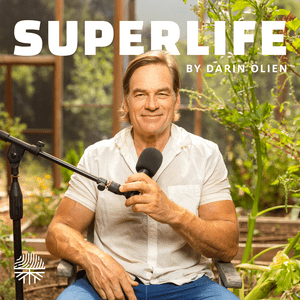
Acerca de SuperLife with Darin Olien
I'm Darin Olien, the "Superfood Hunter."
If you're looking for motivation to take the next step towards a happier, healthier life then you're in the right place.
On this podcast, you'll hear honest conversations with extraordinary people that educate and inspire me. We cover everything from nutrition and mental health to sustainable ways of living.
We also dive into life's Fatal Conveniences™. These are the things that we're doing or consuming in our day-to-day life that may actually be harming us, or the Earth.
Sitio web del podcastEscucha SuperLife with Darin Olien, Luke's ENGLISH Podcast - Learn British English with Luke Thompson y muchos más podcasts de todo el mundo con la aplicación de radio.es
Descarga la app gratuita: radio.es
- Añadir radios y podcasts a favoritos
- Transmisión por Wi-Fi y Bluetooth
- Carplay & Android Auto compatible
- Muchas otras funciones de la app
Descarga la app gratuita: radio.es
- Añadir radios y podcasts a favoritos
- Transmisión por Wi-Fi y Bluetooth
- Carplay & Android Auto compatible
- Muchas otras funciones de la app

SuperLife with Darin Olien
Escanea el código,
Descarga la app,
Escucha.
Descarga la app,
Escucha.
 España