

Escucha gratis este podcast en la aplicación: Descarga gratuita en la App Store
radio.es
Sleep timer
Favoritos
468 episodios
THIS Is What You Need To Worry About With The Rise Of AI
18/09/2026 | 31 minEpisode 400
Should we really be afraid of AI? Many headline statements from the likes of Anthrophic, OpenAI and even the King are raising alarm bells over the threat of AI to humanity. AI companies are even calling to be more highly regulated. But does that mean the threats are worth considering - or are there ulterior motives?
Among the apocalyptic or disastrous ways it could go wrong, there are genuine issues we should be thinking about today. Alignment is one of those - how closely AI aligns with human values and whether it continues to obey us. And the threat of supercharged cyber attacks is another. But is extinction really on the cards?
To discuss the reality of the situation we’re facing, Rowan Hooper and Penny Sarchet are joined by Timothy Revell, Matthew Sparkes and Jacob Aron.
To read more about these stories, visit https://www.newscientist.com/
Image credits:
Sam Altman: TechCrunch, CC BY 2.0 https://creativecommons.org/licenses/by/2.0 via Wikimedia Commons
Mark Zuckerberg: Anthony Quintano from Honolulu, HI, United States, CC BY 2.0 https://creativecommons.org/licenses/by/2.0 via Wikimedia Commons
Learn more about your ad choices. Visit megaphone.fm/adchoicesThe Mystery of Childbirth Is Finally Being Unravelled
16/09/2026 | 23 minEpisode 399
Some aspects of childbirth have remained surprisingly mysterious - and scientists haven’t been able to agree on what actually kicks off the labour process. But they’ve finally worked out what’s going on - and the discovery could turn birth into a much more predictable occasion.
The labour process in humans is much more complex than in other mammals. But researchers have now worked out the driving force that kicks it all off is the immune system - a special type of inflammatory macrophage sending mitochondria to the uterus just before birth.
To explain this new discovery and why it might be game-changing for avoiding pre-term births, Rowan Hooper and Penny Sarchet are joined by Australia reporter Alice Klein.
To read more about these stories, visit https://www.newscientist.com/
Learn more about your ad choices. Visit megaphone.fm/adchoicesAI Just Solved One of the Hardest Problems in Mathematics
11/09/2026 | 32 minEpisode 398
OpenAI says it has just solved one of the hardest problems in mathematics. The Navier-Stokes existence and smoothness problem has been unsolved for more than 200 years. Now AI has cracked it, some claim we’ve finally reached “AGI” - artificial general intelligence.
Navier-Stokes is one of the Millennium Prize Problems, chosen for being famously challenging. And as OpenAI sets its sights on solving more of these problems, what does it mean for the future of mathematics and even for the future of humanity?
This comes as fear mounts over the safety of AI - supercharged by the resignation of a researcher from Anthrophic who believes AI companies are “gambling with our lives.”
So have we really reached AGI? Is this new solution a good thing for humanity? To discuss all of this, Rowan Hooper and Penny Sarchet are joined by Matthew Sparkes and Timothy Revell.
To read more about these stories, visit https://www.newscientist.com/
Learn more about your ad choices. Visit megaphone.fm/adchoicesNew Discovery Reveals the Secret Lives of Denisovans
10/09/2026 | 23 minEpisode 397
The first evidence has been discovered that Denisovans lived in south-west China. This ancient species of human spent over 100,000 years in the region and left behind incredible artefacts that tell us how they lived.
64,000 fragments of bone have been discovered from Bianfu Cave in Yunnan province. And the site tells us a lot about the food they ate and the animals they hunted - including rhinoceroses, hyenas and prime-age deers.
As we discover an increasingly sophisticated culture in this previously mysterious species, what does it teach us about ourselves, and how exceptional Homo sapiens really are?
To discuss the findings, Rowan Hooper and Penny Sarchet are joined by science writer Michael Marshall.
To read more about these stories, visit https://www.newscientist.com/
Image Credits:
Homo longi - Nobu Tamura, CC BY-SA 3.0 https://creativecommons.org/licenses/by-sa/3.0 via Wikimedia Commons
Homo floresiensis - Cicero Moraes, CC BY-SA 4.0 https://creativecommons.org/licenses/by-sa/4.0 via Wikimedia Commons
Neanderthal: Neanderthal-Museum, Mettmann, CC BY-SA 4.0 https://creativecommons.org/licenses/by-sa/4.0 via Wikimedia Commons
Learn more about your ad choices. Visit megaphone.fm/adchoicesThe Nepal Disaster: How Climate Change is Reshaping the World
04/09/2026 | 23 minEpisode 396
A devastating climate disaster has killed at least 1,200 people in Nepal. A mass of ice and rock came crashing down off the Langtang mountain into the valley below. The climate crisis has made events like this much more likely.
This is just one of many retreating glaciers. We’re also on track for a record year of ice-loss in the European alps. As the world is reshaped before our eyes, what does this mean for the planet - and the 1.9 billion people who live downstream of glacier ice mountains?
This all comes as experts predict this year’s Super El Nino event will be the biggest in 1,000 years - plus an admittance from The UN Environment Programme that we will overshoot 1.5 degrees of global warming.
To discuss the tragedy in Nepal and the growing concern in the Alps, Rowan Hooper and Penny Sarchet are joined by Professor of Glaciology Bethan Davies and climate journalist Alec Luhn.
To read more about these stories, visit https://www.newscientist.com/
Image Credit: The aftermath of severe flooding along the Bhotekoshi river in Nuwakot, Nepal, on 28 August Ambir Tolang/JNA/ZUMA Press/Alamy
Learn more about your ad choices. Visit megaphone.fm/adchoices
Más podcasts de Ciencias





Podcasts a la moda de Ciencias
 Ciencia Fresca - Cienciaes.comCiencias, Ciencias naturales, Educación, Tecnología
 Trás los pasos de Santa Hildegarda de BingenCiencias, Ciencias naturales, Cristianismo, Medicina alternativa, Religión y espiritualidad, Salud y forma física
 Ciencia y aparte (by Xataka)Ciencias
 La Radio del SomormujoCiencias
 La aventura de la vidaCiencias
 Unexpected ElementsCiencias
 SolarisArte, Ciencia ficción, Ciencias, Ciencias sociales, Cultura y sociedad, Ficción, Tecnología
 Esta ronda la paga NewtonCiencias, Física
 Universo paraleloCiencias, Ciencias naturales
 Psychiatry & Psychotherapy PodcastCiencias, Medicina, Salud y forma física
 CrowdScienceCiencias
 Making Sense with Sam HarrisCiencias, Cultura y sociedad, Filosofía, Noticias, Política, Religión, Religión y espiritualidad
 The Quanta PodcastCiencias, Ciencias de la vida
 Cruce de cablesCiencias, Cultura y sociedad
 Astrobitácora: astronomía con Álex RiveiroCiencias
 KI verstehenCiencias
 Quilo de Ciencia - Cienciaes.comCiencias, Ciencias naturales, Cultura y sociedad, Diarios personales, Educación, Noticias, Noticias tecnológicas, Tecnología
 Live Like a Girl with Dr. Mindy PelzCiencias, Medicina alternativa, Nutrición, Salud y forma física
- The World, the Universe and UsCiencias, Educación, Noticias
 RAIZ DE 5 - El podcast más hipotenusoCiencias
 NoosferaCiencias
 Ruido de lluvia y truenos para dormirCiencias, Naturaleza
 El bosque habitadoCiencias
 Master Class con Juan Luis ArsuagaCiencias
 EmonthebrainCiencias
 La Terra és planaCiencias
 SternengeschichtenAstronomía, Ciencias, Cultura y sociedad, Educación, Física
 La Tertulia de CómicosCiencias, Humor
 Clau, quiero ser ingenieraCiencias, Educación, Tecnología
Acerca de The World, the Universe and Us
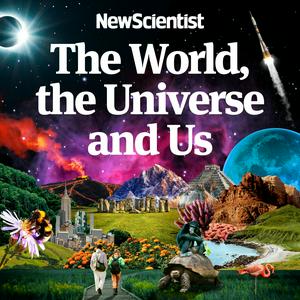
From the evolution of intelligent life, to the mysteries of consciousness; from the threat of the climate crisis to the search for dark matter, The world, the universe and us is your essential weekly dose of science and wonder in an uncertain world. Hosted by journalists Dr Rowan Hooper and Dr Penny Sarchet and joined each week by expert scientists in the field, the show draws on New Scientist’s unparalleled depth of reporting to put the stories that matter into context. Feed your curiosity with the podcast that will restore your sense of optimism and nourish your brain.
For more visit newscientist.com/podcasts
Sitio web del podcastEscucha The World, the Universe and Us, A hombros de gigantes y muchos más podcasts de todo el mundo con la aplicación de radio.es
Descarga la app gratuita: radio.es
- Añadir radios y podcasts a favoritos
- Transmisión por Wi-Fi y Bluetooth
- Carplay & Android Auto compatible
- Muchas otras funciones de la app
Descarga la app gratuita: radio.es
- Añadir radios y podcasts a favoritos
- Transmisión por Wi-Fi y Bluetooth
- Carplay & Android Auto compatible
- Muchas otras funciones de la app

The World, the Universe and Us
Escanea el código,
Descarga la app,
Escucha.
Descarga la app,
Escucha.
The World, the Universe and Us: Podcasts del grupo
 España