EPA's Deregulatory Push: Undermining Climate Rules and Expanding PFAS Exemptions
12/1/2026 | 3 min
Good morning listeners, welcome to our environmental policy briefing. We're starting with a major development that could reshape how the EPA regulates chemicals across America. The Trump administration's Environmental Protection Agency is moving forward with sweeping deregulatory actions in 2026, and they're just getting started.The most significant headline this week involves the EPA's push to rescind the 2009 endangerment finding, which is the scientific foundation underlying federal climate regulations. EPA Administrator Lee Zeldin announced in March that the agency would review thirty-one regulatory actions for possible rollback. According to recent reporting, the agency is finalizing a rule expected in early 2026 that would overturn this endangerment finding, along with rolling back vehicle emission standards that the Biden administration put in place.Here's what this means for listeners. The EPA is planning to delay stricter emission rules for light and medium duty vehicles and reconsider the Clean Trucks Plan that required cuts to nitrogen oxide emissions from heavy duty engines. The agency will keep current 2026 standards in place for another two years, buying time to reconsider those existing standards.Interestingly, not everyone in industry supports this move. According to environmental law experts, the chemical industry generally wants to keep the endangerment finding intact. Many chemical companies disagreed with the original finding but have already incorporated required changes into their processes, so repealing it would create uncertainty and cost them additional compliance headaches.Beyond climate rules, the EPA is tackling other major regulatory changes. The agency proposed broad PFAS reporting exemptions under the Toxic Substances Control Act, introducing industry-requested exemptions while narrowing who must report. There's a catch though—the reporting window is being compressed from six months to just three months beginning sixty days after the final rule takes effect. This means companies with complex supply chains need to prepare immediately.On the chemical front, the EPA announced final risk evaluations for five phthalate chemicals. The agency found unreasonable risks primarily to workers through inhalation during spray applications and manufacturing, but determined that consumer exposure levels do not pose unreasonable risks. This means regulation will focus on workplace protections rather than consumer product restrictions.Additionally, listeners should know that confidential business information claims made under the Toxic Substances Control Act are expiring this year. If your company filed a CBI claim in 2016, it will expire in 2026 unless you reassert and substantiate it. The EPA will begin notifying companies of expiring claims beginning in spring 2026.What should you watch for next? The final rules on the endangerment finding and vehicle emissions standards should arrive in early 2026. If you work in industries affected by these changes or care about environmental policy, now is the time to engage with the regulatory process. Visit the EPA's website to learn more about upcoming rulemakings and public comment opportunities.Thank you for tuning in to this environmental policy briefing. Please subscribe for more updates on how government decisions impact your life and business. This has been a Quiet Please production. For more, check out quietplease dot ai.For more http://www.quietplease.aiGet the best deals https://amzn.to/3ODvOtaThis content was created in partnership and with the help of Artificial Intelligence AI

EPA Rollbacks Threaten Climate Action and Public Health, as Budget Cuts Loom
09/1/2026 | 3 min
The headline this week from the Environmental Protection Agency is its continued push to roll back major climate and air pollution protections, while Congress moves to cut the agency’s budget back to roughly 2012 levels when you factor in inflation, according to reporting from the Center for Biological Diversity and Chemical and Engineering News.Chemical and Engineering News reports that EPA Administrator Lee Zeldin is prioritizing repealing the 2009 “endangerment finding” that says greenhouse gases threaten public health and welfare, the scientific backbone for many federal climate rules. EPA officials say they are reviewing public comments now and aim to move forward in 2026 with a rule that could gut EPA’s authority to regulate climate pollution from cars, trucks, and power plants. A senior EPA air official, Aaron Szabo, has already signaled plans to delay tougher Biden-era vehicle emission standards for cars and heavy-duty trucks, keeping 2026 standards in place longer and giving industry more time.At the same time, an EPA budget bill just passed by Congress would trim the agency’s funding by about 4 percent compared with last year, which environmental advocates say effectively returns EPA to 2012 funding levels once inflation is counted. That means fewer resources for inspections, enforcement, and community protection at exactly the moment when the agency is being asked to reconsider major safeguards on power plants, oil and gas operations, and toxic pollution.For everyday Americans, these moves could mean more soot and smog in the air they breathe and slower action on climate-fueled heatwaves, floods, and wildfires. Businesses that invested early in cleaner technologies may now be competing with companies that can pollute more cheaply if rules are weakened, while heavily regulated industries see short-term cost relief but face long-term legal and policy uncertainty. State and local governments, many of which have set their own climate and air quality goals, may find themselves filling gaps if federal protections retreat, or tangled in court fights over whose rules control. Internationally, efforts to unwind climate regulations and the core endangerment finding risk undercutting U.S. credibility in global climate negotiations.Looking ahead, listeners should watch for EPA’s final decisions on the endangerment finding, vehicle standards, and power plant rules, all expected to move in early to mid-2026, along with how the new budget shapes enforcement on the ground. To engage, listeners can submit comments on EPA proposals through regulations.gov when dockets open, attend local EPA listening sessions and Superfund open houses, and press their elected officials about how these shifts will affect health and climate resilience in their communities.Thanks for tuning in, and don’t forget to subscribe so you don’t miss our next update. This has been a quiet please production, for more check out quiet please dot ai.For more http://www.quietplease.aiGet the best deals https://amzn.to/3ODvOtaThis content was created in partnership and with the help of Artificial Intelligence AI

EPA Postpones Perchlorate Proposal, Tweaks HFC Rules, and Proposes Renewable Fuel Standards
05/1/2026 | 2 min
Welcome to your weekly EPA update, where we cut through the noise to spotlight what's changing our air, water, and world. This week’s top headline: The EPA just postponed its perchlorate drinking water proposal deadline to January 2, 2026, after the longest federal shutdown in history delayed things from November 21, 2025. Perchlorate, that sneaky chemical in rocket fuel, fireworks, and airbags, contaminates water in arid spots like the Southwest—think potential thyroid risks for kids and pregnant women.On regulatory fronts, EPA's tweaking HFC rules under the AIM Act to ease transitions. Higher-GWP equipment made before January 1, 2026, can now install until 2027 for variable refrigerant flow systems, and until 2026 for residential AC—buying time so builders aren't stuck with stranded inventory. Meanwhile, the proposed Renewable Fuel Standards for 2026-2027 slash RIN credits for imported biofuels to half, boosting U.S. energy independence and rural jobs. Total renewable volumes? Aiming for 24.02 billion gallons in 2026, up to 24.46 in 2027. Public comments close August 8, 2025, with final rule by October.These moves hit home differently. Citizens get safer tap water timelines and lower climate pollution from cleaner fuels and refrigerants—EPA's strategic plan eyes GHG cuts through 2026 models. Businesses face adaptation costs but gain domestic biofuel edges; importers take a hit. States and locals prep for WOTUS comment deadlines through January 5, 2026, shaping wetland protections. Globally, HFC phase-downs align with international pacts.EPA Administrator Michael Regan notes, "We're balancing innovation with safeguards." Experts at NRDC pushed the perchlorate delay, stressing the May 2027 final rule.Watch for RFS finalization this fall and WOTUS comments now. Dive deeper at epa.gov, submit input on regulations.gov. Your voice matters—comment today!Thanks for tuning in, listeners—subscribe for more. This has been a Quiet Please production, for more check out quietplease.ai.For more http://www.quietplease.aiGet the best deals https://amzn.to/3ODvOtaThis content was created in partnership and with the help of Artificial Intelligence AI

EPA Rollbacks, New HFC Rules, WOTUS Overhaul - Weekly EPA Update
02/1/2026 | 2 min
Welcome to your weekly EPA update, listeners. The biggest headline this week: EPA Administrator Lee Zeldin just announced a major rollback of the Reactivation Policy, letting idled factories restart without full new permits unless emissions spike, as detailed in his September 18, 2025 memo. This clears decades of red tape for businesses eyeing comebacks.On the regulatory front, EPA proposed tweaking hydrofluorocarbon rules under the 2020 American Innovation Act, raising the global warming potential threshold for cold storage warehouses to 700 starting January 1, 2026, then tightening it again by 2032. They also extended deadlines for lab equipment to 2028 and eased installs for pre-2025 AC systems. Meanwhile, the perchlorate drinking water proposal deadline slipped to today, January 2, 2026, after a government shutdown delay, with final rules due by May 2027. And watch for the WOTUS definition narrowing—public comments close January 5—dropping interstate qualifiers to empower states, per Zeldin's statement: "EPA is delivering on President Trump’s promise... advancing cooperative federalism."These shifts hit hard. American citizens get cleaner air options without stranding fridges, but critics like Sierra Club's Erin Carey warn of weakened water protections risking pollution. Businesses win big—faster restarts and permitting reforms cut timelines, boosting jobs in manufacturing and energy. States gain flexibility on wetlands and haze rules, though local enforcers might tighten up. No big international ripples yet, but HFC changes align with global phase-downs.Key data: Renewable Fuel Standards propose 9.46 billion gallons of advanced biofuel for 2027. PFAS reporting deadline? Pushed to January 11, 2026, for most firms.Citizens, submit WOTUS comments by Monday via epa.gov. Upcoming: NSR preconstruction rule proposal in 2026, power plant GHG repeals early next year.Stay tuned for final rules and budget details at epa.gov. Engage now—your voice shapes this.Thanks for tuning in, listeners—subscribe for more. This has been a Quiet Please production, for more check out quietplease.ai.For more http://www.quietplease.aiGet the best deals https://amzn.to/3ODvOtaThis content was created in partnership and with the help of Artificial Intelligence AI

EPA Rolls Back Major Rules, Deregulation Spree Aims to Boost Energy, Manufacturing
29/12/2025 | 2 min
Welcome to your weekly EPA update, listeners. This week, EPA Administrator Lee Zeldin announced the biggest deregulatory action in U.S. history, launching 31 historic moves to slash red tape on air quality standards, hazardous pollutants, and energy programs, as detailed in the agency's official news release.Under Trump's second term, the EPA is rolling back major rules from the Obama and Biden eras. Key moves include proposing repeal of the 2009 Endangerment Finding on greenhouse gases, which underpinned vehicle and power plant emissions limits—standards that drove corporate average fuel economy up from 23 mpg in 2010 to 40 mpg this year. NZero reports June proposals to scrap carbon capture mandates for power plants, the second-largest U.S. GHG source at 25% of emissions. They're also narrowing Waters of the U.S. protections after December public sessions with the Army, easing rules for farmers and builders, and shifting enforcement to a compliance-first approach per a December OECA memo. Positive notes: $58 million in recycling grants awarded December 16, per Waste Dive, and cleanups like the historic oil removal at Dunsmuir Railyard.For American citizens, this means potentially lower energy bills and reliable power, but critics from EDF warn of risks like prolonged dirty air and formaldehyde cancer threats. Businesses in manufacturing and energy cheer billions in saved compliance costs and revived projects, while environmental groups brace for lawsuits. States gain flexibility on wetlands and haze rules, though some may challenge in court. No big international ripples yet.Zeldin stated, "These actions restore opportunities for American manufacturing and affordable energy for families." Experts note power sector changes could boost grid reliability amid demand surges. Watch 2026 final rules and court fights; vehicle standards face 2026 deadlines.Citizens, comment via regulations.gov on open proposals—your voice shapes this.Next, track WOTUS finals and recycling fund apps. Visit epa.gov for details.Thanks for tuning in, listeners—subscribe for more. This has been a Quiet Please production, for more check out quietplease.ai.For more http://www.quietplease.aiGet the best deals https://amzn.to/3ODvOtaThis content was created in partnership and with the help of Artificial Intelligence AI


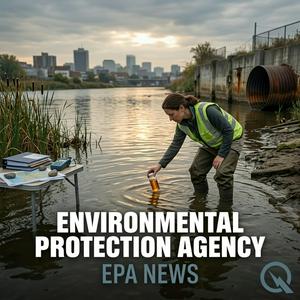
Environmental Protection Agency (EPA) News