
Escucha gratis este podcast en la aplicación: Descarga gratuita en la App Store
radio.es
Sleep timer
Favoritos
95 episodios
Biography Flash: Huberman Lab Essentials Supplements Peptide Scrutiny and New Podcast Appearances
24/10/2026 | 3 minAndrew Huberman Biography Flash a weekly Biography.
Andrew Huberman’s most significant recent development is a new Huberman Lab Essentials episode on supplementation, released October 22. Apple Podcasts describes the roughly 38 minute program as a practical guide to building a supplement routine around individual needs, nutrition, budget, dosing, and cycling. Huberman stresses that sleep, nutrition, and behavior should come before pills, while also discussing supplements marketed for sleep, hormones, focus, and cognitive performance. The episode reinforces his long term public identity as a neuroscience communicator whose influence increasingly reaches into the commercial wellness and performance economy.
On the same day, Huberman promoted the episode on X, calling it a thirty minute, key takeaways only edition. The post drew more than twenty three thousand views or engagements according to the platform listing, providing the clearest verified social media activity in the past few days. There is no reliable evidence in the available reporting of a major announcement, new company launch, or public event involving him in the past twenty four hours.
Huberman also appeared in recent podcast discussions that were republished or highlighted this week. Podcast Notes identifies an October 22 conversation with historian Jared Diamond about leadership, ambition, history, and extraordinary lives. A Spanish report from La Vanguardia covered a recent Aerondight podcast conversation in which Huberman discussed managing worry, sustaining effort, and learning to disconnect. Those appearances broaden his profile beyond laboratory science and supplements, presenting him as a guide to discipline, attention, and personal performance.
The most consequential outside coverage concerns peptides. The Orange County Register, citing KFF Health News reporting, described a listener who said he began using BPC 157 after hearing Huberman discuss peptides. The report also noted that Huberman did not respond to multiple questions and that his website carries a disclaimer saying the podcast is not medical advice. His earlier comments, as quoted by the newspaper, included warnings about possible risks such as tumor growth, but the renewed coverage keeps scrutiny on the gap between scientific discussion, audience interpretation, and commercial sponsorship. Claims that Huberman personally caused harm or endorses unsafe use remain unconfirmed.
For now, the verified picture is of steady content production, continued audience reach, and growing attention to the responsibilities that accompany his health influence. Thank you for listening. Please subscribe so you never miss an update on Andrew Huberman, and search Biography Flash for more great biographies. Thanks for listening. This has been a Quiet Please production.
Get the best deals https://amzn.to/3ODvOtaBiography Flash: Huberman Predicts Brain Tech Revolution and De Extinction Science
10/10/2026 | 3 minAndrew Huberman Biography Flash a weekly Biography.
As of October 10, 2026, Andrew Huberman’s most significant recent activity has been a major expansion of his public profile from health educator into futurist and neurotechnology commentator. According to Apple Podcasts, he appeared October 6 on Invest Like the Best with Patrick O’Shaughnessy for a discussion titled The Frontier of Neurotechnology.
Business Insider reports that Huberman predicted OpenAI, Meta, and Anthropic could eventually become biotech companies because they are pursuing ways to read and write human brain activity without implants. He described that contest as the real artificial intelligence arms race. Benzinga reports that Huberman discussed ultrasound based brain stimulation, personalized artificial intelligence systems that could adjust stimulation to a person’s brain state, and sleep as an early consumer application. He acknowledged that some of these ideas sound like science fiction. Those are Huberman’s predictions, not announced plans by the companies, and no evidence shows that OpenAI, Meta, or Anthropic has adopted his proposed roadmap.
The same appearance also generated attention for a more provocative scenario: gene therapy combined with wearable technology that might allow people to alter motivation. Ground News summarized the discussion as a warning about a potentially unsettling future in which people could directly modify their brains. This remains speculative and should not be presented as an imminent medical development.
On October 5, Huberman released a Huberman Lab episode with geneticist Beth Shapiro about de extinction, woolly mammoths, Neanderthals, synthetic biology, gene drives, conservation, and the ethics of restoring extinct species. His Huberman Lab account promoted the episode on X, noting paid partnerships and sponsors including Eight Sleep, AG1, Function, and Joovv. The episode is significant because it places Huberman at the intersection of neuroscience, genetics, ecological engineering, and public debate over human intervention in nature.
He also remains commercially active around his book Protocols, an Operating Manual for the Human Body. A recent Substack audit by Scott Carney described the book as a bestseller and noted Huberman’s advisory or compensated relationships with AG1, Eight Sleep, Function Health, Reveri, and Whoop. Those claims come from Carney and should be treated as reported, not independently confirmed here.
No verified major headline from the past 24 hours was found beyond continued coverage of his neurotechnology predictions. There are no verified reports of a new public controversy, corporate launch, or personal announcement in that period.
Thank you for listening. Please subscribe so you never miss an update on Andrew Huberman, and search Biography Flash for more great biographies.
Thanks for listening. This has been a Quiet Please production.
Get the best deals https://amzn.to/3ODvOtaBiography Flash: Andrew Huberman's Wellness Empire, Book Rankings and the Biohacking Debate
03/10/2026 | 2 minAndrew Huberman Biography Flash a weekly Biography.
As of October 3, 2026, Andrew Huberman’s most significant recent activity is continued expansion of his public health and performance brand. His podcast released an Essentials episode on October 1 focused on tools for improving focus and concentration. Apple Podcasts lists the episode as newly published, while summaries describe Huberman discussing sleep, caffeine, meditation, work intervals, cold exposure, and several supplements. Those supplement recommendations are his stated protocol, not proof that each intervention works for everyone.
Huberman is also scheduled to appear at the 2026 Eudēmonia wellness summit in West Palm Beach, alongside Tom Brady and Rich Roll. Florida Weekly describes the event as a major gathering focused on science, fitness, medicine, technology, and longevity. The appearance is potentially important to his biography because it places him firmly within the mainstream wellness and performance circuit, rather than limiting his profile to podcasting and academia.
His book, Protocols: An Operating Manual for the Human Body, remains commercially visible. The Los Angeles Times placed it fifth on its weekly best seller list, and Alta California listed it at number five. Another October 3 report said the book had fallen to second in one nonfiction ranking after briefly leading the category. These rankings come from different lists, so they should not be treated as a single universal sales position. Still, they indicate sustained commercial influence several years into Huberman’s expansion from neuroscientist to author and media entrepreneur.
Recent coverage has also kept Huberman at the center of debate over testosterone optimization and what critics call male biohacking culture. The Spectator portrayed him as a symbolic leader of that movement and cited an estimate that the Huberman Lab generated about 18 million dollars over the past year. That revenue figure was not independently confirmed in the available reporting and should be treated as an estimate, not an audited fact.
In the past 24 hours, no major verified scandal, lawsuit, institutional announcement, or confirmed personal disclosure surfaced in the available reliable coverage. Social media activity was not independently verifiable from the material reviewed. Thank you for listening. Please subscribe so you never miss an update on Andrew Huberman, and search Biography Flash for more great biographies. Thanks for listening. This has been a Quiet Please production.
Get the best deals https://amzn.to/3ODvOtaBiography Flash: Andrew Hubermans Bestseller Breakthrough and Radio City Sellout
26/09/2026 | 2 minAndrew Huberman Biography Flash a weekly Biography.
As of September 26, the biggest development in Andrew Huberman’s story is the launch of his first major book, Protocols: An Operating Manual for the Human Body, published September 15 by Simon Element. WTOP reports that the book has reached number one on the latest hardcover nonfiction best seller list, giving Huberman a powerful new platform beyond his podcast and Stanford reputation.
That commercial success is being reinforced by a high-profile live tour. The New York Post reports that nearly 6,000 supporters attended Huberman Lab Live at Radio City Music Hall in New York last week, where fans photographed the new book and treated the neuroscientist like a wellness celebrity. The scale of that audience may prove biographically significant: Huberman is no longer simply a popular science podcaster, but a touring public figure with a devoted fan base.
His media schedule has also expanded. According to BroadwayWorld and HBO program listings, Huberman appeared on Real Time with Bill Maher on September 25 for a one-on-one interview focused on health, science, and his new book. The appearance places him in a broader political and cultural conversation, although the available reports do not establish what positions or controversies were discussed in detail.
Men’s Health published a substantial interview on September 20 in which Huberman described his exercise routine and addressed his personal reputation. The magazine says he acknowledged that he has not always made the best choices in relationships and partners, and that his greatest error was failing to be open about his imperfections. Those remarks appear to be his clearest recent public response to the relationship allegations reported by New York magazine in 2024. Claims circulating on social media beyond those published interviews remain unverified and should not be treated as established fact.
Professionally, Huberman continues to build the Huberman Lab media business. On September 21, his official account promoted a new episode with Harvard physician Chris Thompson about gut health, weight loss, digestion, and GLP-1 drugs. Apple Podcasts also lists a September 24 episode on strength and muscle-building protocols, indicating that regular production continues during the book tour.
Men’s Health additionally highlighted Huberman’s preference for belt squats and his weekly plan of three strength sessions, three cardio workouts, daily walking, and mobility work. Thank you for listening. Please subscribe so you never miss an update on Andrew Huberman, and search Biography Flash for more great biographies.
Thanks for listening. This has been a Quiet Please production.
Get the best deals https://amzn.to/3ODvOtaBiography Flash: Andrew Huberman Goes Mainstream With Protocols Book Tour and Media Blitz
19/09/2026 | 4 minAndrew Huberman Biography Flash a weekly Biography.
In the past few days, Andrew Huberman has been in a full‑tilt, career‑defining media blitz that is rapidly becoming a major chapter in his biography. The centerpiece is the launch of his new, 540‑page book **“Protocols: An Operating Manual for the Human Body,”** which multiple outlets describe as a consolidation of his sleep, fitness, stress, nutrition, light, learning, and personal growth tools into a single operating manual for everyday life. Mens Health reports that the book dropped on September 15 and anchors a small but high‑impact live tour, including a marquee date at Radio City Music Hall in New York City, signaling his evolution from lab neuroscientist and podcaster into mainstream performance and wellness author with arena‑level draw. Slate, in a long review, calls him a “controversial titan of wellness” and dissects the maddening ambition of the 540‑page tome, suggesting that this book will be a touchstone in both his influence and the debates around it.
Television has also turned him into a familiar face this week. CBS Mornings featured Huberman in a segment on optimizing life, framing him simultaneously as a Stanford neuroscientist and the public educator behind the Huberman Lab podcast, and spotlighting “Protocols” as a practical toolkit for reshaping sleep, work, exercise, and stress management. On The Tonight Show Starring Jimmy Fallon, as reported by BroadwayWorld, Huberman sat down with Jimmy to discuss the book and demonstrate an eye‑movement exercise he says can improve sleep, weaving in broader tips on neuroplasticity and lifelong brain health. On X, Huberman publicly thanked Fallon and the show for hosting him to talk about learning, neuroplasticity, and his new book, cementing the appearance as part science outreach, part brand‑building.
On the podcast front, he has been equally visible. The Joe Rogan Experience released episode #2553 with Andrew Huberman on September 14, an almost three‑hour conversation in which he digs into “An Operating Manual for the Human Body,” stress management, sleep, and deliberate challenge as foundations for mental resilience and impulse control, according to Podscripts and related episode summaries. At the same time, his own Huberman Lab feed has pushed out a guest episode with Dr. Arthur Brooks titled “The Art of True Happiness,” and an “Essentials” episode with Dr. Andy Galpin on assessing and improving all aspects of fitness, reinforcing his dual identity as both host and guest in the broader performance‑science ecosystem.
Social media chatter around Huberman has been loud and flattering. On X, Arthur Brooks called their conversation on Huberman Lab one of his favorites ever, while chef and fitness personality Dan Churchill joked he was “about to add 10 points” to his IQ by attending Huberman’s show in New York City, hinting at a live event that aligns with the reported book‑tour dates. These posts, combined with trending tags around his Fallon spot and Rogan episode, suggest his public profile is surging in real time.
There are ongoing online debates about the scientific rigor and commercialization of his advice, especially in longform critiques of “Protocols.” Those discussions, highlighted by outlets like Slate, remain opinion‑driven and at times speculative, but they underscore that Huberman is no longer just a niche science communicator; he is now a polarizing, high‑visibility figure whose ideas are shaping mainstream conversations about health, performance, and longevity.
Thanks for being here for this Andrew Huberman Biography Flash. To never miss an update on Andrew Huberman, be sure to subscribe, and search the term Biography Flash for more great biographies. Thanks for listening. This has been a Quiet Please production.
Get the best deals https://amzn.to/3ODvOta
Más podcasts de Anime y manga




Podcasts a la moda de Anime y manga
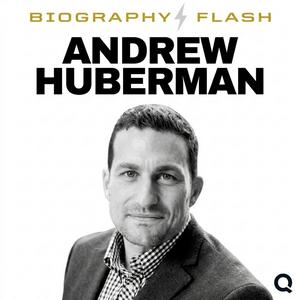
Acerca de Andrew Huberman - Biography Flash
Andrew Huberman is one of the most influential neuroscientists of his generation, known for his groundbreaking research at Stanford University School of Medicine and his massively popular Huberman Lab podcast. This podcast delivers a comprehensive biography of Andrew Huberman alongside regular updates covering the latest news, events, and developments in his career, giving you the complete picture of the man behind the science.
Born on September 26, 1975, to Argentine physicist Bernardo Huberman, Andrew Huberman overcame early academic struggles to become a passionate student of the brain and human behavior. He earned his B.A. in psychology from UC Santa Barbara, a master's degree from UC Berkeley, and his Ph.D. in neuroscience from UC Davis, where his dissertation won the prestigious Allan G. Marr Prize. From there, he launched an extraordinary research career through postdoctoral work at Stanford under renowned neuroscientist Ben Barres, a professorship at UC San Diego, and ultimately a tenured associate professor position at Stanford University School of Medicine, where he directs the Huberman Lab.
Huberman's research spans some of the most compelling frontiers in neuroscience, including visual system development and repair, neural plasticity, neural regeneration for blinding diseases like glaucoma, stress resilience, circadian rhythms, and non-pharmacological interventions for anxiety disorders. His lab made headlines in 2016 for using virtual reality and light patterns to stimulate the regrowth of retinal neurons, and his published work appears in top-tier journals such as Nature, Cell, Science, and Neuron. His contributions have earned him the Cogan Award for vision science along with Pew and McKnight Scholar awards.
Beyond the laboratory, Huberman has become a cultural phenomenon through his Huberman Lab podcast, where he translates complex neuroscience into actionable, science-based protocols for health, performance, sleep, stress management, and more. His ability to bridge the gap between academic research and everyday life has made him one of the most trusted voices in health and wellness.
Whether you are a longtime follower of Huberman's work or just discovering his contributions to neuroscience and public health education, this show gives you a deep dive into his life story along with timely updates on his latest research, podcast episodes, public appearances, and the news that surrounds one of science's most prominent public figures. Subscribe now to stay informed on everything Andrew Huberman.
For more content like this, visit QuietPlease.ai
This content was created in partnership and with the help of Artificial Intelligence AI.
Sitio web del podcastEscucha Andrew Huberman - Biography Flash, Yokai Legends y muchos más podcasts de todo el mundo con la aplicación de radio.es
Descarga la app gratuita: radio.es
- Añadir radios y podcasts a favoritos
- Transmisión por Wi-Fi y Bluetooth
- Carplay & Android Auto compatible
- Muchas otras funciones de la app
Descarga la app gratuita: radio.es
- Añadir radios y podcasts a favoritos
- Transmisión por Wi-Fi y Bluetooth
- Carplay & Android Auto compatible
- Muchas otras funciones de la app
Andrew Huberman - Biography Flash
Escanea el código,
Descarga la app,
Escucha.
Descarga la app,
Escucha.
Andrew Huberman - Biography Flash: Podcasts del grupo
 España