
Escucha gratis este podcast en la aplicación: Descarga gratuita en la App Store
radio.es
Sleep timer
Favoritos
11 episodios
At the Winchester Mystery House, ghosts are just the beginning (with Walter Magnuson)
27/10/2026 | 48 minInside the Winchester Mystery House in San Jose, it is easy to get lost. The 160-room mansion's notorious maze-like design features doors and stairs that seemingly go nowhere, cabinets that are actually windows, and windows that receive no sunlight.
Since becoming a tourist attraction in 1923, the estate's labyrinthine layout has earned it an eerie reputation, drawing visitors eager to learn about the ghosts that may have haunted its owner, Sarah Winchester. But even if you are not interested in ghost stories, you will still get a lot out of your visit.
Executive Director Walter Magnuson notes that many first-time guests arrive expecting a dilapidated roadside attraction, but are instead met with architectural beauty and exquisite craftsmanship. However, he makes no apologies for also telling visitors about the legends and lore.
"Who am I to say my interests are more highbrow and acceptable than someone who is truly fascinated by the paranormal?" he asks.
Today on Call 'Em Like Museum, Walter talks about the line between legend and history, why he feels unfairly slighted by others in the museum world, and everything the house does differently around Halloween. Plus: Why the scariest part of your tour may actually be the sound of an earthquake.
Full transcript of this episode
Subscribe to the newsletter
This episode was hosted, produced, and edited by Eric Johnson from LightningPod
Chapters
(00:00) - Introduction: The Winchester Mystery House in San Jose
(02:25) - Walter Magnuson's First Museums
(07:12) - Separating Fact from Legend at a Haunted Historic House
(12:07) - Who Was Sarah Winchester? Her Story, Reframed
(14:29) - Sarah Winchester's Philanthropy, Workers, and Artifacts
(20:47) - How the Winchester Mystery House Tour Is Structured
(22:10) - Recreating the 1906 San Francisco Earthquake
(25:03) - Halloween at the Winchester Mystery House
(28:16) - In Defense of Paranormal and Ghost-Hunting Fans
(33:47) - Why Getting Lost in the House Is Part of Staff Training
(35:08) - Visitor Reactions and Why House Museums Are Like David Bowie's Music
(38:29) - Walter's Favorite Small Details in the Mansion
(42:14) - Museum Inspiration and Future Goals
Music: www.purple-planet.com
Images:
The Met
American Museum of Natural History
Unsolved Mysteries Host Robert Stack
William Wirt Winchester Hospital/Winchester Center for Lung Disease
Bodie, CA
Alcatraz
Graceland Living Room
Graceland Pool Table
Meow WolfHauntings, astronauts, and warplanes on the USS Hornet (with Laura Fies)
20/10/2026 | 48 min"I consider ghost stories the clickbait of history," says Laura Fies, Executive Director of the USS Hornet Museum. While supernatural tales are a fun thrill for visitors, they also serve as a powerful accessory to historical education.
"We will teach them history... We'll inject it somehow and they'll walk away knowing something more," Laura explains. "And if we have to wrap it into a ghost story, so be it."
As a premier destination for history buffs, tourists, and paranormal investigators alike, the USS Hornet offers something for everybody: Spooky supernatural tours, massive military aircraft, carefully preserved World War II uniforms, and fascinating wartime artifacts—including the crew's original recipe for baking 7,000 donuts at sea.
Today on Call 'Em Like Museum, Laura discusses the unique challenges of running a “midsize museum in a big museum body.” She explains how the Hornet’s exhibits successfully put visitors into the mindset of ordinary enlisted men during World War II, and highlights the crucial role the legendary ship played in recovering astronauts during the Apollo 11 and 12 space missions.
Full transcript of this episode
Subscribe to the newsletter
This episode was hosted, produced, and edited by Eric Johnson from LightningPod
Chapters
(00:00) - Introduction
(04:49) - Boarding the USS Hornet Museum
(08:55) - The Apollo 11 mobile quarantine facility
(11:00) - Daily life for a WWII sailor
(15:10) - Why the USS Hornet is considered haunted
(24:16) - Maintaining an 894-foot aircraft carrier
(34:39) - Operating the museum without federal funding
(41:11) - Baking 7,000 donuts during battle stations
(44:38) - Stealing ideas from other museums
Music: www.purple-planet.com
Images:
Museum of Ice Cream
Exploratorium
Charles Schulz Museum
NASA Snoopy PosterEveryday life & afterlife in ancient Egypt (with Renée Dreyfus)
13/10/2026 | 42 minIf you learned about ancient Egypt in school, you likely heard a lot about pharaohs, tombs, and elaborate death rituals. A new exhibition at the de Young Museum juxtaposes this familiar royal history with the lives and afterlives of ordinary citizens. Here, you'll find golden jewelry and shining sarcophagi, but also everyday objects you have likely never seen before: a baby's rattle, a stone headrest, and a jar for cured meat.
"We are learning so much more about how people lived who were not royalty," says Renée Dreyfus, the curator in charge of ancient art at Fine Arts Museums of San Francisco.
Renée oversaw the American debut of "Treasures of the Pharaohs," which expands our understanding of ancient Egyptian culture, fueled by archaeologist Zahi Hawass's recent excavation of the Golden City near Luxor.
Today on Call 'Em Like Museum, we talk about how ordinary people lived, worked, and prepared for an afterlife in ancient Egypt; Renée's collaborative work with global institutions like the Egyptian Museum in Cairo and the Luxor Museum; and what she has learned during her remarkable 50 years working at FAMSF. Plus: Why the most interesting object in the whole exhibition might just be a wooden chair.
Full transcript of this episode
Subscribe to the newsletter
This episode was hosted, produced, and edited by Eric Johnson from LightningPod
Chapters
(00:00) - Introduction
(04:07) - What museums means to Renée
(07:02) - Misconceptions about Ancient Egypt
(13:37) - The Golden City & regular people
(22:55) - Renée's favorite object in the exhibition
(31:46) - Curating King Tut 30 years apart
(37:34) - The Etruscans exhibit
(40:29) - What to buy in a museum gift shop
Music: www.purple-planet.com
Images:
Several images courtesy Fine Arts Museums of San Francisco
The de Young Museum
The Legion of Honor
Vincent Price
Brooklyn Museum
The Golden City of Aten
Amenhotep III
Zahi Hawass
Sitamun
Videos:
Video from Treasures of the Pharaohs, courtesy of Fine Arts Museums of San FranciscoHow do we actually make museums more diverse? (with Peggy Levitt)
06/10/2026 | 47 minGood museums are centers of art, culture, and education. But the richest and most famous museums are clustered in North America and Europe, and that matters more than you might realize.
Sociologist and Wellesley College professor Peggy Levitt describes herself as a decenterer for just that reason. In her books "Artifacts and Allegiances" and "Move Over Mona Lisa," she has explored how art has been shaped by colonialism, globalization and inequality.
In "Move Over Mona Lisa," Peggy asks what it might take to decenter this world. Historically, she explains, many well-intentioned museums have diversified their collection by invited artists from the Global South to relocate to Paris, London, or New York. But the center has not moved.
"There are people that are looking for a harder reform," Peggy says. "So they are happy to take less critical acclaim, less financial acclaim, if they can create their own institutions, their own networks of circulation, their own nodes of activity that don't rely on North America or Europe for permission or facilitation."
Today on Call 'Em Like Museum, we talk about how museums can represent the whole world more fairly; whether artists in the Global South should entirely opt out of the existing systems; and the importance of "having a spine" when your museum comes under scrutiny from donors & politicians.
Full transcript of this episode
Subscribe to the newsletter
This episode was hosted, produced, and edited by Eric Johnson from LightningPod
Chapters
(00:00) - Introduction
(04:11) - Museums and Nation Building
(13:53) - Culture Wars at the Smithsonian
(15:32) - How to Read Power in Museum Spaces
(21:11) - Globalization, Colonialism, and Immigration
(25:53) - Who Drives Change in Museums?
(30:37) - Move Over, Mona Lisa: Decentering Art
(36:49) - Opting Out of Traditional Centers of Power
(40:41) - Standing Up to Museum Donors
(42:38) - Gift Shops and Favorite Museums
Music: www.purple-planet.com
Peggy's Books:
Artifacts and Allegiances: How Museums Put the Nation and the World on Display
Move Over, Mona Lisa: Reimagining What We Read, Look At, and Learn
Images:
Met Christmas Tree
Danish Vikings
Museum of Islamic Art
National Museum of Singapore
Smithsonian National Museum of American History
Musée nationale de l'histoire de l'immigrationWhat's inside that fancy old house? (with Woody LaBounty)
29/09/2026 | 46 minThe Haas-Lilienthal House is one of San Francisco’s most beautiful architectural landmarks, a gorgeous Queen Anne Victorian that stands out amid a modern landscape of grocery stores and car dealerships. Built in the 1880s in the Pacific Heights neighborhood, this beautifully preserved home offers a unique glimpse into the city's 19th-century history.
While many historic house museums are dedicated to diplomats or the incredibly wealthy, original inhabitants William and Bertha Haas were upper-middle-class merchants moving up in the world. As San Francisco Heritage CEO Woody LaBounty explains, their home's location was chosen carefully to be near the true locus of power just one block over on Van Ness Avenue, which was then a showplace boulevard of massive, elaborate estates.
Today on Call ‘Em Like Museum, Woody talks about why the Haas-Lilienthal House is now the headquarters of SF Heritage and how the organization uses it to tell the city’s story. We also discuss what makes this house museum different from so many others, why it’s so important to preserve historic architecture, and why his favorite room in the house is the bathroom.
Visit the Haas-Lilienthal House: https://www.haas-lilienthalhouse.org/
The Halloween Experience, House of Weird: https://www.haas-lilienthalhouse.org/halloween
Full transcript of this episode
Subscribe to the newsletter
This episode was hosted, produced, and edited by Eric Johnson from LightningPod
Chapters
Music: www.purple-planet.com
Images:
House exterior
The Ashe-Hobart Residence
Residence of Mr. Charles Holbrook
Claus Spreckel's residence (which also survived the fire!)
1906 firefighters
The burning of the Mission District
The dining room chandelier
The house in 1975
The dining room
Golden Gate Park, c. 1925
De Young Museum, 1921
San Francisco burning
The Haas-Lilienthal House entrance
The bathroom
100 McAllister Street in the 1930s
Castro Camera
Queer Arts Featured
Salvador Dalí Museum
Salvador Dalí, 1939
Más podcasts de Arte









Podcasts a la moda de Arte




















Acerca de Call 'Em Like Museum with Eric Johnson
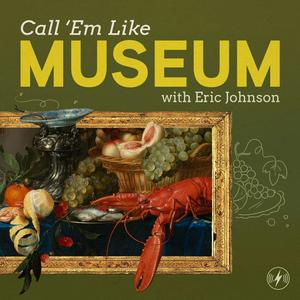
Call 'Em Like Museum is a weekly podcast exploring how museums really work, and why we love them. Host Eric Johnson talks with museum directors, curators, experts, and passionate fans about what drives them, from homegrown passion projects to world-famous institutions. Each episode digs into museum curation, exhibit design, and the visitor experience — plus the essential question: What's actually worth buying in the gift shop? Season One spotlights museums in the San Francisco Bay Area, including the Walt Disney Family Museum, the de Young Museum, and the Winchester Mystery House.
Sitio web del podcastEscucha Call 'Em Like Museum with Eric Johnson, La Previa y muchos más podcasts de todo el mundo con la aplicación de radio.es
Descarga la app gratuita: radio.es
- Añadir radios y podcasts a favoritos
- Transmisión por Wi-Fi y Bluetooth
- Carplay & Android Auto compatible
- Muchas otras funciones de la app
Descarga la app gratuita: radio.es
- Añadir radios y podcasts a favoritos
- Transmisión por Wi-Fi y Bluetooth
- Carplay & Android Auto compatible
- Muchas otras funciones de la app
Call 'Em Like Museum with Eric Johnson
Escanea el código,
Descarga la app,
Escucha.
Descarga la app,
Escucha.
Call 'Em Like Museum with Eric Johnson: Podcasts del grupo
 España

