

Escucha gratis este podcast en la aplicación: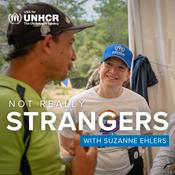 Descarga gratuita en la App Store
radio.es
Sleep timer
Favoritos
18 episodios
What Does it Mean to be a Stranger?
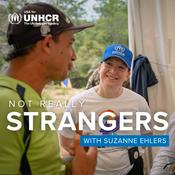
11/06/2026 | 19 minIn this special episode, host Suzanne Ehlers revisits one of Not Really Strangers' most enduring questions: what does the word stranger mean to you? Drawing from each conversation across the past two seasons, you will hear a collage-style episode featuring artists, advocates, business leaders, and more — each of them a refugee, the child of a refugee, or someone who has felt called to work alongside refugees. Together, their voices explore how the idea of a stranger shapes the way we move through the world, and what becomes possible when we choose to close that distance.
If this episode sparked something for you, we invite you to go back and listen to the full conversations from both seasons. Then, if you want to be part of building a world where we aren't really strangers, please consider making a donation to USA for UNHCR at www.unrefugees.org. Finally, if you enjoyed this episode, taking a few minutes to leave a review helps these conversations reach more listeners — and that matters more than you might think.
Resources:
Podcast show notes
Donate now
Follow USA for UNHCR on Instagram
Connect with Suzanne on LinkedInHow Emma’s Torch is Building Community, One Kitchen at a Time
04/06/2026 | 41 minRecorded on location at Emma's Torch — a restaurant and culinary training center for refugees in Brooklyn, NY with locations in the Washington, DC metropolitan area — Suzanne sits down with staff members Kira O'Brien and Alexander Harris and alumnus Giorgi Tabukashvili to explore what home, belonging, and hospitality mean when displacement is part of the story. Now in its tenth year, Emma's Torch runs an 11-week, fully paid culinary training program for refugees, asylees, and other newcomers. Giorgi shares how the program helped him find community when he was new to the U.S after fleeing his home country of Georgia, and how it propelled him in his career as a restaurant manager. Kira, a lifelong New Yorker, shares how living in New York City on 9/11 inspired her to advocate for refugee communities, and “Chef Alex,” a self-described “Jersey Boy” who leads the Emma’s Torch culinary training program in New York, offers a window into how the organization prepares its students to thrive in the restaurant business. At the end of the episode, Kira gives all of us the same “extra credit assignment” she gives her graduate students: to dine at a local restaurant owned by a family whose ethnic background is different from our own. Because, as this entire conversation illustrates, sharing a meal is how strangers become friends.
Topics Discussed:
What home means when it is no longer a place — across languages and experiences of displacement
Emma's Torch's mission: refugee empowerment through culinary education
The 11-week program model: classroom training, the EEE framework, and live cafe operations
Culinary skills as a pathway to long-term employment including recipe literacy, language acquisition, and consistency under pressure
Job retention and wage growth as program success metrics, not just placement
Giorgi's journey: leaving Georgia, crossing through Mexico, arriving with no English or network
How Emma's Torch graduates become mentors and trainers for the next cohort
The hospitality industry as a vehicle for welcoming new Americans
"We are strangers even to ourselves" — on self-discovery and belonging
Episode Resources:
Emma’s Torch website
Cobble Hill | Daily Provisions
Artha Rini Indonesian Restaurant in Kensington, MD
Resources:
Podcast show notes
Donate now
Follow USA for UNHCR on Instagram
Connect with Suzanne on LinkedIn“It’s a Power Question”: On Wakanda, Funding Change, and Compassion Across Oceans with Global Leader Ada Williams Prince
28/05/2026 | 31 minIn this episode of Not Really Strangers, host Suzanne Ehlers sits down with global leader and major sci-fi fan Ada Williams Prince to discuss how her career spanning multiple continents has shaped the way she thinks about the best way to fund social change. Ada shares how she first came to feel a personal connection to the issue of forced displacement and why it’s not just a humanitarian crisis – it is also a political crisis, a gender crisis, and a climate crisis. Ada also makes a compelling case for what she calls a “liberation practice”: designing investment strategies not in boardrooms but by and with the communities most affected on the frontlines of a crisis. Threaded throughout this episode is a meditation on power, and how people having power over systems is what creates lasting change.
Topics Discussed:
Ada’s time working as an emergency program manager in Aceh, Indonesia after the 2004 tsunami and the reminder that compassion crosses oceans, and the visceral connection between forced migration stories.
Understanding that forced displacement is never just a humanitarian crisis but a political crisis, a gender crisis, a climate crisis, and a failure of systems.
The centering of women and children in displacement narratives: chronic underfunding, the dangers of defaulting to male-centered imagery, and the specific vulnerabilities that women and girls face inside protracted displacement.
Reframing philanthropy as a liberation practice where we have to shape the investment strategy itself; not just funding change, but changing who gets to define what change is.
Meaningful examples of progress within the humanitarian aid system (water placement in South Sudan camps, lights on paths to latrines in Guinea) and the question of what the transformational next move looks like.
Who gets portrayed as a worthy recipient of aid, whose suffering is made legible, and who gets to construct those stories.
How strangeness/otherness is being weaponized and entire populations are made to feel like strangers in countries they built
Episode Resources
Refugees International
Women’s Refugee Commission
Women and Girls of Color Design Council
Resilio Fund
Resources:
Podcast show notes
Donate now
Follow USA for UNHCR on Instagram
Connect with Suzanne on LinkedInBuilding Better Futures for Refugees: The Power of Education
21/05/2026 | 30 minIn this episode of Not Really Strangers, Suzanne Ehlers sits down with two UNHCR DAFI scholarship recipients and leaders of the Tertiary Refugee Student Network (TRSN) — Monicah Malith, a law graduate from South Sudan now completing her Advocates Training Program in Nairobi, and Krista Rivas, a Nicaraguan architecture and international relations student finishing her final semester in Mexico City. Together, they explore what home means when you've been displaced, the unexpected ways education equalizes and amplifies, and what they want people who've never met a refugee to understand about our shared humanity. The episode also shines a light on the practical advocacy both are doing: Monicah coaching new DAFI applicants on how to connect their story to their scholarship application, and Krista and TRSN building a centralized website and English-language YouTube channel for refugees in Mexico navigating higher education without a scholarship. Both guests reflect honestly on self-doubt alongside pride — Monicah on walking into her first law orientation in a suit and feeling out of place; Krista on managing social anxiety before a high-stakes internship interview. And both return to the same conviction: that education gave them a voice they intend to use for others still on the path behind them.
Topics:
What "home" means after displacement for Monicah and Krista
The DAFI (the Albert Einstein German Academic Refugee Initiative) scholarship experience and current educational journeys
Monicah's election as first international student president at the University of Nairobi
Krista's hospital design thesis and internship news
The funding gap: no new DAFI scholarships for Mexico in 2025, and Building Better Futures
What refugees and non-refugees share — empathy, migration, and adapting to new places
Pride, self-doubt, and being the first in your family to graduate
What it means to be a "stranger" to both women and how you stop being one
Episode Resources:
Building Better Futures — Watch the campaign video featuring Monicah and Krista
DAFI Scholarship Program
Tertiary Refugee Student Network (TRSN)
Resources:
Podcast show notes
Donate now
Follow USA for UNHCR on Instagram
Connect with Suzanne on LinkedInGrit, Gathering and Going for It: Maryam Banikarim on Living Life Wherever You Find Yourself
14/05/2026 | 39 minIn this episode of Not Really Strangers, host Suzanne Ehlers sits down with Maryam Banikarim, an Emmy Award-winning storyteller, community builder, and host of The Messy Parts podcast, for a conversation that moves from the streets of Chelsea to the streets of Tehran, and back again. Maryam, who fled Iran as a child and arrived in the United States in the middle of the hostage crisis, reflects on what it means to build a sense of home when home is not a fixed place. She shares how New York City became the city where she found her voice, raised her family, and began setting the longest table in the neighborhood. She also opens up about the experience of cultural estrangement and offers hard-won wisdom for young people who have had to flee — joining, doing, and refusing to wait to be invited. Throughout, she returns again and again to the idea that belonging is not something that happens to you, but rather something you build, one long table at a time.
Topics Discussed:
The concept of home as a visceral feeling, not a fixed geography
What it means to be a stranger and conversely, to be welcomed
Growing up displaced: Maryam's experience fleeing Iran as a child
"Cultural estrangement" and the longing that comes with forced departure
Building community in New York City: NYCNext and The Longest Table
The role of the private sector in supporting displaced communities
Advice for young people who have had to flee their home countries
How displacement can be a driver of innovation and resilience
Returning to Iran in 1993 — and finding her childhood bedroom frozen in time
What it means to pull up the piano bench and make room for one more
Episode Resources:
The Longest Table
Maryam’s Columbia Commencement Address
Prep for Prep
Resources:
Podcast show notes
Donate now
Follow USA for UNHCR on Instagram
Connect with Suzanne on LinkedIn
Más podcasts de Cultura y sociedad
 ROCA PROJECTCultura y sociedad
 WORLDCASTCultura y sociedad
 Documentales TV -Historia y FicciónCultura y sociedad, Documental, Historia
 Equipo de investigaciónCultura y sociedad, Documental
 El FaroCultura y sociedad
 Yo documentalCultura y sociedad, Historia
 CrimsCultura y sociedad, True crime
 La Fórmula Del Éxito con Uri SabatCultura y sociedad
 LO QUE TÚ DIGAS con Alex FidalgoCultura y sociedad
 The Wild ProjectCultura y sociedad, Humor, Noticias, Noticias de entretenimiento
Podcasts a la moda de Cultura y sociedad
 La Rueda del MisterioCultura y sociedad, Documental
 Benetan zabiz?Cultura y sociedad
 Tor, tretze cases i tres mortsCultura y sociedad, True crime
 HODINKEE PodcastsArte, Cultura y sociedad, Ocio
 Filosofía en la RedCultura y sociedad, Filosofía
 Gent de MerdaCultura y sociedad
 MISTERIO OVNI TERROR Y PARANORMALCultura y sociedad, Documental
 Entrevistas El DebateCine y Televisión, Cultura y sociedad, Documental, Entrevistas de cine, Entrevistas musicales, Humor, Los grandes de la comedia, Música
 Protagonistas de lo InsólitoCultura y sociedad, Documental
 Malcolm Gladwell, Revisionist History: Special EventCultura y sociedad
 CreadaCultura y sociedad, Relaciones
 Terror: Historias RealesArte, Cultura y sociedad, Ocio
 Who? WeeklyCultura y sociedad, Humor, Noticias, Noticias de entretenimiento
 Chicks in the OfficeCultura y sociedad
 Project UnabomCultura y sociedad, Historia, True crime
 El divino desvánCultura y sociedad, Documental
 Love Life With Matthew HusseyCultura y sociedad, Educación, Relaciones, Superación personal
 heretics. | andrew goldCultura y sociedad, Documental
Acerca de Not Really Strangers
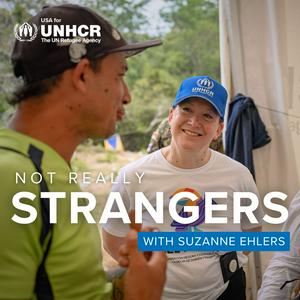
Discover just how connected the refugee experience is to our everyday lives, and to the social issues that matter to us most. Join host Suzanne Ehlers, Executive Director and CEO of USA for UNHCR, the UN refugee agency, as she and her eclectic guests share personal stories and frontline insights. We’re more connected than we may think.
Sitio web del podcastEscucha Not Really Strangers, ROCA PROJECT y muchos más podcasts de todo el mundo con la aplicación de radio.es
Descarga la app gratuita: radio.es
- Añadir radios y podcasts a favoritos
- Transmisión por Wi-Fi y Bluetooth
- Carplay & Android Auto compatible
- Muchas otras funciones de la app
Descarga la app gratuita: radio.es
- Añadir radios y podcasts a favoritos
- Transmisión por Wi-Fi y Bluetooth
- Carplay & Android Auto compatible
- Muchas otras funciones de la app

Not Really Strangers
Escanea el código,
Descarga la app,
Escucha.
Descarga la app,
Escucha.
 España