

Escucha gratis este podcast en la aplicación: Descarga gratuita en la App Store
radio.es
Sleep timer
Favoritos
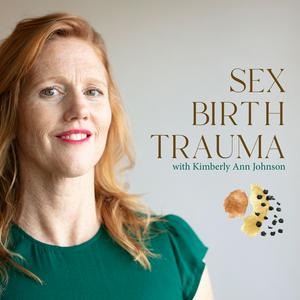
Sex Birth Trauma with Kimberly Ann Johnson
Kimberly Ann Johnson: Author, Vaginapractor, Trauma Educator
Último episodio
247 episodios
EP 246: Whose Desire Is This? – Rematriation, Erotic Self Sourcing, and the Art of Touching Women with Casia Sobolewski
23/08/2026 | 1 h 16 minIn this episode, Kimberly speaks with Casia Sobolewski, somatic sex educator, sexological bodyworker, and co-founder of the Himeros Project. Casia opens with the grief of a recent realization: that patriarchal structures had shaped even her most tender and private erotic world, and that some of the desires moving through her may never have been hers to begin with. From there she traces twenty years of exploring dominance and submission, the pull of the daddy dom dynamic in her twenties, and the question she is only asking now about why she had to imagine herself young to feel turned on. They talk about the "taking quadrant" of the wheel of consent and why so many exhausted women reach for passivity when what their systems actually want is mobilization. She describes the men's retreats she runs with her husband Cosmo Meens: what men bring to a room where their erotic lives are finally speakable, why starting with sexuality is both the hardest and the most important entry point in men's work, and what happens in a man's system when a woman says no. She unpacks matriarchy as mothers at the beginning rather than rule by women, drawing on Heide Göttner-Abendroth and the Mosuo, and names how the nuclear family loads one man with labor that once belonged to grandmothers, aunties, uncles and brothers. The conversation moves through early motherhood and the erotic tether Casia kept through it, the axial age and the cost of men teaching women how to care, aging and the erasure of the grandmother, and closes on the work she and Cosmo are renaming the art and responsibility of touching women.
Bio
Casia Sobolewski is a somatic sex educator, sexological bodyworker, and erotic practitioner who has been teaching sexuality since 2009. She is a certified Somatic Sex Educator and Sexological Bodyworker, a certified Holistic Sex Educator, and a trained intern surrogate partner with the International Professional Surrogates Association. She completed Dr. Betty Martin's Like A Pro Wheel of Consent training and has served on the boards of the Association of Certified Sexological Bodyworkers and the Somatic Sex Educators Association. In Toronto she founded Spit.Exposed, a queer and feminist porn project she ran from 2014 to 2019. From 2018 to 2025 she was a practitioner and teacher with Back to the Body: Sensual Retreats for Women. She is co-founder and ongoing practitioner of the Himeros Project, immersive retreats for men, which she leads alongside her husband Cosmo Meens, and together they teach The Art and Responsibility of Touching Women. She works in immersion experiences only, supporting people who are out of touch with their pleasure, who have experienced sexual trauma, or who want a space to meet the erotic aspect of themselves with integrity. She identifies as queer, non-disabled, introverted, non-monogamous, kink positive, married, cis, femme, a mother to one, a stepmother to three, and a devoted sister, daughter, friend and partner. She lives in British Columbia and her personal site is Honey and Water.
What Casia Shares
The grief opening three or four months ago when she realized patriarchal structures had reached into her most private erotic world
Twenty years of exploring dominance and submission, and the question she is only now asking about why she had to imagine herself young to feel turned on
Why so many women arrive wanting to be dominated, and why exhaustion and choice fatigue are part of the picture
The taking quadrant of the wheel of consent, and the night she first took, tired, at 11pm
What her men's retreats actually look like, including the numbers: nine to twelve men, three male staff, four female practitioners, ages twenty-eight to seventy-five
Why she and Cosmo added mutual touch to the container, and how negotiation of desire is taught in micro steps
What happens in a man's system when she says no, and why receiving a no is the skill that transfers to the rest of his life
Matriarchy as mothers at the beginning, drawn from Heide Göttner-Abendroth, and the Mosuo clan structure where there are no words for husband or father
How the nuclear family hands one stepfather the labor of grandmothers, aunties, uncles and brothers, and why he feels like he is failing
Early motherhood, the erotic structures that stopped computing, the nerve issues, and pleasure as the tether back to herself
The axial age, care labor, and what it costs when the people already doing the caring are taught by men to care more
Erotic self sourcing, and asking her charismatic partner to decenter himself from women's lives
Circumcision of infant boys as a first initiation, and men in their seventies finally being held
Aging, the elephant metaphor, and the erasure of the grandmother
The renaming of their offering to the art and responsibility of touching women, and why the responsibility matters
What You'll Hear
What rematriation means when it is applied to a marriage, a household, a business and a body all at once
Whether a desire can be genuinely yours if it was placed there, and whether that even matters
The difference between rest and mobilization for an exhausted nervous system, and why more passivity is often the wrong prescription
Kim on the bodyworker who discovered she needed to take, not receive, after a full day of giving
Why starting with sexuality is the hardest and most important entry point in men's work
What men sound like singing together at the end of a retreat, without drugs or alcohol
Whether men and women have the same obstacles to pleasure, and where patriarchy shows up on both sides of the same coin
Matriarchy versus matrifocal, and why Casia uses the word that starts an argument
The community that holds her and Cosmo accountable, and what personal power looks like when it is checked
Renegotiating the parenting load as a seven year old claims her independence
Kim on Perdita Finn, Stephen Jenkinson, lineage, and why elderhood makes gender matter less
A long, honest passage from Kim on double binds, young men, her daughter's friends in Scotland, and raising a son you would not want to date
The coming of age ceremony for a thirteen year old girl, and what is missing for boys
Affiliate groups versus mixed groups, and whether single gender work is a stepping stone or a destination
Mothers as the creators of culture, and the mother son bond in matriarchal anthropology
Kim's friend in Palau, and what it feels like to leave a living matriarchy and land in an airport
The hysteria clinic, and why the modern orgasm imperative is the same move in a different costume
Why men mostly cannot see the work, and what "you look good for your age" actually costs
Porn as training in extraction, and what men need instead
Resources
Casia Sobolewski
Personal website, Honey and Water https://www.honeyandwater.ca/
The Himeros Project https://www.himerosproject.com/
The Art of Touching Women https://www.himerosproject.com/the-art-of-touching-women
Instagram https://www.instagram.com/casia.sobolewski/
Linktree https://linktr.ee/casia.xx
Kimberly Ann Johnson
Pre-Order Erotic Seasons: Tuning into the Rhythms of Women's Sexuality and Spirituality (Sounds True, 2026): https://www.amazon.com/dp/1649633742
Support
This episode includes discussion of sexual assault and sexual trauma.
RAINN National Sexual Assault Hotline (US): 1-800-656-4673, rainn.org. Confirm current before publication.EP 245: The Contrast Is the Gold - Death Nesting, the Vortex, and Why Deathcare Belongs to the Village with Anne-Marie Keppel
16/08/2026 | 1 h 9 minIn this episode, Kimberly speaks with Anne-Marie Keppel, death doula educator, founder of the nonprofit Village Deathcare, and author of Death Nesting: The Heart-Centered Practices of a Death Doula, about what has and has not shifted in the culture since she wrote the book. Anne-Marie traces the origin of Death Nesting back to her years as a licensed nurse assistant in residential care, a hospice volunteer, a Meals on Wheels director, and to the elderly homeless man she looked after through Vermont winters; work she did because she wanted to. They look at the 1920s as the demarcation point when care left the home, when antibiotics became a god and the hospital became the authority realm, and at what has been lost in the handoff from family to funeral home. Anne-Marie makes the case that death curiosity is healthy, that it is okay to want to see and touch a dead body, and that fewer than half of the 500 students she has taught ever have. She describes the vortex that opens when someone is leaving their body, why timing matters more than ceremony, and why she considers the celebration of life a travesty when it replaces mourning rather than following it. The conversation goes into difficult territory: what care workers have reported feeling after a medically assisted death, the sense of severing and whiplash, and Kimberly's parallel that you can die and death does not happen. They talk honestly about suicide, about normalizing the thought rather than exiling it, about the scammers now working the death doula platforms, and about why people who long for death often do not know what dead actually is. The episode closes on professionalization: why she calls the business plan death doula training a lost opportunity, why she teaches citizens rather than experts, why the hairdresser who talks about dying with people in her chair is doing death doula work, and why the point is to give all the knowledge and wisdom, everything you've got, away. If any of this landed close to home, you don't have to sit with it alone. In the US, the 988 Suicide and Crisis Lifeline is available by call or text, day or night.
BIO
Anne-Marie Keppel is an international speaker, award-winning author of Death Nesting: The Heart-Centered Practices of a Death Doula, and founder of Village Deathcare 501c3, whose inspiration and purpose is incorporating deathcare into community. Of Irish Celtic and Finnish Sámi (indigenous Finno-Ugric) roots, she draws from her work as a death doula, nurse assistant, life-long meditator, Reiki Master Teacher and mother of three. She leads retreats and talks in Vermont, across the US, in Ireland, England, Costa Rica and Mexico on death, dying, healing and intuition. She lives in Vermont where she practices meditation, magic, community deathcare, trains her Siberian Husky (nonstop) and delights in her family's love.
WHAT ANNE-MARIE SHARES
Why she wrote Death Nesting from a place of genuine care and not a business plan, and how she only later realized she had accidentally built a business model
The basic physical skills nobody is taught anymore: how to transfer someone from bed to chair, how to protect your own back, how to hold a body that cannot hold itself
Her years as a licensed nurse assistant in residential care, a hospice volunteer, and director of Meals on Wheels in Montpelier, Vermont
Caring for an 89 year old homeless veteran through Vermont winters, and what it taught her about doing the work when nobody is filming
The 1920s as the demarcation point: hospitalization, antibiotics as the new god, and the hospital as a god realm where we send our loved ones away
Why death curiosity is healthy, and why it is okay to want to see, touch, and smell a dead body
That fewer than half of the 500 plus students she has taught have ever seen a dead body, at every age including into their sixties
The vortex that opens when a person is leaving their body, why others feel it whether or not they know it, and why it stays open afterward
Why the celebration of life is a travesty when it replaces the funeral, and why timing is the thing that matters
What people have told her after being present at a medically assisted death: the severing, the whiplash, and the gap between what their eyes saw and what their body felt
The scammers currently working death doula platforms with fake terminal diagnoses, and the empathy they exploit
Why she normalizes suicidal thoughts immediately, and what happens in a room when she asks how many people have thought about ending their life
Why people who long for death often do not know what dead is, and her prescription: volunteer for hospice, work in a funeral home, dig a grave
Why coupling a death doula training with a business plan destroys the training, and why she teaches citizens instead of experts
The hairdresser and the barista as models of community deathcare, and how to be a death doula without quitting your job
Why she teaches her students to empower the family, stay in the background, and then walk away
The student who finished her training and realized he actually is afraid to die, and why she called that a hallelujah
WHAT YOU'LL HEAR
What has and has not shifted in the culture since Death Nesting was first written
The parallels and the gap between birth doula care and death doula care, and what weekend trainings do to a threshold
Why 88 is very old, and what the denial of that reveals about the culture
Embodied knowing versus instruction: holding a baby, holding a fractured heel, holding a leg someone cannot feel
Why proximity beats curriculum, and why no training substitutes for a long embodiment practice
How the handoff from family to hospital to funeral home created a generation with nowhere to put its grief
The vortex, the gateway, and why people need to step outside for coffee during a death
A candid, careful exchange about medical aid in dying, individualism, sovereignty, and what Canada has shown since legalization
Stephen Jenkinson's line that you can die and death does not happen, and its birth equivalent
Suicide, ideation, and the difference between exiling the subject and washing away the taboo
Disconnection from the physical earth, zero vulnerability tolerance, and why medical professionals arrive at death doula training carrying decades of unprocessed exposure
Kimberly on mothering the bones as a lay practice, and on what teaching does to your ability to receive
The professionalization problem, the learning rate, and permission to be new at something
Why awkwardness is the skill worth practicing before the business card
Details on Anne-Marie's upcoming autumn death doula training
RESOURCES
Main Website: https://stardustmeadow.com
Anne-Marie Keppel: https://www.annemariekeppel.com
Death Doula Training (Village Deathcare Citizen Course): https://stardustmeadow.com/death-doula-training
Instagram: https://www.instagram.com/villagedeathcare/
Medium: https://annemariekeppel.medium.com
Death Nesting: The Heart-Centered Practices of a Death Doula: https://www.innertraditions.com/books/death-nesting
Referenced in conversation:
Stephen Jenkinson, Orphan Wisdom: https://orphanwisdom.com
Tom Myers, Anatomy Trains: https://www.anatomytrains.com
Tami Lynn Kent, Wild Feminine: https://www.wildfeminine.com/
If you or a loved one are dealing with suicide or suicidal thoughts you can call or text 988 in anywhere in the US to find someone to talk to.EP 244: Consistency, Not Perfection - Nutrition for Menopause and Beyond with Karen Newby
10/08/2026 | 59 minKimberly wanted to speak with someone who was neither hormones-or-nothing nor going to offer complicated longevity protocol. Karen Newby is a UK nutritionist with a BSc in Nutritional Medicine and fifteen years of clinical practice, and she speaks with clear-eyed candor about how to support women's nutrition through midlife and beyond.
What follows is a genuinely practical conversation. Karen explains why menopause is now classified as an inflammatory transitional event, what that has to do with joint pain, foggy head, eczema, and autoimmune flares, and how the shift in estrogen changes insulin sensitivity and where the body stores weight. Underneath the nutrition is a broader argument about what got lost for women in the hormone gold rush. There is useful myth-busting on creatine, on electrolytes as a marketing category newly aimed at midlife women, on the protein wars, and on why the ultra-processed conversation should be about refined carbohydrates and breakfast cereal rather than about whether protein powder counts. Karen's bottom line: the body wants to be well, consistency beats perfection, and confusion is the thing most likely to stop a woman from starting at all.
Bio
Karen Newby / Nutritionist
BSc Nutritional Med, mBANT, CNHC
Karen is a nutritionist, speaker, food activist, author and regular media contributor. She holds a BSc in Nutritional Medicine and has over 15 years of clinical experience. She works extensively with women navigating menopause and post-menopause, translating complex nutritional science into practical, sustainable strategies that support long-term vitality. She is author of three books focused on the menopause and post menopause: The Natural Menopause Method — a nutritional guide to perimenopause and beyond, The Natural Menopause Method Cookbook, and The Post Menopause Method — a nutritional guide to ageing well (out October 2026). Through her writing, she combines clinical expertise with practical recipes, lifestyle guidance and an emphasis on preventative health. Having lived for many years in China and Vietnam, she has witnessed first-hand how traditional food cultures place nourishment front and centre of everyday life versus the UK's ultra processed food culture. Karen is on a mission to help women reclaim agency over their health at menopause, through what they eat and how they live, and how we can learn from ancient food wisdom from wise women across the world. Living without a fear of ageing so our post menopausal lives can be vibrant, purposeful and fulfilling.
What Karen Shares
Why she isn't interested in telling anyone what to do and why the real obstacle is that women carry so much they can't get themselves onto their own to-do list
Menopause as an inflammatory transitional event, and the through-line to aches, foggy head, eczema, psoriasis, and autoimmune conditions
How changing estrogen affects insulin sensitivity, why weight moves to the middle, and the difference between metabolic change and cortisol-driven "worry waist"
The protein-rich, fiber-rich breakfast as the single highest-leverage change and why caffeine belongs with breakfast rather than before it
Her 1% / 2% / 3% framework: fifteen minutes for breakfast, half an hour for lunch, forty-five minutes for the evening meal
A 14-hour overnight fast as the realistic version of intermittent fasting during perimenopause, and why long fasts during hormonal flux tend to backfire
What she actually means by ultra-processed: refined carbohydrates, white bread, breakfast cereal versus the protein powders and jarred goods most people worry about
Creatine: well researched, safe, cheap as monohydrate, not on her essential list, and the brain-health claims not yet supported by robust studies
Why she's skeptical of electrolyte supplements for midlife women, and the Vietnamese soda chanh she drank through monsoon season instead
The protein wars: why Blue Zones populations eat less protein than the West, and why she still thinks it matters at menopause
Fat phobia inherited from a generation of calorie-counting mothers, and what nuts, seeds, and omega-3s do for cognition, cardiovascular health, dry eyes, dry skin, and morning stiffness
Ground linseed and phytoestrogens, including for teenage daughters moving through their own hormonal flux
How to read an ingredients list and why the brands making the biggest health claims are usually spending on marketing rather than product
Good housekeeping as a lost skill: bone stock from rib bones, veggie stock from peelings, leftovers for lunch, and why real food is cheaper than processed
Giving birth in Beijing, being shouted at by elders for taking her newborn outside, and what traditional confinement cultures understood that the West forgot
Why the suffragettes were early proponents of vegetarian cookery and why she isn't vegan or vegetarian but thinks most of us could eat more like it
What You'll Hear
Why "hormones or no hormones" is the wrong first question, and what gets left out when it's the only one being asked
Kimberly on being floored by menopause despite writing a book on postpartum nourishment and on dismantling her business, cutting sugar entirely, and spending a stretch in ketosis
The generational break: what happens when your grandmothers had hysterectomies and there is no menopause to inherit
Irritability and rage in perimenopause partly blood glucose, partly finding your voice, and Karen's caveat that some people genuinely are annoying
The cortisol awakening response, that fluttery-hearted start to the day, and what to drink before coffee
Why confusion is the real enemy the listeners writing in with "a PhD in menopause" who still feel worse, not better
Kimberly on being a redhead with less margin for error, and when a more extreme approach is warranted
Acupuncture, going twice, and why some interventions need a real course rather than a trial
Learning to cook in midlife assembling versus cooking, the power of ribs as a great attractor, and what a full fridge does for the nervous system
Food as community: daughters who cook, parents who start showing up for dinner, and the traveling tinned fish situation
Hunger from the chest versus hunger from the gut, and how to tell a stress response from actual appetite
The 3pm slump, the sad sandwich, and the reactive eating that follows both
Resources
Website — https://www.karennewby.com
Instagram — https://www.instagram.com/karen.newby.nutritionist
Facebook — https://www.facebook.com/karennewbynutritionist
Pre-order The Post Menopause Method: A Nutritional Guide to Ageing Well (out October 2026) — https://www.amazon.com/Post-Menopause-Method-nutritional-guide-ageing-ebook/dp/B0GXFWS5XJ
Pre-order Erotic Seasons: Tuning into the Rhythms of Women's Sexuality and Spirituality (out November 2026) — https://us.macmillan.com/books/9781649633743/eroticseasons/EP 243: Eating the Shadow – Mythopoetic Men's Work, the Lover Archetype, and Repair in a Villageless World with Ian MacKenzie
08/06/2026 | 56 minIn this episode, Kimberly speaks with Ian MacKenzie, filmmaker, writer, mythosomatic guide, and host of The Mythic Masculine, about what men's work looks like in 2026. A fellow Orphan Wisdom scholar, Ian traces the mythopoetic lineage back through Robert Bly's Iron John, Carl Jung, and Marie-Louise von Franz, and describes how discovering Bly's book in his late grandfather's study set him on this path alongside his film work on feminine archetypes (Amplify Her). They talk candidly about the cultural moment — the "Rape Academy," the Pelicot case, the question of where the men are, and why the issues that feel omnipresent in some circles remain invisible in others curated by algorithm. Ian unpacks the medicine of mythopoetic men's spaces: how men can "put down the masculine pole" when others hold the container, why porn functions as a "toxic mimic" of intimacy, and how the shadow we exile grows hostile and acts out. They explore the lover archetype and erotic rites of passage rooted in his time at the Tamera community in Portugal, the "road of ashes" and why real men's spaces are composed of "failed heroes," and how to tend rites of passage for our own children by building real relationships with other men long before adolescence. The conversation closes on accountability and repair in a "villageless" culture, erotic leadership, and the inaugural Cascadia Men's Conference.
Bio
Ian MacKenzie is a filmmaker, mythosomatic guide, and the founder of The Mythic Masculine - a platform devoted to stewarding the soul work of men. For two decades, Ian has tracked the emergence of imaginal culture - from the fires of Burning Man to the streets of Occupy Wall St - amplifying the voices of visionaries, artists, and wisdom keepers working toward a more regenerative world. A 15-year scholar of the Orphan Wisdom School, and a four-time pilgrim to the Tamera peace research community in Portugal, he has dedicated himself to expanding the terrain of what men's inner work can be: weaving ritual, ancestral story, and somatic reclamation into a living path toward sovereign purpose. He is the co-founder of The Deep Masculine Journey, a 12-week initiatory program for men, and the host of The Mythic Masculine podcast. His films include Sacred Economics, Occupy Love, Amplify Her, and The Village of Lovers. He lives on Vancouver Island with his partner and son.
What He Shares
The mythopoetic lineage of Bly's Iron John, Jung, von Franz and finding the book in his grandfather's study in his mid-30s
How exploring feminine archetypes through Amplify Her opened the question of masculinity for him
Why the "where are the men" moment is so confusing for men who want to speak but fear getting it wrong
The "hungry ghost" pattern: what happens when men locate all their Eros and vitality in women
Porn as a "toxic mimic" (Caroline Casey's phrase) of real intimacy and reciprocity
"Putting down the masculine pole" how men can finally fall apart when others hold the container
"Eating the shadow" creating space for men to reveal trespass and explore real repair
Erotic rites of passage and the lover archetype, drawn from his time at Tamera
The "road of ashes," failed heroes, and the difference between olders and elders
Tending rites of passage for our kids and why a parent is "disqualified" from leading their own child's
Accountability and repair in a villageless culture, and the vision behind the Cascadia Men's Conference
What You'll Hear
What "the mythic masculine" means and where the mythopoetic tradition comes from
Whether the erotic is "feminine" anima, animus, and locating aliveness inside vs. outside
How algorithmic bubbles make the same cultural crisis omnipresent for some and invisible for others
The critique of men's work as apolitical self-improvement and the Mankind Project's stance
Dyads, Forum, and psychodrama as practices for meeting the shadow
The "dogs in the basement" story. Shadow, ancestors, and what we exile
What an erotic rite of passage weekend actually looks like, and the core wound it surfaces
A hard, honest exchange about campus assault and what real accountability could look like
Erotic leadership, deep attunement, and meeting a partner stepping into her own fullness
Details on the Cascadia Men's Conference "Courting the Divine Spark"
Resources:
Main Website: http://themythicmasculine.com
Facebook: https://www.facebook.com/ianalexanderm/
Instagram: https://www.instagram.com/ian.mackenz/EP 242: Arbitrary Intelligence - Tools, Limits, and the Willies of What's Coming with Stephen Jenkinson
25/05/2026 | 1 h 7 minIn this episode, Kimberly is re-joined by Stephen Jenkinson, author of Trembling Still: The Awful Clarity of a Mind in Eclipse, about the moment we find ourselves in with artificial intelligence and what it asks of us. They unpack the claim that AI is merely a tool; a real tool elaborates the capacities of the human hand just enough to reveal its God-given limits. Jenkinson suggests renaming AI "arbitrary intelligence," and traces how the rollout was designed to anticipate and absorb resistance before it could even form. Kimberly shares her own encounters with AI's creep into branding, self-driving cars, dream interpretation, therapy, dating, and her daughter's experience competing against Adderall and AI-assisted classmates. Together they explore whether willful underachievement might be the truest form of resistance and why the loss of kinship with the world is the precondition for welcoming a machine as your therapist. Jenkinson describes an MIT technologist's pitch to make him immortal through AI, and his fully human reply. The conversation closes with Jenkinson's own physical limitation, that unlike any Zoom AI companion, he can't sit any longer; a poetic, human ending to the kind of overflowing conversations that we've come to expect from these two.
Bio
Stephen Jenkinson, MTS, MSW, is a teacher, author, culture worker, farmer, and founder of the Orphan Wisdom School. He is the author of Die Wise, Come of Age, A Generations Worth, Reckoning (with Kimberly Ann Johnson) and most recently Trembling Still: The Awful Clarity of a Mind in Eclipse. His work explores grief, elderhood, dying, and the deep obligations of being alive in a time of unprecedented consequence. He has a master's degree in theology from Harvard and a master's in social work from the University of Toronto, and spent years as a program director in a major Canadian hospital, where his work focused on the care of the dying. He lives on a farm in the Ottawa Valley with his wife Nathalie Roy.
What He Shares:
– Why AI should be called "arbitrary intelligence" and why the words artificial and intelligence don't belong together
– The MIT technologist's pitch to make him immortal through AI and why he said no
– The shift from Lascaux to Turkey: how humans went from small stick figures to the biggest thing that ever happened
– Willful underachievement as the truest form of resistance
– Why he's glad he won't see the future and the two-generation rule for language loss
– The rollout: how AI anticipated resistance and folded it into the code before anyone could articulate their concern
– His own physical limitation as the conversation's closing teaching
What You'll Hear:
– Kimberly's encounters with AI creep: branding, self-driving cars, Zoom companions, Microsoft Word prompts
– Is AI a tool? Why a tool elaborates the hand and complies with God-given limits
– Arbitrary intelligence: renaming the thing for what it is
– The rollout: how resistance was anticipated, folded into the code, and served back as good soup
– The allegation that this has happened before and why he doesn't buy it
– The microwave precedent: how fast something goes from luxury to you're-a-buffoon-without-it
– Slow food, fast food, and what you can't recover from losing
– Kimberly's daughter competing unassisted against Adderall and AI and reinforcing the slower pace
– Willful underachievement and failing to qualify as resistance
– Leonard Cohen: none of us deserving the cruelty or the grace
– The MIT pitch: wouldn't your grandchildren want access to you after you die?
– Love must obey the limits of time and the human frame
– The want machine: why wanting something for someone doesn't make it good for them
– Lascaux to Turkey: from humans as tiny stick figures to humans as the biggest thing
– The loss of kinship with the made world as the precondition for AI
– AI as therapy, dream interpreter, dating coach, prescription writer and the abject loneliness underneath
– Being hurt aloud about what we're willing to submit to
– AI as you riffing on you being true to yourself as the thing that's being sold
– Kimberly on the inescapable attack in nervous system language and whether talking about it helps or feeds it
– SJ's body calling time: people learning from the part of you that you wish wasn't happening
Resources
Website: orphanwisdom.com
Upcoming Book: Trembling Still: The Awful Clarity of a Mind in Eclipse
Más podcasts de Medicina alternativa
 Feel Better, Live More with Dr Rangan ChatterjeeMedicina alternativa, Salud y forma física
 Conferencias - Borja Vilaseca OficialMedicina alternativa, Salud y forma física
 Well with Arielle LorreArte, Cultura y sociedad, Diarios personales, Medicina alternativa, Moda y belleza, Salud y forma física
 BiopotencialFitness, Medicina alternativa, Nutrición, Salud y forma física
 Feminist WellnessEducación, Medicina alternativa, Salud mental, Salud y forma física, Superación personal
 I Can’t SleepCiencias, Medicina alternativa, Salud mental, Salud y forma física
 Las Almas DespiertasEducación, Medicina alternativa, Salud y forma física, Superación personal
 Get Sleepy: stories for sleepDrama, Ficción, Historias para niños, Medicina alternativa, Niños y familia, Salud y forma física
 Keen on Yoga PodcastEspiritualidad, Medicina alternativa, Religión y espiritualidad, Salud y forma física
Podcasts a la moda de Medicina alternativa
- I Can’t SleepCiencias, Medicina alternativa, Salud mental, Salud y forma física
 The Doctor Youn ShowMedicina alternativa, Salud y forma física
 Ancient Health PodcastMedicina alternativa, Salud y forma física
- Well with Arielle LorreArte, Cultura y sociedad, Diarios personales, Medicina alternativa, Moda y belleza, Salud y forma física
 The Menstruality PodcastEducación, Espiritualidad, Medicina alternativa, Religión y espiritualidad, Salud y forma física, Superación personal
 Biohacking Beauty: The Anti-Aging Skincare PodcastArte, Medicina alternativa, Moda y belleza, Nutrición, Salud y forma física
 Meditation SoundsMedicina alternativa, Niños y familia, Salud y forma física
 8 Hour Binaural BeatsMedicina alternativa, Salud y forma física
Acerca de Sex Birth Trauma with Kimberly Ann Johnson
Cutting-edge, pioneering conversations on holistic women's health, including sex, birth, motherhood, womanhood, intimacy and trauma with doula, certified Sexological Bodyworker, Somatic Experiencing practitioner, and author of Call of the Wild and the Fourth Trimester, Kimberly Ann Johnson.
Sitio web del podcastEscucha Sex Birth Trauma with Kimberly Ann Johnson, Feel Better, Live More with Dr Rangan Chatterjee y muchos más podcasts de todo el mundo con la aplicación de radio.es
Descarga la app gratuita: radio.es
- Añadir radios y podcasts a favoritos
- Transmisión por Wi-Fi y Bluetooth
- Carplay & Android Auto compatible
- Muchas otras funciones de la app
Descarga la app gratuita: radio.es
- Añadir radios y podcasts a favoritos
- Transmisión por Wi-Fi y Bluetooth
- Carplay & Android Auto compatible
- Muchas otras funciones de la app

Sex Birth Trauma with Kimberly Ann Johnson
Escanea el código,
Descarga la app,
Escucha.
Descarga la app,
Escucha.
 España