
Escucha gratis este podcast en la aplicación: Descarga gratuita en la App Store
radio.es
Sleep timer
Favoritos
206 episodios
204. Moore's Law Than Meets the Eye: Michael Wright's Blueprint at Biomimetics International
23/10/2026 | 1 h 13 minMichael Wright, founder of Biomimetics International, joins Grow Everything to explain how learning from nature can reshape the way we design products, build businesses, and scale emerging industries. Drawing on decades in semiconductors and high technology, he describes biomimetics as learning from nature’s tested systems, from burr inspired Velcro to shark skin that reduces drag, while emphasizing that copying a biological function is not enough if a product cannot return safely to the biosphere. He introduces the Biosverse, nature’s third number, and generational cost of ownership as ways to account for environmental liabilities that traditional business models may overlook. The conversation explores how digital and biological systems converge, why biotech can learn from semiconductor standards and roadmaps, how AI might benefit from a more nurturing and accountable design approach, and why leaders should ask, “Do you know what you do does?” Michael’s vision is a mindset shift that brings nature into the design process before we build, then measures whether innovations can serve communities and remain compatible with the living world.
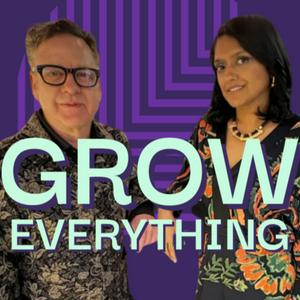
Grow Everything brings the bioeconomy to life. Hosts Karl Schmieder and Erum Azeez Khan share stories and speak with the leaders and innovators using biology to change the world. Biology is the world’s oldest technology, and it can be engineered. So, what are we growing?
Learn more at www.messaginglab.com/groweverything
Chapters:
(00:00:00) Grow Everything opening and biotech headlines, from fall foliage to food systems for Mars
(00:07:00) FDA inspections, peptide manufacturing, and the importance of knowing where products come from
(00:14:00) Michael Wright’s semiconductor career and the path to biomimetics
(00:21:00) How digital and biological systems converge, from precision agriculture to digital water
(00:28:00) The Biosverse, biosphere compatibility, and nature’s third number
(00:35:00) Generational impact, executive decisions, and long term costs
(00:42:00) What biotech can learn from semiconductor roadmaps, standards, and shared infrastructure
(00:49:00) AI as a mom, biological sensing, and symbiotic decision making
(00:56:00) Michael’s dream project: a mindset shift toward looking at nature first
(01:03:00) Quick fire questions, the episode debrief, and designing data centers with nature in mind
Episode Links:
Biomimetics International
Michael Wright
The Exponential Era by David Espindola and Michael Wright
NASA Mars to Table Challenge
Fall foliage tracker in NY
Black mold, bugs found at Chinese plants making GLP-1 compounding agents
Cemvita and Roebling Partner to Accelerate Industrial BioSolutions From Discovery to Deployment
199. Space, the Final Fermenter: Mario Maggio Brews Biology in Orbit with Ambrosia Space
156. When Matter Makes Decisions: Michael Levin on the Intelligence of Form
133. Funding, Frameworks & Frenemies: Dr. Angela Belcher of NSCEB Gets Real on the $15B Biotech Boost Plan
71. Squid Pro Quo: Tandem Repeat's Melik Demirel Reinvents Clothing with Squitex
Grow everything LinkedIn
Topics Covered:
biomimetics, bio-inspired design, biosphere compatibility, generational cost of ownership, nature-inspired materials, biomimicry in engineering, sustainable data centers, AI and biomimicry, biomimetics industry standards, circular materials
Have a question or comment? Message us here:
Text or Call (804) 505-5553
Instagram / Twitter / LinkedIn / Youtube / Grow Everything
Music by: Nihilore
Production by: Amplafy Media203. The Valley of Do: Karl & Erum Orchestrate Bio-Ecosystems at Bioinnovations Conference
16/10/2026 | 48 minAt Bio Innovations in Omaha and an adjacent investor gathering in Houston, Grow Everything hosts Karl Schmieder and Erum Azeez Khan unpack the shift reshaping the bioeconomy: scientific discovery is becoming faster and less expensive, while deployment, scale up, and durable partnerships have become the real competitive advantage. They share conversations from the conference floor on the missing middle between bench science and commercial production, the Midwest’s feedstock and infrastructure advantage, the need for early technoeconomic discipline, and how corporates can give innovators clearer demand and specification targets. From pilot facilities and downstream processing to waste to value opportunities and resilient domestic supply chains, this recap maps the practical work required to turn biological innovation into products that matter.
Grow Everything brings the bioeconomy to life. Hosts Karl Schmieder and Erum Azeez Khan share stories and speak with the leaders and innovators using biology to change the world. Biology is the world’s oldest technology, and it can be engineered. So, what are we growing?
Learn more at www.messaginglab.com/groweverything
Chapters:
(00:00:00) Halloween, food dyes, and a motel room microbiology discovery
(00:05:29) The fire microbe and the promise of extremophiles for manufacturing
(00:07:46) AI agents, scientific discovery, and physical laboratories
(00:14:43) Bio Innovations recap: Omaha infrastructure meets Houston capital
(00:18:00) Discovery is cheaper, but deployment is the whole game
(00:22:24) The missing middle: pilots, ecosystems, and the valley of do
(00:26:45) Business models, corporate demand clarity, and consumer framing
(00:34:40) Scale up lessons: feasibility, downstream processing, and tech transfer
(00:42:28) Waste to value, bioeconomic resilience, and what comes next
Links and Resources:
Bioinnovations
Steve Bray - TritenIAG
Phillip Crawford -Roebling
Mike Glasspool - Merrick
Kyle Pomraning - Pacific Northwest National Lab
Gatorade recall across 37 states in the U.S.
Scientist discovered two new species of bacteria from a motel room they converted into a lab
Incendiamoeba cascadensis. This 'fire amoeba' pushes the limit of what's possible for complex life
Claude discovers a novel enzyme system with CRISPR-like repeats
C5R Built a Research Lab Run by AI in 12 Weeks.
164. From Plasmids to Pallets: How Erin Marasco Scales Biology at Cargill
165. Biology Behind the Brands: Inside P&G’s Two-Century Story
166. The Great Reformulation: Joshua Lachter Rethinks How We Make Everything at Scale
102. Waste into WOW! Cemvita's Moji Karimi on Turning Carbon Problems into Golden Opportunities
Topics Covered:
autonomous labs, laboratory robotics, AI in biotechnology, synthetic biology, bioengineering, biological automation, data as a service, biotech infrastructure, cell engineering, programmable biology
Have a question or comment? Message us here:
Text or Call (804) 505-5553
Instagram / Twitter / LinkedIn / Youtube / Grow Everything
Music by: Nihilore
Production by: Amplafy Media202. Setting Sail for Biotech Scale: Jenny Rooke Steers Innovators at Genoa Venture
09/10/2026 | 53 minGenoa Ventures founder and managing director Jenny Rooke joins Karl Schmieder and Erum Azeez to explore bioconvergence, the expanding frontier where biology meets AI, automation, materials science, and real world business building. Drawing on her journey from physics and genetics to venture capital, Jenny explains why durable bio based companies must pair novel science with clear customer demand, disciplined scale up, and a path to meaningful commercial value. The conversation examines lessons from early synthetic biology, the realities of biomanufacturing at scale, next generation clinical assessment tools, and why founders working between traditional tech and biotech categories need investors who understand both.
Grow Everything brings the bioeconomy to life. Hosts Karl Schmieder and Erum Azeez Khan share stories and speak with the leaders and innovators using biology to change the world. Biology is the world’s oldest technology, and it can be engineered. So, what are we growing?
Learn more at www.messaginglab.com/groweverything
Chapters:
(00:00:00) Climate Week, bioliteracy, and biology as a climate solution
(00:03:00) America’s Living Library Act and the case for sampling public lands
(00:07:00) State microbes, public engagement, and the future of bioliteracy
(00:10:00) Erum’s biomanufacturing course and designing food safe colors
(00:15:00) Introducing Jenny Rooke and Genoa Ventures
(00:17:00) From physics and genetics to investing in science based companies
(00:20:00) The Genoa sail: founder autonomy, trust, and avoiding fatal mistakes
(00:22:00) What defines a bioconvergence company
(00:24:00) Why biotechnology needs a broader frame than pharma
(00:26:00) Lessons from synthetic biology’s first wave and the impact of AI
(00:28:00) Matching company timelines to biology, markets, and venture returns
(00:29:00) The future of clinical assessment tools and actionable health data
(00:32:00) Diagnostics, consumer data, and the difference between insight and infotainment
(00:34:00) Why bio based businesses can offer investors a different risk profile
(00:37:00) Why industrial biotechnology companies fail and what scale up requires
(00:40:00) Biomanufacturing, commercial readiness, and Genoa’s newest investment
(00:42:00) What Genoa is watching across tools, biology, and manufacturing
(00:45:00) Jenny’s four word credo and the founder mindset
(00:48:00) Closing reflections on bioconvergence and building the bioeconomy
Links and Resources:
Genoa Ventures
Jenny Rooke LinkedIn
Genoa Ventures LinkedIn
JPM 2026: Genoa Ventures’ Jenny Rooke on Next-Gen Clinical Assessment Tools
Graveyard report - First Bite Ventures
3 States Have Official State Microbes
National Security Commission of Emerging Biotech
Topics Covered:
bioconvergence, deep tech venture capital, synthetic biology investing, biomanufacturing, life science tools, clinical diagnostics, industrial biotech, bioeconomy
Have a question or comment? Message us here:
Text or Call (804) 505-5553
Instagram / Twitter / LinkedIn / Youtube / Grow Everything
Music by: Nihilore
Production by: Amplafy Media201. Out of Cell Experience: Michael Heltzen Drives Pure Chemistry at eXoZymes
02/10/2026 | 50 minMichael Heltzen, CEO of Exozymes, joins Grow Everything to explain how cell free biomanufacturing is opening new possibilities for natural products, nutraceuticals, and medicines. Michael shares why engineered enzymes can make high purity molecules without relying on living cells, how Exozymes moved its NCT program from discovery toward commercial manufacturing in less than two years, and why its capital light partnership model is central to scaling impact. The conversation also explores AI guided enzyme design, digital twins for manufacturing, rare cannabinoids, downstream processing, and the disciplined focus required to turn a broad biotechnology platform into real products.
Grow Everything brings the bioeconomy to life. Hosts Karl Schmieder and Erum Azeez Khan share stories and speak with the leaders and innovators using biology to change the world. Biology is the world’s oldest technology, and it can be engineered. So, what are we growing?
Learn more at www.messaginglab.com/groweverything
Chapters:
(00:00:00) Michael Heltzen and the Exozymes mission
(00:05:00) Why cell free manufacturing can unlock inaccessible natural products
(00:10:00) Combining molecular biology, computation, and AI guided enzyme design
(00:15:00) From laboratory platform to industrial scale production
(00:20:00) Commercial partnerships and the NCT market opportunity
(00:25:00) Rare cannabinoids and a new toolkit for medicinal chemistry
(00:30:00) The capital light licensing model for biomanufacturing
(00:35:00) Downstream processing, purity, and investor skepticism
(00:40:00) The future of sustainable enzyme driven chemical manufacturing
(00:45:00) Key takeaways on focus, partnerships, and platform innovation
Links and Resources:
eXoZymes
eXoZymes Awarded $2 Million NIH Grant to Advance Cannabinoid Analogs for Drug Discovery
eXoZymes’ Cell-Free Biomanufacturing Platform Gets Positive Feedback from Cayman Chemical
Michael Heltzen LinkedIn
eXoZymes on LinkedIn
129. No Cells? No Problem! eXoZymes' Michael Heltzen on the Future of Microbe-Free Biotech
176. Dare to Commercialize: Damien Perriman’s eXoZymes Playbook
51. Cell-Free, Problem-Free: Enzyme Alchemy with Alex Rosay at Cascade Biocatalysts
85. Always Be Brewing: Continuous Fermentation with Cauldron's Michele Stansfield
Topics Covered:
cell-free biomanufacturing, enzyme engineering, exozymes, biosynthesis, cannabinoids, NCT (N-trans-caffeoyltyramine), synthetic biology, AI-driven enzyme design, scalable bioproduction, sustainable chemicals
Have a question or comment? Message us here:
Text or Call (804) 505-5553
Instagram / Twitter / LinkedIn / Youtube / Grow Everything
Music by: Nihilore
Production by: Amplafy Media200. That's One Cell of a Machine: Jason Kelly of Gingko Automates Labs to Accelerate Discovery
25/09/2026 | 1 h 28 minFor the 200th episode of Grow Everything, Karl Schmieder and Erum Azeez Khan talk with Jason Kelly, co-founder and CEO of Ginkgo Bioworks and former chair of the US National Security Commission on Emerging Biotechnology, about why biology is still so hard to engineer. Jason explains why a cell is the only coded substrate we have besides a computer, why the real bottleneck is tooling rather than ideas, and why Ginkgo moved from royalty based research partnerships to selling robotic hardware and lab data as a service. Using a subway, car and Waymo analogy, he separates automation from autonomy and makes the case for replacing the manual lab bench, which eats roughly 97 percent of research spending while running 40 hours out of 168. He walks through Ginkgo's Boston system of 105 robots running 24/7, new autonomous labs for MIT, Caltech, Northwestern and the University of Maryland, and the OpenAI project where GPT-5 ran 30,000 experiments a week and beat state of the art in cell free protein synthesis by 40 percent. He also lays out the policy stakes as drug discovery shifts to China, and why the day biology becomes predictably easier to engineer, biotech gets bigger than tech.
Grow Everything brings the bioeconomy to life. Hosts Karl Schmieder and Erum Azeez Khan share stories and speak with the leaders and innovators using biology to change the world. Biology is the world’s oldest technology, and it can be engineered. So, what are we growing?
Learn more at www.messaginglab.com/groweverything
Chapters:
(00:00:00) A cell is a machine that can do a million other things
(00:07:00) AI data centers, contamination, and the waste to value opportunity
(00:14:00) Biosecurity, guardrails, and who is accountable for AI in biology
(00:21:00) Ginkgo's mission: programming a computer you did not design
(00:28:00) Why Ginkgo reset its business model from royalties to tools and data
(00:34:00) Subway, car, Waymo: what an autonomous lab actually means
(00:41:00) Inside Nebula: 105 robots, 24/7 lab work, and autonomous labs for MIT and Caltech
(00:47:00) The end of experimental scarcity and what scientists do next
(00:54:00) Offshoring biotech to China and the policy fix Jason wants
(01:01:00) Simulating cells, Moore's law for biology, and the markets beyond pharma
Links and Resources:
Gingko Bioworks
Gingko Bioworks - Automation product
Jason Kelly linkedin
Ginkgo Bioworks Joins ARPA-H GIVE Program to Build Autonomous Manufacturing System for Individualized RNA Medicines
National Security Commission on Emerging Biotech
Singapore is building supercomputer that runs on human brain cells
Water in Wyoming data center contaminated with cupriavidus gilardii
112. The Baked-In Future of Science: Nick Edwards on Potato AI’s Quest to Become Your AI Scientist
5. Dreaming in Biology: Tales from the Ginkgo Bioworks Studio
50. The Dye-Hard Innovator: Natsai Chieza Designs Change for the Fashion Industry and the World
Topics Covered:
autonomous labs, laboratory robotics, AI in biotechnology, synthetic biology, bioengineering, biological automation, data as a service, biotech infrastructure, cell engineering, programmable biology
Have a question or comment? Message us here:
Text or Call (804) 505-5553
Instagram / Twitter / LinkedIn / Youtube / Grow Everything
Music by: Nihilore
Production by: Amplafy Media
Más podcasts de Ciencias




Podcasts a la moda de Ciencias






Acerca de Grow Everything Biotech Podcast
Grow Everything explores the world of biology as technology. Hosts Erum Khan and Karl Schmieder interview leaders and influencers biologizing industries with tools like synthetic biology, precision fermentation, bioprospecting, and more. These companies make biomaterials from waste, cosmetics that restore healthy hair and skin, and delicious cultivated foods in a bioreactor and so much more. Join us as we discuss the latest and greatest across biotech, engineered biology, entrepreneurship, and culture and how this transition is solving healthcare and climate change challenges.
Sitio web del podcastEscucha Grow Everything Biotech Podcast, Catástrofe ultravioleta y muchos más podcasts de todo el mundo con la aplicación de radio.es
Descarga la app gratuita: radio.es
- Añadir radios y podcasts a favoritos
- Transmisión por Wi-Fi y Bluetooth
- Carplay & Android Auto compatible
- Muchas otras funciones de la app
Descarga la app gratuita: radio.es
- Añadir radios y podcasts a favoritos
- Transmisión por Wi-Fi y Bluetooth
- Carplay & Android Auto compatible
- Muchas otras funciones de la app

Grow Everything Biotech Podcast
Escanea el código,
Descarga la app,
Escucha.
Descarga la app,
Escucha.
 España