
Escucha gratis este podcast en la aplicación: Descarga gratuita en la App Store
radio.es
Sleep timer
Favoritos
74 episodios
SEND & School Absence
13/11/2026 | 55 minWhy can school feel so overwhelming for some neurodivergent children, and why are their parents so often blamed when they struggle to attend?
In this episode of All Aboard ADHD, Claire is joined by Writer, Educator and SEND mum Jo Clayton and Actor and Filmmaker Natalie Lauren, the writer and producer of Unauthorised Absence. Their powerful short film explores school distress, unmet needs, and the pressures families face when a child can’t attend school.
Together they explore:
📣 “I needed to be heard”: how hundreds of stories from Jo’s years in parent support groups shaped the film.
🎬 A cold email and a shared mission: Natalie’s decade supporting young people outside mainstream education, and seeing the earlier part of their journey for the first time.
🎧 Hearing what children can’t say: how the use of sound helps us experience what’s happening internally for the film’s main character Thea when she can’t put it into words, and the film’s aim to “foster empathy, facilitate understanding, and motivate change”.
📊 “There’s more to this than a bum on a seat”: why a focus on attendance above all else can leave children’s needs unseen and unmet.
🎭 Holding it together at school, falling apart at home: how masking can hide a child’s distress, leaving parents misunderstood and blamed.
💔 When support depends on attendance: why withdrawing help from a child who is already struggling can make things harder.
⚖️ Fines, blame and families under pressure: why the system falls hardest on those with the least, and how “broken systems break people”.
🤝 Responding “as humans first”: trusting your instincts, building bridges, and finding a way forward together.
When a child is struggling to attend school, families can feel unheard, judged and very alone. Rather than receiving the understanding and support they need, parents can find themselves blamed, fined or even prosecuted. The consequences for families can be devastating, deepening the divide between parents and schools, while the child’s underlying needs remain unmet. Ultimately, it’s the child who pays the price.
This conversation offers understanding, validation and a hopeful reminder of what becomes possible when we respond to children and parents with humanity.
Further resources & links
Find out more about Unauthorised Absence - a short film written by Jo Clayton, produced by Natalie Lauren, and directed by Georgia Parris: https://www.mimesic.com/films/unauthorisedabsence
Watch the film online from Tuesday 10 November: https://youtu.be/dn8C7WuGv8g
Find a community screening near you: https://www.google.com/maps/d/viewer?mid=1M7-j6lkokmGGw67toHClV8f8gJ2r_xk&hl=en&ll=54.306518128477215%2C-30.464489099999994&z=4
Follow the film on Instagram: @unauthorisedabsencefilm
Follow the film’s writer Jo Clayton @joclaytonstory
Follow the film’s producer Natalie Lauren:@natalielaurenw
Organisations mentioned:
Not Fine in School https://notfineinschool.co.uk/
Square Peg https://www.teamsquarepeg.co.uk/
Autistic Girls Network https://autisticgirlsnetwork.org/
A Sisyphean Task: a short film about an early career teacher, recommended by Jo: https://directorsnotes.com/2025/11/22/gus-flind-henry-george-malcher-a-sisyphean-task/
ADHD coaching and resources from Claire: https://allaboardadhd.com
Follow Claire on Instagram & TikTok: @allaboardADHD
The views shared in this episode are those of the guests, based on their professional expertise and personal experience. This content is for informational purposes only and is not a substitute for professional medical, educational, or psychological advice. Please consult a qualified professional for personalised support relevant to your individual circumstances.Periods, Hormones & ADHD
30/10/2026 | 52 minWhy can ADHD feel harder to manage at certain times of the month, and why have periods and hormonal changes been so overlooked in ADHD research?
In this episode of All Aboard ADHD, Claire is joined by Senior Lecturer in Psychology Dr Jessica Agnew-Blais of Queen Mary University of London, who holds a PhD in psychiatric epidemiology from Harvard and leads the Measuring Adult ADHD and Menstruation (MAAM) study. Jessica shares what the research tells us so far, and how parents can support their daughters as they begin navigating their cycles.
Together they explore:
📚 "A childhood disorder and a disorder of males": why the role of hormones in ADHD has been so under-researched, particularly during periods, pregnancy and menopause.
💡How the MAAM study began: women with ADHD describing symptoms that felt harder premenstrually, and very little research to explain why.
📊 Inside the MAAM study: following 56 women with ADHD as they tracked their symptoms, mood, sleep and menstrual cycles daily for three months, using regular check-ins and wearable technology.
🌙 Understanding the menstrual cycle: from the follicular to the luteal phase, and why some women's brains may be more sensitive to hormonal fluctuations than others.
💊 When medication feels less effective: early evidence on hormonal sensitivity, PMDD and adjusting doses premenstrually.
🧠 More than mood: how motivation and focus may shift across the cycle, and why symptoms fluctuate with life's demands.
📝 "Make a little data project of yourself": how tracking can help you and your daughter notice patterns across the menstrual cycle, but why it isn't right for everyone.
💛 Self-compassion on the harder days: why a few less productive days are okay, and Jessica's hope for more personalised care rather than asking women to be "guinea pigs".
Hormonal changes can affect girls and women with ADHD in ways that haven't always been recognised or understood, with many of us only now making sense of our own experiences. This conversation offers an evidence-led look at what we know so far, and how we can better support our daughters, and ourselves, with understanding and compassion.
Further resources and links:
The MAAM study (Measuring Adult ADHD and Menstruation):
King's College London https://www.kcl.ac.uk/research/maam-study
Queen Mary University of London: https://www.adhdlifelab.com/maam-study
Dr Jessica Agnew-Blais, King's College London profile: https://www.kcl.ac.uk/people/jessica-agnew-blais
Follow Jessica's ADHD Life Course Lab on Instagram: @adhdlifecourselab
Queen Mary School of Biological and Behavioural Sciences on Instagram: @qmulsbbs
Blood: The Science, Medicine, and Mythology of Menstruation by Dr Jen Gunter: https://www.amazon.co.uk/s?k=blood+jen+gunter&adgrpid=187117248900
The Menopause Manifesto by Dr Jen Gunter: https://www.amazon.co.uk/stores/Dr.-Jen-Gunter/author/B003E0EFOK
The MTA study (Multimodal Treatment of ADHD), mentioned by Jessica: https://www.nimh.nih.gov/funding/clinical-research/practical/mta/the-multimodal-treatment-of-attention-deficit-hyperactivity-disorder-study-mtaquestions-and-answers
ADHD coaching and resources from Claire: https://allaboardadhd.com
Follow Claire on Instagram & TikTok: @allaboardADHD
The views shared in this episode are those of the guest, based on their professional expertise and personal experience. This content is for informational purposes only and is not a substitute for professional medical, educational, or psychological advice. Please consult a qualified professional for personalised support relevant to your individual circumstances.Girls, Puberty & ADHD
16/10/2026 | 1 h 4 minWhy does ADHD so often stay hidden in girls until puberty, and how can parents tell whether it’s “just hormones” or something more?
Why does ADHD so often go unrecognised in girls until adolescence, why can puberty make previously manageable difficulties harder to navigate, and how can parents tell whether it’s “just hormones” or something more?
In the first two-guest episode of All Aboard ADHD, Claire is joined by Dr Sally Cubbin, Consultant Psychiatrist and Founding Member of the UK Adult ADHD Network, alongside Gillian Johnson Shakespeare, Author, Illustrator and ADHD Coach, co-authors of the newly published Women and ADHD book. Together they explore how adolescence shapes girls’ sense of identity, their friendships, their changing bodies and the expectations they absorb about who they’re supposed to be.
They discuss:
🔍 Why girls get missed: a picture built around boys, and the MOPP cluster of masking, overcompensating, perfectionism and people-pleasing As Sally puts it, “the absence of an obvious problem or an obvious difference doesn’t mean there’s an absence of ADHD.”
🌊 What puberty changes: oestrogen and dopamine, irregular cycles, disrupted sleep and developing at a different pace from friends
🏠 Fine at school, falling apart at home: why girls can appear to be coping at school but fall apart as soon as they get home
🎭 The cost of masking: how years of trying to fit in can affect identity and self-esteem leaving you feeling “invisible to oneself”
👭 Friendships, fitting in and rejection sensitivity: why finding friends you can be yourself with matters so much
⚠️ Shame and hidden risks: internalised criticism, greater vulnerability around boundaries, alcohol and disordered eating, and why assessments must consider the whole person.
💡 Diagnosis as a turning point: relief, sometimes grief, and finally an explanation.
🤝 How parents can help: keep scaffolding, swap “why isn’t the homework done” for curiosity, choose your moments to talk (such as long car journeys), co-regulate, and permission to “cope ugly”.
Puberty can be a challenging time for any girl, but for girls with ADHD, it can bring additional difficulties that aren't always easy to recognise or understand.
This conversation explores what parents can look out for, and how we can better support our daughters through these important years, with curiosity rather than judgement.
Further resources & links
Women and ADHD by Dr Sally Cubbin & Gillian Johnson Shakespeare: https://www.amazon.co.uk/Women-ADHD-Puberty-Menopause-Beyond/dp/147214982
Dr Sally Cubbin: https://adhdclinic.co.uk/dr-sally-cubbin/
Gillian Johnson Shakespeare: https://adhdclinic.co.uk/coaching-and-books/gillianshakespeare/
ADHD Coaching and Resources from Claire: https://allaboardadhd.com
Follow Claire on Instagram & TikTok: @allaboardADHD
The views shared in this episode are those of the guest, based on their professional expertise and personal experience. This content is for informational purposes only and is not a substitute for professional medical, educational, or psychological advice. Please consult a qualified professional for personalised support relevant to your individual circumstances.Laura Mears-Reynolds - My ADHD Story
02/10/2026 | 55 minHow does growing up with undiagnosed ADHD shape your life and what happens when you finally get answers?
In this episode of All Aboard ADHD, Claire is joined by Laura Mears-Reynolds, diagnosed with ADHD at 38, host of the ADHD AF podcast and founder of the ADHD AF Plus charity.
Laura tells her story of shame, burnout and survival, sharing how her fierce sense of justice led her to build a grassroots movement providing real-life peer support for adults with ADHD across the UK.
🧶 The penny-drop moment: how a friend's diagnosis shattered the “naughty little boys” stereotype, prompting Laura to recognise her own ADHD traits and realise: “If you’ve got it, I’ve definitely got it”.
🔥 From chaos to “dumpster fire”: perimenopause, three-year waiting lists, escalating crises and the devastating point where Laura felt “I was done”.
💊 Diagnosis and the day after: being told she had “severe combined” ADHD and waking up the following morning with a glimmer of hope, realising, “I don’t have to hate myself today”.
👧 Childhood through an ADHD lens: constant anxiety, rejection sensitivity (RSD), insomnia and being labelled “disrespectful” for leaving GCSE coursework until the last minute, despite agonising over it all night.
🎭 Girls, masking and minimising: how gender expectations, people-pleasing and trying not to be “a nuisance” can contribute to ADHD going unrecognised in girls and women.
⚖️ Justice sensitivity and ADHD: why Laura challenges the idea that ADHD is a “superpower”, exploring how her fierce need for justice has both challenged her, and fuelled her advocacy for others.
🐆 Building ADHD AF and the Leopard Print Army: from responding to podcast DMs at 4am to creating a community through body doubling, national meet-ups and the ADHD AF Plus charity, which now provides over 17 free peer support groups across the UK. As Laura puts it, “It’s about us, by us, for us”.
Laura's honesty about the challenges of living with undiagnosed ADHD, the impact of shame and the power of finding community, provides a conversation about reframing how we understand ourselves, finding hope and recognising that we don't have to navigate the ADHD journey alone.
If you’ve ever felt “too much” or like you’re failing at “adulting”, this episode will help you see yourself, and your children, through a more compassionate lens.
Further resources & links:
ADHD AF Community Information: https://www.adhdafplus.org.uk/peersupport
Sponsor Laura’s Skydive on 3rd October 2026: https://givestar.io/gs/skydiving-13000-ft-for-adhdaf-adhdadultuk
ADHD AF Plus Charity and Local Peer Support Groups: https://adhdafplus.org.uk
ADHD AF Day - paint the internet leopard print 🐆each year on 23 October for #ADHDAFDay: https://www.adhdafplus.org.uk/roar
Follow Laura on Instagram: @lauraisadhdaf / @adhdafpodcast / @adhdafplus
All Aboard ADHD Coaching and Resources from Claire: https://allaboardadhd.com
Follow Claire on Instagram & TikTok: @allaboardADHD
The views shared in this episode are those of the guest, based on their professional expertise and personal experience. This content is for informational purposes only and is not a substitute for professional medical, educational, or psychological advice. Please consult a qualified professional for personalised support relevant to your individual circumstances.ADHD & Sleep
18/09/2026 | 58 minHow can parents and caregivers better understand and support the biological sleep needs of children and teens who have ADHD, without panic, shame, or setting impossible “perfect sleep” standards?
In this episode of All Aboard ADHD, Claire is joined by UKCP-accredited psychotherapist Heather Darwall-Smith, an ADHD sleep specialist and author of The ADHD Sleep Book, to unpack why sleep is so hard for ADHD brains, what’s really going on with circadian rhythms, the role of melatonin, and how families can work with biology instead of fighting it. Together they discuss:
🧬 Why ADHD sleep is different: biological vs behavioural, the impact of delayed body clocks, and why up to 75% of people with ADHD struggle when it comes to sleep.
⏰ Circadian clocks, chronotypes and teens: understanding delayed sleep phase, why we're more likely to be night owls, how adolescence shifts sleep even later, and why it's so hard to get up
🌞 Starting the day with light: the power of consistent wake-ups and morning light helps reset ADHD body clocks and becomes “free medicine” for ADHD sleep
🥱 Understanding melatonin: our natural hormone production, what it really does, and why prescriptions matter for safe use when supplemented
🧠 Why switching off is so hard: transitions, the fear of going to bed, racing brains at bedtime, and the value of externalised support
💊 Stimulant medication and sleep: the importance of using timing, hydration, and food to benefit from symptom management ADHD medication brings without ruining your sleep
😮💨 The impact on parents: chronic exhaustion, the power of family “summits”, plus why understanding ADHD sleep can help take the blame or shame out of bedtime and getting up in the morning
If bedtime is a battleground, mornings often bring meltdowns, and you’re wondering what’s as a result of having ADHD, versus a genuine sleep problem, this episode offers science-based reassurance, practical tools, and a deeply compassionate reframe to help the whole family.
Further resources & links
The ADHD Sleep Book by Heather Darwall-Smith: https://amzn.eu/d/09MQ6NFM
Heather’s website and clinical resources: https://heatherdarwallsmith.com/
ADHD coaching and resources from Claire: https://allaboardadhd.com
Follow Claire on Instagram & TikTok: @allaboardADHD
Follow Heather Darwall-Smith on Instagram @thesleeppsychotherapist
The views shared in this episode are those of the guest, based on their professional expertise and personal experience. This content is for informational purposes only and is not a substitute for professional medical, educational, or psychological advice. Please consult a qualified professional for personalised support relevant to your individual circumstances.
Más podcasts de Familia






Podcasts a la moda de Familia












Acerca de All Aboard ADHD
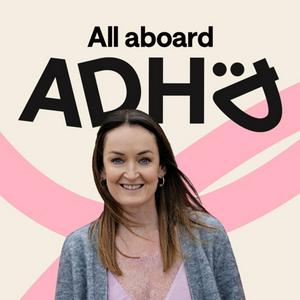
All Aboard ADHD is the podcast that helps parents and caregivers navigate the ADHD journey. Whether you're right at the beginning asking, “What now?” or further along the path wondering, “What next?” - All Aboard ADHD is here for you. Each episode brings expert insights, inspiring special guest stories, and real-life experiences from parents whose children have ADHD - helping you feel informed, empowered, and less alone. If you're supporting a child with ADHD, have ADHD yourself, or simply want to understand more about the incredible ADHD brain, join us on this journey of discovery.
Sitio web del podcastEscucha All Aboard ADHD, Había Una Vez by Naran Xadul | Cuentos Infantiles y muchos más podcasts de todo el mundo con la aplicación de radio.es
Descarga la app gratuita: radio.es
- Añadir radios y podcasts a favoritos
- Transmisión por Wi-Fi y Bluetooth
- Carplay & Android Auto compatible
- Muchas otras funciones de la app
 España

