PodcastsTecnologíaThe POWER Podcast

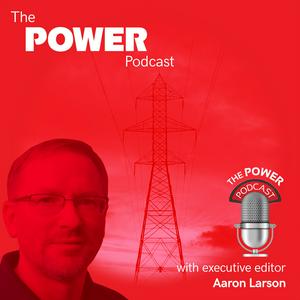
The POWER Podcast

POWER
The POWER Podcast
Último episodio

213 episodios

  • The POWER Podcast

    211. How Corporate Energy Buyers Are Reshaping the U.S. Grid: CEBA CEO Rich Powell on Data Centers, Nuclear, and Permitting Reform

    23/04/2026 | 35 min
    Corporate energy buyers have quietly become one of the most consequential forces shaping the U.S. electricity system. By the end of 2025, members of the Corporate Energy Buyers Association (CEBA) had procured more than 130 GW of carbon-free electricity in the U.S.—a footprint comparable to the combined generating capacity of California and Texas—and roughly double that globally.
    In this episode of The POWER Podcast, CEBA CEO Rich Powell joins POWER Executive Editor Aaron Larson for a wide-ranging conversation on how hyperscalers, manufacturers, retailers, and other large electricity users are responding to unprecedented demand growth and reshaping corporate procurement in the process.

    Topics covered include:

    • Why CEBA is "big tent" on clean technology, and how solar, nuclear, wind, geothermal, hydro, gas with carbon capture, and even fusion PPAs all figure into the mix
    • How AI-driven data center growth—and the chip fabs supplying them—are layering onto existing trends in electrification and internet expansion
    • The four-pronged nuclear revival: reactor restarts, license renewals, uprates, and advanced reactor bets on X-energy, Kairos, TerraPower, Oklo, and light-water SMRs
    • The Ratepayer Protection Pledge and how large buyers are addressing concerns that data centers push costs onto residential customers
    • Why ERCOT remains CEBA's "North Star" market, and how hybrid deals combining firm capacity with clean energy attributes are changing PPA structures
    • The rise of flexibility as a corporate procurement category, including demand-side management, on-site storage, and virtual power plants
    • How rising tariffs and supply chain inflation are squeezing solar, wind, and gas project economics
    • Powell's top policy ask: fundamental, legislatively codified reform of federal permitting and transmission planning

    A candid look at where the corporate clean energy market stands today—and what it will take to keep pace with the AI era.
  • The POWER Podcast

    210. Rural Co-ops Navigate a New Era of Load Growth, Rising Costs, and Policy Pressure

    16/04/2026 | 22 min
    After decades of flat electricity demand, the U.S. power sector is suddenly racing to keep up—and rural electric cooperatives are on the front lines. In this episode of The POWER Podcast, Jim Matheson, CEO of the National Rural Electric Cooperative Association (NRECA), joins executive editor Aaron Larson to discuss how roughly 900 co-ops serving 42 million people across 48 states are navigating surging data center load, supply chain pressures, and a shifting regulatory landscape.
    Matheson explains what makes the co-op model distinctive—not-for-profit, consumer-owned, and locally governed—and why affordability isn't a talking point but an operational imperative for utilities that serve 92% of America's persistent poverty counties. He then digs into the generation debate, drawing a key distinction between always-available sources like coal, gas, and nuclear, and intermittent resources like wind and solar, and makes the case for local flexibility over federal one-size-fits-all mandates.

    Other topics covered in the conversation include:

    • Why Matheson believes viable power plants shouldn't be retired before replacement capacity is in place.
    • The long-term outlook for nuclear, the status of small modular reactors, and a notable Michigan plant restart driven by two co-ops.
    • Where energy storage fits today—and what a true long-duration breakthrough would unlock.
    • How global supply chain pressures and tariffs are driving up costs on everything from turbines to meters.
    • NRECA's 2026 policy priorities, including EPA rule rollbacks, permitting reform, raising the USDA Rural Utilities Service lending cap, and FEMA reform.
    • The contractual and operational complexity of onboarding hyperscale data center loads, and why existing consumers shouldn't subsidize them.
    • How roughly 200 co-ops are now bringing broadband to underserved rural areas—a modern echo of 1930s rural electrification.

    Whether you're tracking the AI-driven load boom, policy developments in Washington, or the unique role cooperatives play in the U.S. electric sector, this conversation offers a clear-eyed view from someone who represents member-owned utilities covering 54% of the nation's land mass.
  • The POWER Podcast

    209. Renewables Reenvisioned: How Linea Energy Built a 7-GW Renewable Pipeline in Under Two Years

    09/04/2026 | 23 min
    Cassidy DeLine has spent more than 16 years developing renewable power plants. As the founder and CEO of Linea Energy, she's built an independent power producer with a pipeline exceeding 7 GW in roughly two years—a pace she calls "a bit unrivaled" for a company of its size and age. On this episode of The POWER Podcast, DeLine sits down with executive editor Aaron Larson to explain how Linea got there and where it's headed next.
    At the core of Linea's approach is a commitment to better information, earlier. Most developers don't get detailed site data, such as wetland boundaries, topography, and transmission characteristics, until after leases are signed and field teams are deployed. Linea has built proprietary simulations to surface that information before a single landowner conversation takes place, giving its team a sharper picture of risk before committing capital.
    That discipline extends to how the company handles offtake. Unlike most developers, Linea is comfortable advancing projects without a power purchase agreement (PPA) locked in. DeLine explains why signing a PPA too early can actually create risk, particularly in a market where tariff volatility and shifting capital costs have burned developers who fixed the revenue side before they had certainty on expenses.
    The conversation also covers Linea's growing role in the data center space. The company is doing bespoke energy development for data center operators and, in some cases, developing the data center itself. But DeLine is candid about the engineering challenges: artificial intelligence (AI) inference workloads cause demand to swing on a microsecond basis, which is fundamentally different from what the grid was built to handle. Linea has developed battery-and-inverter solutions to smooth those rapid fluctuations, guided by a simple principle: the lights have to stay on.
    DeLine shares her perspective on battery storage as a grid resource, the maturing but still incomplete renewable energy capital markets, the interconnection queue bottleneck, and what it means to commit to communities for a 40-year ownership horizon. She also discusses why Linea is evaluating small modular reactor technology—not because the economics work today, but because projects started now won't come online until the 2030s, and she wants to be ready for where the market is heading.
    Whether you're in development, finance, policy, or just following the energy transition, this is a conversation worth hearing.
  • The POWER Podcast

    208. The Genesis Mission: How AI Supercomputing Is About to Reshape American Science and Energy

    02/04/2026 | 31 min
    After 22 years at IBM, where he rose to senior vice president and director of IBM Research, Dr. Dario Gil now leads one of the most ambitious science and technology initiatives in a generation. As the Department of Energy's (DOE's) Under Secretary for Science and director of the Genesis Mission, Gil is orchestrating a convergence of high-performance computing, artificial intelligence (AI), and quantum computing aimed at transforming how America does science and engineering.

    The Genesis Mission rests on a straightforward premise: a computing revolution is underway, and the U.S. should harness it to double the productivity of its trillion-dollar-a-year research and development engine within a decade. The initiative is built on three pillars: a platform for accelerating discovery anchored in high-performance computing, AI supercomputing, and quantum computing; a portfolio of national challenges in energy, physical sciences, and national security; and a university engagement effort to rethink how future scientists and engineers are educated in the age of AI.

    Gil offered fusion energy as a prime example of how AI can compress timelines. By training neural networks on validated simulation data, researchers can build surrogate models that run thousands to tens of thousands of times faster, allowing engineers to iterate on reactor designs in hours rather than months. AI is also being applied to real-time plasma control through collaborative work involving Google DeepMind and Commonwealth Fusion Systems.

    On the grid, Gil shared two striking examples. The DOE's Office of Electricity is developing AI agents to help developers fix deficient interconnection applications—which account for 80% to 90% of submissions—potentially accelerating studies by up to a year. Meanwhile, Brookhaven National Laboratory's Grid FM emulator can speed power flow calculations by 100x, compressing what would be 20 years of conventional analysis of the Texas transmission grid into roughly two months.

    Gil was candid about the tension between AI as an energy solution and AI as a source of surging electricity demand, noting that planned data centers now reach gigawatt scale. The path forward, he said, involves optimizing the existing grid, accelerating nuclear energy, investing in fusion, and driving major efficiency gains in AI hardware.

    New supercomputing infrastructure is already being built through the Genesis Consortium, a partnership of 27 industrial players. Argonne and Oak Ridge National Laboratories are each standing up large GPU clusters this year, with a 100,000-GPU system planned for Argonne in 2027—the largest science-oriented cluster in the world.

    Asked what success looks like, Gil pointed to the AlphaFold story: 50 years of work produced 200,000 protein structures, then AI predicted 200 million in two years. Success, he said, will mean 50 to 100 comparable breakthroughs across all domains of science within three to five years.
  • The POWER Podcast

    207. Investing in Energy’s ‘Anti-Fragile’ Future

    26/03/2026 | 22 min
    With federal tax credits under threat and regulatory stability in short supply, Bala Nagarajan, managing director of the energy investments team at S2G Investments, explained what he looks for in a company. "Is the product or the solution sold by this business cheaper, faster, better than the incumbent solution?" he asked. If so, it's worth considering. If not, the investment may not be a fit. His team heavily discounts any business case that depends on policy incentives. The message for entrepreneurs: build something that wins on its own economics first, and treat incentives as upside rather than a foundation.

    Speaking as a guest on The POWER Podcast, Nagarajan introduced the concept of "anti-fragile businesses"—companies whose value propositions can withstand geopolitical shocks, policy reversals, and economic downturns. His showcase example was Aerones, a portfolio company that uses robots to repair wind turbine blades. The thesis: there is an enormous existing fleet that needs maintenance, qualified technicians are scarce and expensive, and the work is dangerous. A robotic solution that is cheaper, faster, and safer represents exactly the kind of durable opportunity S2G seeks.

    For most of Nagarajan's 17-year career in energy, demand growth was gradual, tied to long-horizon electrification trends in homes, transportation, and manufacturing. AI data centers have compressed that timeline dramatically. The demand for new electrons "is knocking on our doors today," he said. This surge, combined with constrained supply, has created a dynamic that many believe will keep power prices high for a long time. S2G prefers skepticism. "What if things change?" Nagarajan asked. "How well will our underwrite hold up in the midst of potential changes?"

    Where is investor enthusiasm strongest? Grid-enhancing technologies. Rather than building new generation capacity, the market wants solutions that make the existing grid better—advanced conductors, grid-enhancing software, and solid-state transformers. Conversely, the "power-to-X" sector—green hydrogen, sustainable aviation fuel, and similar products relying on cheap clean electricity—is struggling as rising power prices undermine their economics.

    The gap between well-capitalized developers and smaller players is also widening. Only developers with deep balance sheets can afford to "Safe Harbor" equipment—purchasing materials early to lock in expiring tax credit incentives. Smaller developers are being forced to sell projects or abandon them, driving capital toward established brands.

    Nagarajan also suggested natural gas is no longer a bridge fuel. Given demand for gas turbines from hyperscalers and the signals from manufacturers like GE Vernova and Siemens Energy, gas is firmly embedded in the energy mix. The consequence, he argued, is that emissions will rise, driving significant demand for high-integrity carbon credits—a space he is personally bullish on.

    His overarching message is one of disciplined optimism. The energy sector is experiencing a rare convergence of rising demand, constrained supply, and deep pools of capital. But the winners will be those who resist underwriting to today's enthusiasm and instead back businesses that can thrive regardless of which way the policy winds blow.
Más podcasts de Tecnología

Acerca de The POWER Podcast

The POWER Podcast provides listeners with insight into the latest news and technology that is poised to affect the power industry. POWER’s Executive Editor Aaron Larson conducts interviews with leading industry experts and gets updates from insiders at power-related conferences and events held around the world.

Sitio web del podcast

Escucha The POWER Podcast, Acquired y muchos más podcasts de todo el mundo con la aplicación de radio.es

Descarga la app gratuita: radio.es

  • Añadir radios y podcasts a favoritos
  • Transmisión por Wi-Fi y Bluetooth
  • Carplay & Android Auto compatible
  • Muchas otras funciones de la app

The POWER Podcast: Podcasts del grupo

  • Podcast Kinoko Power -Japón-
    Kinoko Power -Japón-
    Gobierno
Aplicaciones
Redes sociales
v8.8.13| © 2007-2026 radio.de GmbH
Generated: 4/30/2026 - 6:29:32 AM