

Escucha gratis este podcast en la aplicación: Descarga gratuita en la App Store
radio.es
Sleep timer
Favoritos
124 episodios
19 Years Tired. It Was Narcolepsy. | Lindsay Scola
24/09/2026 | 39 minEver been told your exhaustion is "just stress"?
Lindsay Scola spent 20 years at the center of politics and entertainment, advancing events for President Obama and working the Emmys, while secretly fighting to stay awake. It took 19 years, two "normal" sleep studies, and a meltdown in her doctor's office to finally hear the words: narcolepsy type 1.
Dr. Alison Kole and Lindsay talk about the narcolepsy symptoms that hide in plain sight, why home sleep tests can miss what's really going on, how to push for a referral to a sleep specialist, and the everyday strategies that keep Lindsay thriving today.
If you're tired of being tired, this one's for you. You are allowed to ask.
Find Lindsay at lindsayscola.com and watch her TEDx talk on YouTube.
More from Dr. Kole: askthesleepmd.comYour Skin Knows You Didn't Sleep: Sleep, Skin Aging & the Truth About Korean Skincare with Dr. HeeJin Kim
16/09/2026 | 41 minHave you ever looked in the mirror after a bad night and thought, my face did not sign up for this?
You're not imagining it. That dullness, the sunken eyes, the fine lines that look a little deeper than they did yesterday — that's your skin talking. And when a few bad nights turn into a few bad months, it stops being about looking tired and starts being about accelerated aging.
In this episode, I'm joined by Dr. HeeJin Kim — a physician trained in Pulmonary, Critical Care, and Geriatric Medicine who has since become a skincare expert and beauty educator. She and her sister founded PureenMD, with locations in Fort Lee, New Jersey and Seoul, Korea. She blends dermatology-informed routines, evidence-based ingredients, and Korean skincare philosophy into strategies real people can actually follow.
We get into what's real and what's hype — including the part where she tells me, on the record, that half of what I've been buying doesn't do what I thought it did.
In this conversation:
Why HeeJin asks every patient how they sleep before she talks about products
What one bad night does to your skin — and what chronic poor sleep does that's structurally different
The cortisol–acne connection that doesn't stop when you leave your twenties
Collagen 101: why production peaks around age 28 and what actually slows the decline
Oral collagen — where the evidence is thin, where it isn't, and why she takes it anyway
Topical collagen: the honest answer (it's not what the label implies)
Korean vs. American sunscreen — the regulatory reason they feel different, and why "made in Korea" on Amazon may not mean what you think
Why anti-sunscreen content goes viral and why it's wrong
The short list: gentle low-pH cleanser, moisturizer, SPF — then vitamin C and retinol after 30
Retinol vs. retinal vs. tretinoin, and how to start without wrecking your barrier
PDRN, "salmon sperm," and which serums are worth it
Is eye cream a scam? (Her answer surprised me.)
Gwanri — the Korean philosophy of maintenance, and why barrier preservation beats aggressive lasers and peels
The one habit she'd change for every woman listening — and the overnight window most of us are scrolling straight through
And a bonus cameo from my daughter's drum practice, because this is real life. --> may need to get removed if not including.
If you take away one idea about how your nights are showing up on your face in the morning, do something kind for your future skin: protect your sleep tonight.
Sleep is not a luxury. It may also be the most underrated skincare product that exists — and it's free.Fix Your Circadian Rhythm | Dr. Olivia Walch, PhD
09/09/2026 | 35 minIf you've ever typed "why can't I sleep" or "how do I fix my circadian rhythm" into a search bar at 2 a.m., this episode is for you.
Most of us have been taught to think about sleep in one dimension: how many hours did I get? But there's a second dimension almost nobody talks about — rhythm. And when your rhythm is off, more hours in bed won't save you.
This week I'm joined by Dr. Olivia Walch, PhD, a mathematician and sleep scientist, author of Sleep Groove, and CEO of Arcascope, the company behind the circadian health app Clairoe. Olivia studies the biology most of us are unknowingly fighting every single day — and she explains it in a way that finally makes it usable.
We get into what light actually does to your body at different times of day, why the outdoors can be 100 to 1,000 times brighter than your living room without you noticing, and whether blue-light-blocking glasses do anything at all. We talk about red light at night and the cells in your eye that talk directly to your circadian clock. We cover meal timing, the clock in your digestive system, and why eating on a schedule can quiet nighttime hunger without willpower. And we take on one of the most common things I hear in my office: "I've always been a short sleeper." The genetics say four in 100,000 people. The math says it's probably not you.
Olivia also shares the study that finally fixed her own sleep — and why the secret ingredient was accountability, not information.
In this episode:
Why sleep rhythmicity matters as much as sleep duration
What light does at morning, midday, night, and 3 a.m. — and why timing changes everything
The honest answer on blue blockers, brightness, and wavelength
Red light at night: real mechanism, realistic expectations
Meal timing, the digestive clock, and finding your "food groove"
The short sleeper myth and why tired brains can't grade their own performance
How the Clairoe app translates wearable data into personalized light timing for shift workers, travelers, and everyone in between
About the guest: Dr. Olivia Walch, PhD, is a mathematician and sleep scientist, the author of Sleep Groove, and the CEO of Arcascope. Her app, Clairoe (C-L-A-I-R-O-E), uses circadian science to predict your biological time and tell you when to seek and avoid light.
Connect with Olivia: clairoe.io · arcascope.com
Connect with Dr. Alison Kole: Website: askthesleepmd.com Podcast: askthesleepmd.com/simwp Newsletter — Diary of a Sleep Doctor: alisonkole.substack.com Instagram & YouTube: @askthesleepmd Work with me: askthesleepmd.com/workwithme
If this episode helped you better understand your sleep, please rate, review, and share it with someone who needs to hear it.
This podcast is for educational purposes and is not a substitute for individualized medical advice. If you are struggling with your sleep, please speak with a qualified sleep provider.National Sleep Foundation Talks Kids Sleep
02/09/2026 | 30 minYour kid is bouncing off the walls at 7 p.m., melting down over the wrong-colored cup, and you're standing there thinking: how are they not tired?
Here's what nobody tells you. When adults are sleep-deprived, we run out of battery — slow, foggy, flat. When kids are sleep-deprived, the system doesn't drain. It glitches. They speed up. Which means the child who looks least tired is often the one who needs sleep most.
New data says this is happening in almost half of American homes.
I'm joined by Dr. Joseph Dzierzewski, PhD, Senior Vice President of Research and Scientific Affairs at the National Sleep Foundation, to unpack the 2026 Sleep in America® Poll: 44% of U.S. children aren't consistently getting the sleep they need, and most parents underestimate how much their child needs by more than an hour a night.
We cover the updated NSF sleep duration guidelines hour by hour, why tired kids look hyperactive instead of sleepy, bed-sharing and the social side of sleep, and what you can change tonight.
Read the full poll at thensf.org.
Share this with one parent or pediatric provider you know. Until next time — sleep well.Back To School Sleep Reset featuring Dr. Sujay Kansagra
26/08/2026 | 28 minThe Back-to-School Sleep Reset Every Family Needs Right Now
Summer let everyone drift. Later bedtimes, slower mornings, no alarms. Then the school calendar shows up and suddenly you're asking a kid whose body clock is set to midnight to be alert at 7 a.m.
You are not alone, and you are not a bad parent. This is biology.
This week Dr. Alison Kole sits down with Dr. Sujay Kansagra — pediatric neurologist and sleep medicine specialist at Duke, the voice behind @thatsleepdoc, and the inventor of Lullabee, a smart crib mattress built on actual infant sleep science. He is one of the clearest communicators in sleep medicine, and this conversation is packed with things you can start doing tonight.
In this episode:
How much sleep kids actually need at every age, so you can measure how far off you really are
Why summer drift isn't automatically harmful, and the two things that matter more than a perfect schedule
Toddlers are larks. Teenagers are owls. Why fighting either one is a losing strategy
The "robotic return to bed" technique for bedtime battles, and why Dr. Kansagra once used it 213 times in a single night
How to tell the difference between a child pushing limits and a child who is anxious, especially when they can't name the feeling themselves
The 10 to 15 minute rule for shifting a teenager's clock back before day one of school, plus the light, dim, and meal-timing levers that make it stick
Where melatonin actually has evidence behind it as a clock-shifting agent, why the dose is far smaller and the timing far earlier than most people assume, and why this is a conversation for your provider and not the gummy aisle
Why a consistent wake time matters more than a consistent bedtime
The counterintuitive weekend fix: don't sleep in, take a strategic midday nap instead. Twenty to thirty minutes or a full ninety, and why the middle is the worst place to land
Why this nap advice is not for chronic insomniacs
Permanent standard time vs. permanent daylight saving time: the morning-light argument, the school-bus safety argument, and what happened the last time this country tried it in the 1970s
How school start times and daylight saving stack the deck against developing teenage brains
The story behind Lullabee: how it soothes, how it weans itself as a baby's sleep matures, and why it re-engages during regressions
Sleep is not a luxury. It's a vital sign. And for your kids, it's the foundation the whole school year is built on.
About the guest Dr. Sujay Kansagra is a pediatric neurologist and sleep medicine specialist at Duke University Medical Center, the creator behind @thatsleepdoc, and the inventor of Lullabee.
Find him: @thatsleepdoc on Instagram, TikTok, Facebook, YouTube, and Threads Lullabee: lullabee.com
Connect with Dr. Alison Kole Website: askthesleepmd.com Instagram: @askthesleepmd
If this episode helped you build your back-to-school sleep plan, follow the show, share it with one parent who needs it, and leave a review so more families can find it.
Great days start the night before. Sleep well.
This podcast is for educational purposes and is not medical advice. Talk with your own clinician about your family's situation.
Más podcasts de Fitness
 The Line with Dr Kristen HolmesDeportes, Educación, Fitness, Salud y forma física, Superación personal
 Biopotencial de Pau NinjaCiencias, Cursos, Educación, Fitness, Medicina alternativa, Naturaleza, Nutrición, Salud y forma física
 Fitness en la NubeDeportes, Fitness, Nutrición, Salud y forma física
 Well Beyond 40Fitness, Nutrición, Salud y forma física
 Cuaderno de EntrenamientoFitness, Salud y forma física
 Radio Fitness RevolucionarioFitness, Medicina, Nutrición, Salud y forma física
 The E3 Rehab PodcastFitness, Medicina, Salud y forma física
 Los Otros de 77 Feet PodcastFitness, Salud y forma física
Podcasts a la moda de Fitness
- The Line with Dr Kristen HolmesDeportes, Educación, Fitness, Salud y forma física, Superación personal
 TRAINEDFitness, Nutrición, Salud mental, Salud y forma física
 Rox Lyfe - The HYROX PodcastFitness, Salud y forma física
 MasmusculoFitness, Salud y forma física
 The Jordan Syatt PodcastFitness, Salud y forma física
- Cuaderno de EntrenamientoFitness, Salud y forma física
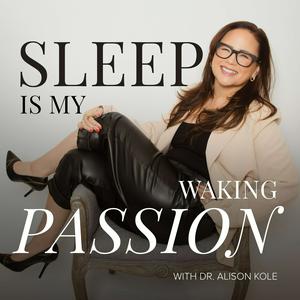
Acerca de Sleep is My Waking Passion
Hosted by Dr. Alison Kole—a triple-boarded pulmonary critical care and sleep medicine physician, reformed chronic insomniac, devoted mom, and unapologetic sleep health creator—this hit podcast takes you on the real, unfiltered journey inside the science and soul of sleep. Each week, with wisdom forged from the trenches of night shifts and the chaos of motherhood, Alison sits down with top-tier experts and ordinary people with extraordinary sleep stories, unraveling how sleep shapes happiness, health, and destiny. If you want the 360° truth—the wins, the setbacks, the breakthroughs—about why every hour of sleep could be the most important hour of your life, this is the show that will change how you see your pillow forever. Sleep isn’t just her passion—it’s the key to waking up to your potential. Hit subscribe and transform your nights, days, and dreams.
Sitio web del podcastEscucha Sleep is My Waking Passion, The Line with Dr Kristen Holmes y muchos más podcasts de todo el mundo con la aplicación de radio.es
Descarga la app gratuita: radio.es
- Añadir radios y podcasts a favoritos
- Transmisión por Wi-Fi y Bluetooth
- Carplay & Android Auto compatible
- Muchas otras funciones de la app
Descarga la app gratuita: radio.es
- Añadir radios y podcasts a favoritos
- Transmisión por Wi-Fi y Bluetooth
- Carplay & Android Auto compatible
- Muchas otras funciones de la app
Sleep is My Waking Passion
Escanea el código,
Descarga la app,
Escucha.
Descarga la app,
Escucha.
 España