

Escucha gratis este podcast en la aplicación: Descarga gratuita en la App Store
radio.es
Sleep timer
Favoritos
134 episodios

The Money Mistakes That Keep High Earners Stuck
14/10/2026 | 14 minEpisode Description
Many people believe that opening a retirement account means their money is automatically invested.
But that's not always the case.
In this episode of The Budgetdog Breakdown, Brendan answers listener questions about overlooked 401(k) investments, index funds versus real estate, and building a financial system that works for people who struggle with traditional budgeting.
The conversation also explores the trade-offs between income and quality of life, helping a stay-at-home spouse feel financially equal, and figuring out how to reduce working hours when your health is suffering.
Money isn't just about earning more.
It's about building a financial system that gives you the freedom to make intentional choices.
Episode Timeline and Highlights
00:00 The cost of leaving retirement savings in cash
01:56 Index funds vs. real estate and angel investing
03:14 Automating finances when budgeting feels impossible
04:51 Turning down a $60K raise for quality of life
08:20 Creating financial equality in a single-income household
10:38 Reducing work hours without financial chaos
13:12 Taking a leap of faith toward a different life
Key Takeaways
• A retirement account is an account, not an investment itself.
• Review your investment selections and allocations across your financial accounts.
• You don't need complicated investments to build wealth.
• Automating your finances can reduce the need for daily budgeting.
• A higher salary isn't always the best choice for your life.
• Shared finances require trust, communication, and intentional conversations.
• Understanding essential expenses can help you evaluate a career change.
• Financial planning can create more flexibility when life changes.
Quotables
"Wealthy people aren't wealthy because they win every day. They just use systems that make losing hard."
"The purpose of life is not to sit there and be owned by your money."
"I don't look for balance. I look to focus on the things that are important."
Final Thought
Your financial future isn't determined by how much money you make alone.
It's shaped by the systems you build, the risks you choose to take, and whether your money supports the life you actually want to live.Making More Money Won't Fix Your Finances
07/10/2026 | 19 minMaking more money doesn't automatically solve your financial problems.
In this episode of The Budgetdog Breakdown, Brendan answers questions about Roth conversions after a job loss, what to do after maxing out retirement accounts, paying off a mortgage versus investing, and why high-income earners can still feel like they're barely getting ahead.
The conversation explores how a lower-income year can potentially create an opportunity for a Roth conversion, why financial planning needs to be based on individual goals, and how to think about balancing investing with debt payoff. Brendan also shares the reasoning behind paying off his own mortgage at 28 and how reducing personal financial risk gave him the flexibility to take a major entrepreneurial risk.
The episode also dives into the difference between tax preparation and proactive tax planning. For business owners and high earners, waiting until tax season may mean missing opportunities that could have been identified throughout the year.
Money isn't just about how much you make.
It's about having a system for what you do with it.
Episode Timeline and Highlights
00:00 Why wealthy people rely on systems
00:18 Roth conversions after a job loss
01:25 When converting pretax money to Roth can make sense
02:22 Alternatives to a Roth conversion
03:35 Using lower investment values strategically
04:13 What to do after maxing out retirement accounts
05:19 The 15% retirement investing framework
06:40 When to prioritize an HSA
07:04 When taxable investing makes sense
07:40 Paying off your mortgage vs. investing
08:18 Why Brendan paid off his mortgage at 28
09:11 Understanding risk
09:32 Investing before aggressively paying off debt
10:15 Leaving Deloitte to build Budgetdog
11:43 Managing risk before taking a leap
12:29 Why $250K can still feel like you're broke
13:52 The importance of financial systems
14:59 Making $350K without a tax strategy
15:17 Tax preparation vs. tax planning
16:40 Why not all CPAs provide the same service
17:33 What proactive tax planning looks like
18:44 Why business owners need proactive tax strategy
19:20 Final thoughts
Key Takeaways
• A lower-income year can potentially create Roth conversion opportunities
• Pretax-to-Roth conversions create taxable income
• Retirement planning should be based on your specific goals
• Maxing out tax-advantaged accounts doesn't mean you're finished
• Mortgage payoff and investing can both be valid strategies
• Managing risk is an important part of financial planning
• High income without a system can still lead to financial stress
• Tax preparation and tax planning are different services
• Business owners can benefit from proactive tax planning
• Your money needs a system, not just a higher income
Quotables
"Making more money doesn't automatically mean you're good with money."
"Rich people and wealthy people can manage their risk really well."
"Your income is no longer the issue. You don't have a system."
"Making more money isn't the same as building wealth."
The goal isn't simply to earn more.
It's to build a system that makes the money you earn actually work for you.The Retirement Accounts You're Probably Using Wrong
30/09/2026 | 21 minSaving for retirement is only part of the equation.
In this episode of The Budgetdog Breakdown, Brendan answers listener questions about retiring at 50, Roth conversion ladders, tax-efficient investing, asset location, and the HSA's role in retirement planning.
The conversation begins with the importance of building flexibility across pretax, Roth, and taxable accounts. Brendan explains how having too much money concentrated in one tax bucket can create challenges when it's time to withdraw, and walks through the concept of Roth conversion ladders for people retiring before traditional retirement age.
We also explore why the location of your investments matters, including why interest-producing assets such as bonds can be less tax-efficient in taxable brokerage accounts. Finally, Brendan breaks down the HSA's triple tax benefit and explains why it can function as an additional retirement-planning tool.
Money isn't just about how much you accumulate.
It's also about how efficiently you can use it.
Episode Timeline and Highlights
00:00 Why wealthy people rely on systems
00:18 Retiring at 50 with a pretax-heavy portfolio
01:17 The three investment buckets
02:33 Understanding tax-efficient withdrawals
03:34 How Roth accounts work
04:15 Taxable brokerage accounts and tax flexibility
04:56 Required minimum distributions
05:15 Understanding Roth conversion ladders
06:10 How conversion ladders work
07:11 When Roth conversions may make sense
08:04 Rule 72(t) and Rule of 55
08:57 Tax preparation vs. tax strategy
09:36 Roth conversions after a job loss
10:41 Why asset location matters
13:52 Understanding dividends and taxes
14:12 Why bonds can be tax inefficient
15:46 The HSA triple tax benefit
16:45 Reimbursing yourself for medical expenses
17:44 Why an HSA can function as a retirement account
18:59 What changes at age 65?
19:39 The importance of keeping receipts
20:57 Final thoughts
Key Takeaways
• Retirement planning requires more than accumulating money • Pretax, Roth, and taxable accounts each provide different forms of flexibility • Roth conversions may be worth considering during lower-income periods • Tax strategy should be based on your individual circumstances • Asset location can affect your after-tax results • Interest income from bonds is generally taxed differently from long-term capital gains • HSAs offer multiple tax advantages • Keeping documentation for qualified medical expenses is important • Planning withdrawals before retirement can help create greater flexibility
Quotables
"If you only fill up one bucket...it makes your journey much harder."
"How you withdraw that money matters."
"Your CPA is likely set up to do tax prep...they're not thinking about the strategy."
"The HSA is one of my favorite accounts."
The goal isn't simply to accumulate as much money as possible.
It's to build a financial structure that gives you flexibility when you actually need to use it.Stop Chasing Gold: The Investment Advice You Actually Need
23/09/2026 | 8 minWhere you put your money depends on what you're trying to accomplish.
In this episode of The Budgetdog Breakdown, Brendan answers listener questions about saving for a newborn, quarterly taxes for freelancers, round-up investing apps, saving for a house, bond ladders, and investing in gold.
The conversation explores the differences between 529s and UPMAs, why financial goals should determine where you allocate your money, and why short-term goals require a different approach to risk than long-term investing.
Brendan also explains why simple strategies can sometimes make more sense than chasing higher returns, especially when the money is needed within a few years. The episode closes with a discussion about gold, commodities, and the risks of making investment decisions based on what everyone else is doing.
Money isn't just about maximizing returns.
It's about making the right decision for your goals and timeline.
Episode Timeline and Highlights
00:00 Why wealthy people use systems
00:18 Saving for a newborn: 529 vs. UPMA
01:44 Allocating money toward children's goals
02:18 Understanding quarterly taxes as a freelancer
03:49 Do round-up investing apps actually work?
04:51 Saving for a house in three years
05:07 Understanding bond ladders
06:04 Risk vs. return for short-term goals
06:33 Should you invest in gold?
07:16 Gold and silver promotions
07:51 Why following the crowd can hurt your investments
08:28 Final thoughts
Key Takeaways
• Your financial goals should determine where you put your money • 529s and UPMAs serve different purposes • Freelancers need to understand their tax obligations • Small automated contributions don't replace intentional planning • Short-term goals require careful attention to risk • A three-year goal may call for a different strategy than retirement investing • Gold is a commodity and shouldn't automatically be treated as a retirement solution • Investment decisions shouldn't be based solely on what everyone else is doing • Simple financial strategies can sometimes be more appropriate than complicated ones
Quotables
"Every account has a purpose or has an advantage or a pro and con."
"You have to be super intentional."
"I would rather you have that money at the end of this three years than trying to beat the market."
"Nobody knows the future."
The goal isn't to find the investment everyone is talking about.
It's to understand what your money needs to accomplish—and build your strategy around that.The Real Reason You Still Feel Broke Even When You Earn More
16/09/2026 | 21 minMaking more money doesn't always create a greater sense of financial security.
In this episode of The Budgetdog Breakdown, Brendan answers real listener questions about teaching children financial literacy, investing without emotion, achieving financial independence, and why people can earn significantly more money than their parents while still feeling financially behind.
The conversation explores why financial education needs to become part of everyday family life, how parents can teach children about money through simple conversations, and why financial confidence comes from education and repeated small wins rather than trying to have one perfect conversation.
Brendan also discusses why investing should be boring, how automation can remove emotional decision-making, and why constantly checking your portfolio can lead to poor financial behavior. The episode also explores the idea of retiring at 40 and the importance of changing your beliefs and systems before expecting different financial results.
Finally, Brendan breaks down why earning more doesn't necessarily mean feeling richer, discussing inflation, purchasing power, and the importance of turning active income into investments and assets.
Money isn't just about how much you earn.
It's about what you do with it.
Episode Timeline and Highlights
00:00 Why wealthy people rely on systems
00:18 Teaching kids about money
03:26 Making financial education part of your family culture
04:21 Taking ownership of your financial education
05:21 Teaching children about ownership and investing
06:39 Why investing should be boring
08:04 Automating your financial system
09:25 Is FIRE at 40 actually realistic?
10:34 Beliefs, identity, environment, and systems
11:57 Building confidence through micro-wins
13:10 Checking your investments too often
14:03 Why emotional investing can hurt your results
14:58 What happens when the market drops
16:37 Why earning more can still leave you feeling broke
17:27 Inflation and the money supply
19:03 Why owning assets matters
20:09 Turning income into investments
Key Takeaways
• Financial education should become part of everyday life • Parents need to educate themselves before teaching their children • Investing doesn't need to be exciting to be effective • Automation can reduce emotional financial decisions • Constantly checking investments can encourage reactive behavior • Small wins can build confidence over time • Financial independence requires changing both behavior and systems • Higher income doesn't automatically create greater purchasing power • Inflation can reduce the value of money held in cash • Turning active income into assets can help build long-term wealth
Quotables
"Financial education starts with you, not your ten-year-old."
"The game of money and the game of wealth is boring."
"If you can prove to yourself that you're going to do what you say you're going to do, you'll build micro confidence."
"Your financial future isn't determined by where you are today. It's determined by the system you build from this point forward."
The goal isn't to make money exciting.
It's to build a system that works whether you're excited, scared, or completely uninterested.
Más podcasts de Carrera





Podcasts a la moda de Carrera

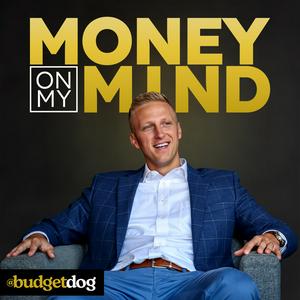
Acerca de Money On My Mind
From $300k+ in debt to Millionaire status by 30 years old, I have realized the power of a budget.
At 23, I was in a dreadful position, but I knew that the only person that could change that was ME! I dug deep and put together a financial plan that changed my life forever.
Now I am debt free and just quit my 9-5 to pursue Budgetdog full time!
I made this podcast to empower others with the same knowledge and tools that I use in my own personal finances!
Sitio web del podcastEscucha Money On My Mind, MENTOR360 y muchos más podcasts de todo el mundo con la aplicación de radio.es
Descarga la app gratuita: radio.es
- Añadir radios y podcasts a favoritos
- Transmisión por Wi-Fi y Bluetooth
- Carplay & Android Auto compatible
- Muchas otras funciones de la app
Descarga la app gratuita: radio.es
- Añadir radios y podcasts a favoritos
- Transmisión por Wi-Fi y Bluetooth
- Carplay & Android Auto compatible
- Muchas otras funciones de la app

Money On My Mind
Escanea el código,
Descarga la app,
Escucha.
Descarga la app,
Escucha.
 España
