Powered by RND
PodcastsEducaciónBallet Science

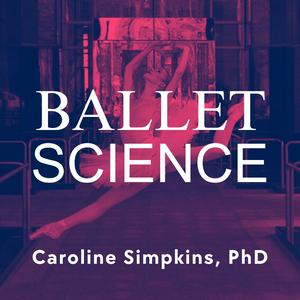
Ballet Science

Caroline Simpkins, Ph.D.
Ballet Science
Último episodio

Episodios disponibles

5 de 29
  • Does Ballet Help Older Adults Reduce Fall Risk?
    Falls are the #1 cause of injury in older adults worldwide, but can ballet help?In this episode of the Ballet Science Podcast, Caroline Simpkins, PhD, breaks down her published research in the Journal of Dance Medicine & Science, examining whether recreational ballet dancers aged 55+ show advantages in key fall-risk factors compared to non-dancers.Using functional mobility tests, leg strength assessments, cognitive screening, and physical activity measures, this study explored how ballet may support strength, balance, power, coordination, and healthy aging.In this episode, you’ll learn:Why falls are such a major public-health issueHow ballet uniquely trains strength, balance, and neuromuscular controlHow older ballet dancers performed on sit-to-stand, timed-up-and-go, strength tests, and moreWhy dancers showed significantly better physical function than non-dancersWhy fall history alone doesn’t tell the full storyWhat this means for fall prevention programs and healthy agingThe next steps for ballet-based research and structured interventionsThis episode is perfect for dancers, teachers, older adults, clinicians, and anyone interested in how movement practices support long-term health.📄 Read the full publication: Simpkins C, Ahn J, Yang F. Recreational Ballet Practice Is Associated with Improved Fall Risk Factors in Older Adults. Journal of Dance Medicine & Science. 2025. https://doi.org/10.1177/1089313X251380085Subscribe for weekly episodes connecting biomechanics, injury prevention, and dance science.Watch the Video on YouTubeFollow Ballet Science:Website: https://ballet.scienceInstagram: https://instagram.com/ballet.science Facebook: https://facebook.com/ballet.science X: https://x.com/ballet_science
    --------  
    13:05
  • Building Strong Male Ballet Dancers | Shane Wuerthner
    Unlock what it really takes to build strong, resilient male ballet dancers, without “bulking up” or losing artistry. In this episode of the Ballet Science Podcast, Caroline Simpkins sits down with Shane Wuerthner (former principal dancer and founder of Athletistry) to talk all things strength training for male dancers and students.We break down the biggest misconceptions about lifting weights, why “just do push-ups” isn’t enough, and how to design smart, dancer-specific strength programs for partnering, jumps, turns, and overhead lifts. Shane also explains how to support young male dancers who feel intimidated stepping into the gym, how to introduce load and plyometrics safely during growth, and how strength training can help prevent common injuries to the back, knees, and Achilles.Looking ahead, we discuss how strength training for male dancers may evolve over the next decade in professional companies and schools, the importance of collaboration between teachers and strength coaches, and why anatomy and physiology education is so powerful for dancers.In this episode, we cover:The biggest myths male ballet dancers hear about strength trainingHow to design programs for partnering, overhead lifts, jumps & turnsWhy “muscle-bound” fears are often misunderstoodHow to support young men who are new (or nervous) in the gymCommon weaknesses and movement patterns in male ballet studentsHow smart strength training can reduce injury risk and improve longevityWhat the future of strength training in ballet could look likeFollow Ballet Science:Website: https://ballet.scienceInstagram: https://instagram.com/ballet.science Facebook: https://facebook.com/ballet.science X: https://x.com/ballet_scienceFollow Shane Wuerthner, Athletistry:Website: https://www.athletistry.au/Instagram: https://instagram.com/athletistryFacebook: https://www.facebook.com/athletistryYouTube: https://www.youtube.com/@AthletistryofficialWatch Full Interview on YouTubeLogo Photo: Richard Calmes
    --------  
    58:27
  • Strength Training Benefits For Ballet Dancers | Kendall Baab
    Welcome to the Ballet Science Podcast, where we bring science into the studio to help dancers of all ages and abilities perform their best on stage and off. In this episode, host Caroline Simpkins, PhD, is joined by Kendall Baab, a Los Angeles–based strength and conditioning coach, dance science educator, and founder of Body Kinect.We dive into how strength training can transform ballet technique, reduce injury risk, and build confidence for dancers, from young studio students to pre-professional and professional performers.In this episode, we cover:Kendall’s journey from studio dancer to dance science and strength coachHow lifting weights improved her own dancing (goodbye, low back pain!)The lingering myth that strength training makes dancers “bulky” or less flexible, and why that’s not trueKey biomechanical benefits of strength training for ballet (balance, jumps, leg height, endurance)Why upper-body and core strength are essential for turns, jumps, and overall controlFoundational movement patterns every dancer should train (squat, lunge, hinge, push, pull, single-leg, carry, rotation)How strength work can help prevent chronic overuse injuries and support long-term career longevityWhat movement efficiency means in ballet and how coordination + strength improve performancePractical advice for dancers who are new to cross-training (bands, weights, gym confidence, simple starting routines)Why pointe work demands full-body strength, not just calf raises and TherabandsWhether you’re a ballet dancer, studio teacher, dance parent, or love the science behind movement, this episode will give you practical, evidence-informed insights you can use right away.Follow Kendall Baab:Website: https://www.bodykinect.org/Instagram: https://instagram.com/trainwithkendallYouTube: https://https://www.youtube.com/@trainwithkendallWatch Video on YouTubeLogo Photo: Richard Calmes

    --------  
    59:00
  • Pointe Shoes: The Athletic Shoes of Ballet | Dr. Jessica Aquino
    From studio to science lab, this episode of the Ballet Science Podcast dives into how new vs. dead pointe shoes change lower-extremity biomechanics and muscle activity in professional ballet dancers. Dr. Caroline Simpkins, a former ballerina turned researcher, is joined by Dr. Jessica Aquino, DPT, ATC, a physical therapist and athletic trainer specializing in dance medicine, sports medicine, and performing arts medicine.We break down what “dead” pointe shoes really are, how Dr. Aquino measured differences using 3D motion capture, force plates, and EMG, and what those findings mean for stability, torque at the ankle, tibialis anterior activation, injury risk, and performance. You’ll hear practical guidance for dancers, teachers, and directors on when to retire a pair, why not to perform in a brand-new shoe, and how to think about break-in versus break-down.We also look ahead to pressure sensors, new materials (polymer shanks, 3D-printed options), and how sports-science methods can inform pointe shoe design, without losing the classical aesthetic.If you love evidence-based dance, hit Like and Subscribe for weekly episodes on biomechanics, injury prevention, mindset, and more. Share this with a dancer or teacher who needs it!Publication Discussed:Aquino, J., Amasay, T., Shapiro, S., Kuo, Y. T., & Ambegaonkar, J. P. (2021). Lower extremity biomechanics and muscle activity differ between ‘new’and ‘dead’pointe shoes in professional ballet dancers. Sports biomechanics, 20(4), 469-480. Follow Dr. Jessica Aquino:Instagram: @dr.beyondbarre Watch Video on YouTube⁠Logo Photo: Richard Calmes
    --------  
    40:15
  • Sports Psychology for Dancers | Lauren Ostrander McArdle on Confidence, Mindset & Performance
    Former professional ballerina Lauren Ostrander McArdle, MS (Sports Psychology), joins the Ballet Science Podcast to unpack the mental side of dance... how to manage perfectionism, channel nerves, and build a reliable pre-performance routine. We delve into injury psychology, explore identity beyond ballet, and discuss practical sport psychology tools that dancers can utilize in class, auditions, and on stage.What you’ll learn:🧠 How Mindset Impacts Technique, Artistry, And Consistency😮‍💨 Tools For Performance Anxiety (Breathing, Self-Talk, Arousal Regulation)💪 Building Confidence That Isn’t Dependent On Casting Or External Validation🩹 Injury Psychology In Three Phases: Acute, Rehab, And Return-To-Dance📋 Ritual vs. Routine: Evidence-Based Steps To Perform At Your Best💎 Navigating Career Transitions And Dancer Identity After Retirement🎓 How To Find Qualified Mental Performance Help (What CMPC Means)Follow Lauren Ostrander McArdle:Instagram: @behindthecurtain.spp⁠Watch Video on YouTubeLogo Photo: Richard Calmes
    --------  
    1:11:35

Más podcasts de Educación

Acerca de Ballet Science

The Ballet Science podcast is hosted by Caroline Simpkins, Ph.D., a former ballerina turned researcher. This podcast brings science into the studio to help dancers of all ages and abilities give their best performance both onstage and off, and reveals how the science of ballet can benefit anyone who moves. Each week, we will explore the intersection of science and ballet—from injury prevention and biomechanics to nutrition, mindset, and everything in between.
Sitio web del podcast

Escucha Ballet Science, Ojalá lo hubiera sabido antes y muchos más podcasts de todo el mundo con la aplicación de radio.es

Descarga la app gratuita: radio.es

  • Añadir radios y podcasts a favoritos
  • Transmisión por Wi-Fi y Bluetooth
  • Carplay & Android Auto compatible
  • Muchas otras funciones de la app
Aplicaciones
Redes sociales
v8.0.7 | © 2007-2025 radio.de GmbH
Generated: 12/8/2025 - 2:13:30 AM