

Escucha gratis este podcast en la aplicación: Descarga gratuita en la App Store
radio.es
Sleep timer
Favoritos
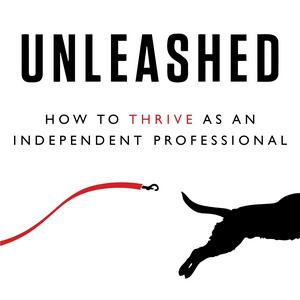
Unleashed - How to Thrive as an Independent Professional
Will Bachman
Último episodio
640 episodios
656. Jean-Christophe Lanoix, Turboconsultant: Running a Solo Practice on AI Agents, end-to-end
03/08/2026 | 42 minJean-Christophe Lanoix is the founder of Turboconsultant. He spent seventeen years at Hinicio, a strategy consultancy specialising in hydrogen — joining as an intern, rising to Associate Director and leaving in 2024, two years after the firm's exit. He now builds the system he wishes he had had.
Introducing Turboconsultant
An execution layer for solo consultants: a virtual team of AI agents spanning the whole practice — business development, research, methodologies, marketing and content, deliverable production, quality control, meetings and follow-up, admin. The consultant directs. The agents execute. It installs as a plugin on Claude Cowork and turns a generalist agentic workspace into a consulting-grade one. Three things separate it from a general-purpose assistant.
Personalisation. A one-time onboarding hands it the consultant's own methodologies, templates, frameworks and voice. What comes out arrives in their template, follows their methods, and reads in their words.
Quality control. Every document it produces passes three layers of audit before it leaves — sources traced, figures recomputed, claims contested by models outside the system. That is where AI hallucination and error get caught.
Data walling. Nothing moves from one engagement to another, and the models do not train on client work.
And it is one system rather than a patchwork of tools: the whole practice runs in a single environment that sharpens with every engagement.
The net effect, measured on the existing user base, is a 25x on average, while improving the general quality of the work.
Demonstration of Turboconsutlant
Both cases are invented, and so is the consultant behind them — a generic profile carrying no proprietary methodologies, no past deliverables, no writing to learn from. The engagement starts the way a real one does: a request for proposal lands by email. Everything that follows comes out of that one document and public sources.
The proposal — thirty minutes
The system interviews the consultant first — how they want to work, whether they know the client, who delivers, what their day rate is. Then it writes, in their own template: context, the question behind the client's question, objectives, approach and methodology, scope in and out, work packages, data room requirements, timeline, budget options, next steps. The consultant reviews and signs off. Nothing leaves unvalidated.
Without AI, a proposal of that depth is several man-days.
The methodology section — six work packages mapped onto one governing question.
Pricing the work — three options, fees, payment terms. A commercial proposal, not an analysis.
The kick-off pack — fifteen minutes
One instruction produces the whole pack: the client kick-off deck, an internal briefing note — assumptions, questions to ask, objections to expect, the landmines — and the data room request list in Excel, item by item, with what each one unblocks and the date it is needed by.
In a firm, this is junior work. A solo consultant has no junior. It costs them half a day to a full day, every time.
The work-package sequence agreed at kick-off, and the date after which the analysis stops waiting for client data.
The First Deliverable — forty-five minutes
The pattern holds whatever the sector: the research, the market sizing, the model underneath, and a deck of exhibits in the consultant's own consulting-grade template — each exhibit carrying one argument, each figure carrying its source.
This is where the consultant sits as a director rather than an executant: give the instruction, let the team execute, come back and review. It is also where the system refuses to please. Here it tested the client board's own headline figure instead of repeating it, and the deck says why.
Forty-five minutes for a work package that is easily five to ten days of work without it.
An exhibit from the first deliverable — the sizing funnel, in the consultant's template.
The economics behind it, recomputed from the model that sits under the deck.
Quality control — three layers, then a loop
Nothing reaches the client before three independent passes.
Layer 1 — sources. Every claim and every figure traced back to where it came from, the source assessed, each one rated: verified, probable, or not established.
Layer 2 — internal audit. An isolated sub-agent reviews the finished document against a purpose-built grid and rebuilds the Excel model from its own inputs. Same family of model, so it catches the obvious: the unsupported claim, the figure that contradicts the model, the page that does not carry its title.
Layer 3 — dual external audit. Two models from outside the system, independent of each other and of the one that did the work. No shared bias, and two verdicts to compare. This is where the qualitative control happens. Here the two disagreed — which is itself the finding.
Then the loop. The consultant asks the system to integrate the findings and audit again, and iterates. Half an hour takes a document from roughly 85% client-ready to something that needs only a final human review.
The three verdicts on the first draft, as returned — including the external model that said HOLD.
Everything from both engagements is published
Every file is downloadable, unedited: the proposals, the contract, the kick-off packs, the deliverables, the Excel models, and the three audit reports in full — including the one that said do not ship, and the revised deliverable it forced. A second engagement, in a different sector, was launched live during the recording; it landed after the recording stopped, and its files are there too.
Access the files: turboconsultant.com/unleashed
Timings above are the elapsed time of each task on this run, not a benchmark.
Watch the video:
Listener Offer
Are you a good fit?
· You consult on your own — strategy or management?
· You want to scale without compromising quality?
· Consumer AI gets you a draft, not a deliverable?
Three yeses? Thirty minutes with me, free. If it's not a fit, I'll tell you. → https://calendly.com/jcl-turboconsultant/unleashed?month=2026-07
Or skip the call and start now — Unleashed listeners, neither code expires:
· UNLEASHED_TC — Turboconsultant, €399/month instead of €499
· UNLEASHED_AUDIT — AI-First Audit, €200 instead of €300
Timestamps
04:02: Turboconsultant's Features and Benefits
07:32: Onboarding and Personalization Process
12:24: Demo of Turboconsultant's Capabilities
23:42: Kickoff Meeting Preparation and Work Package Execution
43:45: Quality Assurance and Iterative Improvement
50:07: Additional Features and Conclusion
Links:
Video permalink: https://umbrex.com/wp-content/uploads/2026/08/Jean-Christophe-Lanoix.mp4
LinkedIn: https://www.linkedin.com/in/jean-christophe-lanoix-93119018
Company website: https://www.turboconsultant.com
Files from this episode: https://www.turboconsultant.com/unleashed
This episode on Umbrex: https://umbrex.com/unleashed/episode-656-jean-christophe-lanoix-turboconsultant-running-a-solo-practice-on-ai-agents-end-to-end/
Unleashed is produced by Umbrex, which has a mission of connecting independent management consultants with one another, creating opportunities for members to meet, build relationships, and share lessons learned. Learn more at www.umbrex.com.
*AI generated timestamps and show notes.655. Andreia Fernandes, Portfolio Careers: The future of work?
20/07/2026 | 20 minShow Notes:
Andreia Fernandes, founder of the Portfolio Career Institute, explains that the term "portfolio career" was coined by Charles Handy in 1994, and it emphasizes working in different roles and contexts.
Defining a Portfolio Career
Andreia adds that portfolio careers involve using different skills in various contexts, such as a mathematician working in both a school and an insurance company. She highlights that portfolio careers are not just about diversifying income streams but also aligning with one's values and being purpose-driven.
The Portfolio Career Program
Andreia describes the stages of her cohort program for pursuing a portfolio career. She emphasizes the importance of community and peer exchange in her program, sharing an example of two bankers with different career paths. The program starts with understanding one's strengths, purpose, and limitations, and includes evaluating whether a portfolio career is the right fit. Andreia mentions that some participants are clear about their goals, while others are unsure and need guidance to explore new paths.
Designing a Career
Andreia discusses the importance of self-reflection and specific exercises in her program, such as the Ikigai principle. She introduces the portfolio career canvas, a framework she developed with a scientific background to help participants design their careers. The canvas includes elements like portfolio career metrics, learning journey, network building, and revenue streams. Andreia explains that participants need to consider what would make them regret having a portfolio career and adjust their plans accordingly.
Stages of the Portfolio Career Program
Andreia explains the next stages of the program, focusing on activating networks and positioning oneself in the market. She shares her own experience of having a portfolio career, including entrepreneurial ventures, lecturing, and executive coaching. Andreia emphasizes the importance of having a unique selling proposition (USP) and positioning oneself in the right environment. She provides examples of her clients' success stories, such as a banker who became a lecturer and project manager.
How the Program Helps Participants
When asked about common strands in portfolio careers, and Andreia mentions that there are no limits to what one can do. Andreia shares an example of a white-collar worker who wanted to produce something with their hands, such as brewing beer or working with wood. She discusses the concept of strategic diversifiers, who have two passions and want to follow different streams to balance their energy. Andreia highlights the importance of learning and knowledge sharing in portfolio careers, especially in the knowledge economy.
How the Program Impacts Careers
Andreia shares examples of participants who have gone through her cohort and the impact it had on their careers. She mentions a banker who became a lecturer and project manager, exploring new areas outside of risk management. Another participant, an employer for seven and a half years, strengthened her current activity by exploring new business models. Andreia emphasizes that the program helps participants design their future and make informed decisions about their careers. For those who want to learn more about Andreia's coaching and the Portfolio Career Institute, Andreia offers upcoming events and webinars where potential participants can meet her and learn about her approach. Andreia encourages listeners to visit the website for more information and to contact her directly for further inquiries.
Timestamps:
0:02: Defining a Portfolio Career
02:50: Program Structure and Community Support
06:51: Self-Reflection and Exercises
13:16: Activating Networks and Positioning
14:36: Common Strands in Portfolio Careers
19:52: Impact of Cohort Participants
20:56: Resources and Contact Information
This episode on Umbrex: https://umbrex.com/unleashed/episode-655-andreia-fernandes-portfolio-careers-the-future-of-work/
Links:
Company website: https://go.portfoliocareerinstitute.com/en
Andreia on LinkedIn: https://www.linkedin.com/in/andreiarfernandes/
PFCI on LinkedIn https://www.linkedin.com/company/portfolio-career-institute-pfci/
PFCI on Insta: https://www.instagram.com/portfoliocareerpfci/
Unleashed is produced by Umbrex, which has a mission of connecting independent management consultants with one another, creating opportunities for members to meet, build relationships, and share lessons learned. Learn more at www.umbrex.com.
*AI generated timestamps and show notes.654. Shankar Ananth, Micro-Casing: A Gamified Way to Practice Case Interviews
13/07/2026 | 26 minShow Notes:
Shankar Ananth shares his background, mentioning his nine years of consulting experience, highlighting his experience at McKinsey and Bain, and his role in building the new app, Micro-Casing.
Bridging the Gap in Case Interview Preparation
Shankar explains the gap in case interview preparation methods, which led him to create Micro-Casing. He also mentions his eight years of experience as a case coach and the usefulness of the app for students. He discusses the target audience of the app, which includes consulting candidates and those looking to improve their consulting thinking.
Micro-Casing - Your Case Partner Reimagined
Shankar explains the homepage of the app, where users can log in through Google or Apple.
Quick start guide
The app is designed as a decision-making tool with a multi-choice game-like interface to mimic case interviews.
Categories
Users can choose from various categories like market entry, growth strategy, profitability, market size, or M&A.
Avoiding AI Hallucinations
Shankar explains the gameplay, where users can pick a category, race the clock, and solve timed cases with two attempts. The app includes a feature where incorrect answers lead to rabbit holes, similar to real-life case interviews. The scoring system involves penalties for viewing hints and entering rabbit holes. Shankar highlights the app's manual case creation process to avoid AI hallucinations, ensuring the cases are accurate.
Mock Case Interviews Demonstration
The app's growth strategy category is described, showing the available cases and their status (completed or not started).
Coaches
Shankar explains the optional feature of selecting a sidekick or coach, which provides tips during the case.
Growth Dilemma
They start a case called "ShopSphere's Growth Dilemma," where a case prompt is read and the process of solving the problem begins.
Case Profitability
The Summary Page
Shankar explains the summary page, which shows the case details, difficulty, pass score, and performance metrics.
Case results and performance review
The summary page includes a growth category readiness score and an overall readiness score, indicating progress and areas for improvement. He explores the view of all hints feature, which provides detailed feedback on each question.
The Quality Control System
Shankar discusses the process of creating and validating cases, involving AI-driven reviews and manual checks by experienced case coaches. The app currently has over 60 cases across various categories, ensuring rigorous quality control. Shankar mentions the potential for users to disagree with answers, which will be tracked for future improvements. The app aims to provide a comprehensive and accurate case preparation experience.
The Leaderboard Feature
Will and Shankar discuss the leaderboard feature, which allows users to compare their progress with others. The leaderboard is based on overall category readiness and overall readiness scores, calculated using various metrics. Shankar explains the option for colleges and consulting clubs to create their own leaderboards and case competitions within the app. The app supports private quizzing clubs, allowing organizations to upload and co-create cases for exclusive use. Shankar shares his experience as a case coach, starting from word-of-mouth referrals and eventually joining platforms to offer his services.
Case Practice for Consultants
He highlights the importance of case practice for consulting candidates, noting that it can take months to prepare. Shankar offers listeners of the podcast two months of free access to the entire app, providing an opportunity to try it out.
Timestamps:
03:07: Overview of Micro-Casing App
06:29: Gameplay and Scoring Mechanism
10:03: Detailed Walkthrough of the App
13:54: Evaluation and Feedback
16:59: Creation and Validation of Cases
20:14: Leaderboard and Customization Features
Links:
iOS: https://apps.apple.com/us/app/micro-casing/id6754453873
Android: https://play.google.com/store/apps/details?id=com.microcasing.dev&pcampaignid=web_share
Special link / discount code for the general audience for a free 2 months:
iOS: https://apps.apple.com/redeem?ctx=offercodes&id=6754453873&code=2MOTS
Android:Use the code 'Umbrex' at checkout, not within the app
Special link / discount code for participants in the Umbrex Consulting Fellowship for a free 3 months:
iOS: https://apps.apple.com/redeem?ctx=offercodes&id=6754453873&code=UMB200
Android:Use the code 'UmbrexCore' at checkout, not within the app
This episode on Umbrex: https://umbrex.com/unleashed/episode-654-shankar-ananth-micro-casing-a-gamified-way-to-practice-case-interviews/
Unleashed is produced by Umbrex, which has a mission of connecting independent management consultants with one another, creating opportunities for members to meet, build relationships, and share lessons learned. Learn more at www.umbrex.com.
*AI generated timestamps and show notes.653. Harsh Aggarwal, How AI Lets Solo Consultants Take On Bigger Work
06/07/2026 | 22 minShow Notes:
Update since recording: Restack has since moved to one simple plan at $800 per seat per month, and now works across PowerPoint, Excel, and Word as a single agent.
Harsh Aggarwal is the founder of Restack, an AI agent that works inside PowerPoint to turn a consulting or PE team's analysis into a client-ready deck. He was previously at Roland Berger and product lead at an $8B PE firm.
Restack: From Thinking to a Client-ready Deck
Harsh explains that Restack is an AI agent that works natively inside PowerPoint to automate formatting for consulting and private equity teams. The purpose of Restack is to help consulting teams focus on client relationships and actual consulting work by automating the grind of formatting. Harsh highlights the historical advantage big firms had due to their production capacity, using McKinsey as an example. He discusses how AI has closed the research gap but the production gap remains, which is where Restack aims to help by automating the process of turning thinking into a client-ready deck.
A Restack Demonstration
Harsh begins demonstrating Restack by sharing his screen and showing a standard PowerPoint deck. He explains that Restack opens as a sidebar inside PowerPoint and can handle tasks that would normally take hours, such as updating a deck with new data.
Harsh shows how Restack can update a deck with new data without specific instructions on formatting or chart appearance.
He emphasizes that Restack can handle complex tasks like verifying data from sources like the SEC EDGAR website and updating slides based on that data.
Converting Decks into Code
Harsh explains that Restack converts the entire PowerPoint deck into code, allowing it to make precise changes to the data. He compares this technology to popular tools like Cloud Code and Cursor, which are used in software engineering to augment code bases. Restack can update specific lines of code in the deck, making it highly precise and efficient.
Restack updates the slides and analyzes the uploaded data, showing the progress on screen.
Restack Results
Harsh shows the results of Restack updating the numbers in the slides, explaining that it also updates the storyline based on the new data.
He highlights that Restack takes screenshots to verify its own results before presenting them to the analyst or associate. The charts created by Restack are fully editable and can be manipulated like normal charts in PowerPoint. Harsh recaps the task of updating the data in four slides and shows the final results, emphasizing the efficiency of Restack.
Creating Slides from Scratch
Harsh demonstrates another use case where Restack can create a new slide from scratch using a data model. He explains that Restack can read the existing deck to understand the context and formatting, creating new slides that match the existing deck's style.
When asked if Restack can create any kind of chart, Harsh confirms, showing how Restack can convert a chart to a different type, like a waterfall chart. Harsh emphasizes that Restack is a generalized tool that can handle various tasks, making it versatile for different consulting needs.
Pricing and Subscription Information
Harsh explains how to sign up for Restack, either by visiting the website or reaching out to him on LinkedIn. He offers a free sandbox for listeners to test Restack on live cases, encouraging them to reach out for access. Pricing is $800 per seat per month, billed monthly, with credits pooled across the team (a five-seat team is $4,000/month). One to five seats are self-serve; six or more is the Practice plan. Harsh compares the pricing to tools like PitchBook and Bloomberg, noting the time and cost savings Restack offers.
Timestamps:
01:51: Demonstration of Restack's Functionality
06:08: Technical Details of Restack's Operation
08:03: Results and Verification of Restack's Work
12:34: Additional Use Cases and Capabilities of Restack
22:38: Sign-Up and Pricing Information
Links:
LinkedIn: http://linkedin.com/in/heyhiharsh
Company website: http://re-stack.com/
This episode on Umbrex: https://umbrex.com/unleashed/episode-653-harsh-aggarwal-how-ai-lets-solo-consultants-take-on-bigger-work/
60-second Demo: http://re-stack.com/demo
Unleashed is produced by Umbrex, which has a mission of connecting independent management consultants with one another, creating opportunities for members to meet, build relationships, and share lessons learned. Learn more at www.umbrex.com.
*AI generated timestamps and show notes.652. Vaibhav Longani, Giani: Zero‑Defect, Source‑Backed Slides for Consultants
29/06/2026 | 27 minVaibhav Longani introduces Giani.ai, the tool that helps consultants build PowerPoint decks one slide at a time. Vaibhav shares his background as a freelance consultant for seven years, working with leading consulting firms across the US, Middle East, and Europe.
The Giani Design
Vaibhav explains the design philosophy of Giani, focusing on knowledge synthesis and slide creation, rather than beautification. He highlights the tool's ability to understand and generate content based on specific consultant needs, such as action titles, footnotes, and chart readings.
Faster, More Accurate, and User-friendly
Vaibhav discusses the tool's focus on making slide creation faster, more accurate, and easier for consultants. He compares Giani to other AI tools, emphasizing its ability to understand and generate content based on a consultant's knowledge base. The tool includes a chat interface for high-frequency use cases, generated from data mined from 10 consultants over three years. Vaibhav explains the tool's philosophy of "evidence first," especially in critical sectors like healthcare and commercial due diligence, ensuring transparency and accuracy.
Demonstration of Giani
Vaibhav demonstrates the tool's web portal, where users can add their document base and specify the source of documents.
The tool comes alive within PowerPoint, allowing users to choose projects and access project context knowledge.
Vaibhav sets up a dummy project for commercial due diligence and explains how to generate content from various document sources, including external reports, client documents, and Excel models.
He shows how the tool can generate content from the web or knowledge base, and how it integrates with PowerPoint to create slides, and generates content for slides, including bullets and tables, additionally, it integrates with Excel models for data analysis.
Refined Content Verified Knowledge
He explains the tool's ability to refine content, making it more concise and structured, and how it can insert content into PowerPoint slides. The tool's feature of tracking the source of each content piece, allows users to verify and audit the information.
Fact Checker
Vaibhav discusses the tool's fact-checking feature, which verifies claims against the knowledge base and provides evidence for verification.
Vaibhav explains how the tool allows multiple team members to share project context and collaborate on slides.
Title Suggestions
He demonstrates the tool's ability to generate action titles based on the slide's content and context, and how it can recommend proactively. The conversation turns to the tool's architecture, including the generate, refine, and review tabs, and how they support the consultant's workflow.
Quality Checks
Vaibhav explains the tool's quality checks, including custom rules for consistency and grammatical errors, and how it can automate QC tasks.
Slide Generation
Vaibhav introduces the tool's slide building agent, which can generate slides based on interviews and other data sources, ensuring accuracy and evidence. He explains how the tool can encode templates for specific projects and how it can generate slides with clarification questions for user approval.
Pricing
The tool's pricing ranges from $50 to $150 per month based on feature sets and duration. Vaibhav offers a free trial for Umbrex users. In closing, Vaibhav shares his background and the development process of the tool, emphasizing the iterative improvement and validation with consultants from leading firms.
Timestamps:
01:18: Design Philosophy and Features of Giani.ai
04:15: Tool Demonstration and User Interface
06:58: Content Generation and Refinement
11:39: Collaboration and Quality Checks
18:21: Advanced Features and Pricing
Links:
Email: v@giani.ai
This episode on Umbrex: https://umbrex.com/unleashed/episode-652-vaibhav-longani-giani-zero-defect-source-backed-slides-for-consultants/
Unleashed is produced by Umbrex, which has a mission of connecting independent management consultants with one another, creating opportunities for members to meet, build relationships, and share lessons learned. Learn more at www.umbrex.com.
*AI generated timestamps and show notes.
Más podcasts de Administración
 Business WarsAdministración, Economía y empresa, Historia
 Coaching Real LeadersAdministración, Carrera, Cultura y sociedad, Economía y empresa
 FINANZAS PARA TODOSAdministración, Economía y empresa, Inversión
 Uncommon Sense - Tools to Improve your Work ForeverAdministración, Economía y empresa, Educación, Tutoriales
 HBR On LeadershipAdministración, Economía y empresa, Educación, Empresa, Superación personal
 Masters of ScaleAdministración, Economía y empresa, Empresa
 The McKinsey PodcastAdministración, Economía y empresa, Noticias, Noticias financieras
 Lead. Win. - An Extreme Ownership PodcastAdministración, Economía y empresa
 HBR IdeaCastAdministración, Economía y empresa, Empresa, Marketing
Podcasts a la moda de Administración
- Coaching Real LeadersAdministración, Carrera, Cultura y sociedad, Economía y empresa
 McKinsey Talks TalentAdministración, Economía y empresa, Gobierno, Noticias, Noticias financieras, Tecnología
- FINANZAS PARA TODOSAdministración, Economía y empresa, Inversión
 No Bullsh!t LeadershipAdministración, Carrera, Economía y empresa
- The McKinsey PodcastAdministración, Economía y empresa, Noticias, Noticias financieras
- HBR IdeaCastAdministración, Economía y empresa, Empresa, Marketing
- HBR On LeadershipAdministración, Economía y empresa, Educación, Empresa, Superación personal
 Coaching for LeadersAdministración, Carrera, Economía y empresa, Educación, Superación personal
Acerca de Unleashed - How to Thrive as an Independent Professional
Unleashed explores how to thrive as an independent professional.
Sitio web del podcastEscucha Unleashed - How to Thrive as an Independent Professional, Business Wars y muchos más podcasts de todo el mundo con la aplicación de radio.es
Descarga la app gratuita: radio.es
- Añadir radios y podcasts a favoritos
- Transmisión por Wi-Fi y Bluetooth
- Carplay & Android Auto compatible
- Muchas otras funciones de la app
Descarga la app gratuita: radio.es
- Añadir radios y podcasts a favoritos
- Transmisión por Wi-Fi y Bluetooth
- Carplay & Android Auto compatible
- Muchas otras funciones de la app

Unleashed - How to Thrive as an Independent Professional
Escanea el código,
Descarga la app,
Escucha.
Descarga la app,
Escucha.
Unleashed - How to Thrive as an Independent Professional: Podcasts del grupo
 España