

Escucha gratis este podcast en la aplicación: Descarga gratuita en la App Store
radio.es
Sleep timer
Favoritos
334 episodios
How to Turn Amazon Videos Into a Sales Machine
14/07/2026 | 22 minScott talks with Michael from Social Motion and Video Science about why sellers need to manage video the same way they manage keywords, bids, and listings: with testing, data, and a clear performance goal.
Michael explains that the best Amazon videos start with search intent. A shopper looking for an “air purifier” may care about pets, allergies, bedrooms, or odor, and each use case can need a different hook.
Instead of running one generic video across every keyword, sellers can build video variants around buyer intent and test which angles drive stronger clicks, CPC, ROAS, and conversions.
The big takeaway is that video can become a sales machine when it is refreshed and optimized over time. AI can make the process faster and more affordable, but the strategy still comes from research, scripting, storyboarding, testing, and knowing when to refresh winning creative before fatigue sets in.
Episode Notes
00:00 – Why Amazon Video gets ignored
01:00 – Michael’s e-commerce and video background
02:30 – Video must drive results
04:00 – The PPC creative gap
05:30 – Amazon video placements
07:00 – Search intent matters
09:00 – One video is not enough
10:30 – What can lower CPC
13:00 – Video fatigue is real
15:00 – Why sellers avoid creative
16:30 – Start with top sellers
18:00 – Build videos by intent
20:00 – Testing needs enough clicks
22:00 – Use a 12-week test window
24:00 – How AI helps
26:00 – AI is not the strategy
28:00 – Refresh winning videos
30:00 – Amazon vs. social video
32:00 – Brands still move slowly
34:00 – Performance-first creative
35:00 – How to reach Michael
Related Post:
TikTok as a Growth Channel for Amazon Brands
How to Reach :
LinkedIn: linkedin.com/in/michaelarking
Website: socialmotionfilms.com
Scott’s Links:
LinkedIn: linkedin.com/in/scott-needham-a8b39813
X: @itsScottNeedham
Instagram: @smartestseller
YouTube: www.youtube.com/@smartestamazonseller2371
Newsletter: https://www.smartscout.com/newsletter-sign-up
Blog: https://www.smartscout.com/blogEpisode 330 - Amazon 1P vs 3P: Which Model Wins in 2026
02/06/2026 | 25 minScott is with Matt Snyder, founder of Brands Excel, to discuss one of the most misunderstood transitions on Amazon: moving between Vendor Central (1P) and Seller Central (3P).
After years of third-party sellers gaining share, Amazon’s first-party retail business appears to be growing again. Matt explains how tariffs, inventory challenges, margin pressure, and operational complexity have made life harder for many mid-sized sellers, while larger brands continue capturing more market share.
The result is a marketplace where the biggest players keep getting bigger.
He details the transition from 1P to 3P, including the internal roadblocks that can prevent brands from gaining control of listings, content, and catalogs. Matt also shares how Amazon’s New Seller Success team can sometimes help brands navigate these challenges.
Scott and Matt also look at the reverse trend. These are brands moving from 3P back to 1P. In categories like grocery and consumables, Amazon may subsidize pricing and logistics in ways that make the vendor model attractive.
There is no perfect model.
As ecommerce evolves through AI, social commerce, and changing marketplace economics, brands that know when to shift strategies and navigate the messy middle will be best positioned for growth.
Episode Notes:
00:09 - Amazon retail (1P) begins gaining share again relative to 3P sellers
01:54 - Why larger brands are capturing more market share
03:12 - Pattern and the rise of large marketplace operators
04:58 - Common reasons brands consider moving from 1P to 3P
06:53 - Vendor agreements and the challenges of opening a Seller Central account
08:16 - Using Amazon leadership principles to gain internal support
10:32 - How Amazon's New Seller Success team can help transitions
12:02 - Why 1P to 3P transitions remain difficult for large brands
13:40 - Content ownership, listing control, and vendor contribution issues
14:54 - The emerging trend of 3P brands moving to 1P
16:12 - Categories where the vendor model can still outperform 3P
17:20 - Amazon Fresh, grocery expansion, and basket-building products
18:48 - Pricing subsidies and how Amazon protects customer loyalty
20:16 - The trade-offs between different Amazon business models
22:14 - Looking ahead: AI, social commerce, and future marketplace shifts
24:12 - AI agents and the next wave of ecommerce complexity
24:55 - Building a collaborative Amazon seller community
Related Post:
How to Use Amazon Ad Data to Find New Product Opportunities
How to Reach Matt:
LinkedIn: linkedin.com/in/matthew-snyder-amazon
Website: https://www.brandsexcel.com/
Scott’s Links:
LinkedIn: linkedin.com/in/scott-needham-a8b39813
X: @itsScottNeedham
Instagram: @smartestseller
YouTube: www.youtube.com/@smartestamazonseller2371
Newsletter: https://www.smartscout.com/newsletter-sign-up
Blog: https://www.smartscout.com/blogEpisode 329 - Inside the Digital Shelf Institute: The Future of Online Shopping
26/05/2026 | 29 minLauren Livak Gilbert, lead of the Digital Shelf Institute, joins the podcast to explore how agentic commerce and AI tools like Amazon’s Rufus are transforming product discovery.
As the industry shifts from traditional SEO keyword stuffing to natural language and Answer Engine Optimization (AEO), sellers must optimize their Product Detail Pages by directly answering consumer Q&As to feed context-driven AI recommendations.
Currently, nimble challenger brands are capturing market share by adapting quickly and building off-site trust signals, while large legacy brands are often bogged down by massive SKU counts, messy data taxonomy, and regulatory hurdles.
To overcome these challenges and safely scale AI content generation, Lauren emphasizes the critical need for strict E-commerce hygiene and a single source of truth for product data using Product Experience Management platforms like Salsify.
Episode Notes:
00:00 - Introduction to Lauren Gilbert and the Digital Shelf Institute (DSI)
01:48 - Defining the "Digital Shelf" and the Data Explosion
03:51 - What is Agentic Commerce?
08:12 - Amazon Rufus, Natural Language, & Answer Engine Optimization (AEO)
14:16 - Why Challenger Brands are Winning Market Share
18:01 - The Core Data and Taxonomy Problem for Large Brands
21:40 - Solving Content Chaos and Workflows with Salsify
24:42 - Legal, Compliance, and the Importance of Trust Signals
28:08 - How to Join the Digital Shelf Institute
Related Post: How to Build a Repeatable Amazon Competitor Analysis Workflow
How to Reach Lauren:
LinkedIn: linkedin.com/in/laurenlivak
Scott’s Links:
LinkedIn: linkedin.com/in/scott-needham-a8b39813
X: @itsScottNeedham
Instagram: @smartestseller
YouTube: www.youtube.com/@smartestamazonseller2371
Newsletter: https://www.smartscout.com/newsletter-sign-up
Blog: https://www.smartscout.com/blogEpisode 328 - This AI Shift Feels Different… And It’s Moving FAST
19/05/2026 | 35 minScott is with Brett Bohannon to talk about the fast-moving shift from basic AI chat tools to agent-driven Amazon workflows. They discuss Claude, OpenClaw, MCP servers, APIs, and how sellers can connect private catalog data, public marketplace data, and advertising insights into one AI-powered operating system.
Brett shares how he uses AI agents to reduce repetitive Amazon tasks, audit catalogs, connect tools like Keepa and Data Dive, and build workflow automations for ads, inventory, and listing optimization.
They also shed light on what this means for Amazon software, why unique data still matters, and how sellers can start using AI to solve specific operational problems instead of chasing every new tool.
Episode Notes:
00:09 - Intro to Brett Bohannon, Claude, and AI agents
01:40 - From custom GPTs to faster AI workflows
02:37 - Why recent AI progress feels different
02:55 - OpenClaw, AI agents, and business context
06:28 - Data Dive adapter for Claude and API data
07:18 - Three AI user levels: LLM users, builders, and MCP users
08:13 - How MCPs connect Claude with hosted or local data
09:49 - Combining Amazon tools under one AI workflow
12:33 - Using catalog data, Keepa, and niche analysis together
14:05 - Automating daily Amazon workflows
16:18 - Skill Create, GitHub, and open-source Amazon tools
17:45 - Replacing software with custom AI tools
19:31 - Maintenance tradeoffs with DIY AI workflows
20:08 - What stays valuable in Amazon software
22:57 - Talking to Amazon data inside Claude or ChatGPT
25:16 - Combining profitability, ads, and marketplace data
27:22 - Using agents to scale as a solo consultant
29:08 - Brett’s Amazon background and catalog expertise
30:34 - Catalog audits using category listing reports
31:17 - Rufus scoring and listing data quality
33:38 - Helm and layered MCP workflows
34:25 - AI agents and the future of Amazon software
Related Post: How to Sell on TikTok Shop 2026 (Guide For Beginners)
LinkedIn: https://www.linkedin.com/in/brett-bohannon-1992329/
Website: https://voartex.com/
Scott’s Links
LinkedIn: linkedin.com/in/scott-needham-a8b39813
X: @itsScottNeedham
Instagram: @smartestseller
YouTube: www.youtube.com/@smartestamazonseller2371
Newsletter: https://www.smartscout.com/newsletter-sign-up
Blog: https://www.smartscout.com/blogEpisode 327 - The Reality of Running a Business on Amazon Right Now
12/05/2026 | 29 minCajua and Josh have been selling on Amazon since 2017. They started with private label and also tried each of the popular models, including Retail Arbitrage, Online Arbitrage, and Wholesale Distribution.
Now they focus on being a brand-direct growth partner (aka an Accelerator) for small brands. They've generated millions in revenue for their brand partners, host the Ecom Unlimited Podcast, and help run The Wholesale Network. A community for people growing their wholesale businesses on Amazon. You can connect with them on their social platforms here.
Episode Notes:
00:09 - Meet Kaja and Josh from E Comm Unlimited
01:30 - Starting with eBay flips, YouTube, and private label
02:38 - Early private label lessons from a crowded product launch
03:20 - Finding a better opportunity with bat boxes
04:27 - Early sales, COVID inventory issues, and bootstrapping limits
05:31 - Moving into retail arbitrage
06:19 - The Goodwill book flip that proved arbitrage could work
07:16 - Shifting from arbitrage to wholesale
08:09 - Why online arbitrage was hard to scale
08:55 - How supply chain issues led to brand direct
09:56 - Why smaller brands create strong Amazon opportunities
10:16 - Using SmartScout to find overlooked brands
11:26 - Expo West and trade show opportunities
13:15 - Finding brands with clear Amazon pain points
14:40 - Common brand objections to Amazon sellers
15:42 - Building relationships at trade shows
16:46 - Why timing and follow-up matter
18:24 - Educating brands on Amazon supply chain issues
20:18 - DTC brands and Amazon confusion
21:30 - Why smaller brands may need brand-direct partners
22:06 - Why consumables remain exciting on Amazon
23:24 - Why Amazon is still growing despite seller fatigue
24:37 - The skills sellers need to win today
25:40 - Why trade shows keep sellers excited
27:04 - The Wholesale Network and brand-direct education
28:32 - Where to find E Comm Unlimited
Related Post:
Top 5 Ways to Increase Reviews on Amazon Products
Podcast:
YouTube: https://www.youtube.com/@ecom.unlimited
Instagram: https://www.instagram.com/ecomunlimited.io/
Cajua:
Twitter: https://twitter.com/CajuaRobinson
Instagram: https://www.instagram.com/cajuarobinson/
LinkedIn: https://www.linkedin.com/in/cajuarobinson/
Josh:
Twitter: https://twitter.com/Joshua_Dambman
Instagram: https://www.instagram.com/joshua_dambman
Scott’s Links:
LinkedIn: linkedin.com/in/scott-needham-a8b39813
X: @itsScottNeedham
Instagram: @smartestseller
YouTube: www.youtube.com/@smartestamazonseller2371
Newsletter: https://www.smartscout.com/newsletter-sign-up
Blog: https://www.smartscout.com/blog
Más podcasts de Tecnología
 Inteligencia ArtificialCursos, Economía y empresa, Educación, Empresa, Tecnología
 AcquiredEconomía y empresa, Inversión, Tecnología
 MiniTecnología
 CibermillonariosTecnología
 ApplelianosTecnología
 Emilcar DailyTecnología
 Lex Fridman PodcastCiencias, Cultura y sociedad, Filosofía, Tecnología
 Las Charlas de ApplesferaTecnología
 Latent Space: The AI Engineer PodcastCiencias, Economía y empresa, Empresa, Tecnología
 All-In with Chamath, Jason, Sacks & FriedbergEconomía y empresa, Empresa, Inversión, Salud y forma física, Tecnología
Podcasts a la moda de Tecnología
 Horizonte ArtificialTecnología
 Your Undivided AttentionCultura y sociedad, Gobierno, Relaciones, Tecnología
 Oxide and FriendsTecnología
 Domótica CompatibleTecnología
 Y Combinator Startup PodcastTecnología
 Atareao con LinuxTecnología
 Nada Que GanarEconomía y empresa, Empresa, Inversión, Tecnología
 CriptoMonedas TVTecnología
 Galaxy BrainCultura y sociedad, Economía y empresa, Noticias, Tecnología
 Arroba SonoraEducación, Tecnología
 Bitcoin en españolTecnología
 Signals and ThreadsCarrera, Economía y empresa, Inversión, Tecnología
 Inteligencia Artificial SemanalAdministración, Economía y empresa, Noticias, Noticias tecnológicas, Tecnología
- MiniTecnología
 Radio Marca Barcelona 89.1 FMHistoria de la música, Música, Noticias, Noticias tecnológicas, Tecnología
 Soft Skills EngineeringTecnología
 Triple ClickArte, Cultura y sociedad, Tecnología
 Software 2.0Tecnología
 Tech LifeNoticias, Noticias tecnológicas, Tecnología
 Relfon daily podcastTecnología
 Dwarkesh PodcastCiencias, Tecnología
 The AI Daily Brief: Artificial Intelligence News and AnalysisTecnología
 TED Radio HourCiencias, Ciencias sociales, Cultura y sociedad, Tecnología
 5 minutos con SammyTecnología
 Vidas en red SpreakerCristianismo, Noticias, Política, Religión y espiritualidad, Tecnología
 Uncanny Valley | WIREDTecnología
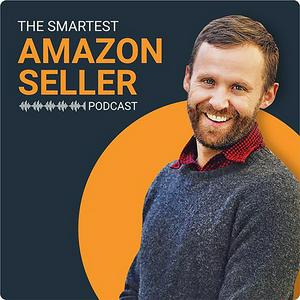
Acerca de The Smartest Amazon Seller
Scott Needham is the Founder of SmartScout. An Amazon software developer for 10 years his company BuyBoxer has done over $300m in sales on Amazon. Scott has accumulated a deep knowledge about selling product online, and in the podcast he shares his knowledge with you to help you become a better Amazon seller.
Sitio web del podcastEscucha The Smartest Amazon Seller, Inteligencia Artificial y muchos más podcasts de todo el mundo con la aplicación de radio.es
Descarga la app gratuita: radio.es
- Añadir radios y podcasts a favoritos
- Transmisión por Wi-Fi y Bluetooth
- Carplay & Android Auto compatible
- Muchas otras funciones de la app
Descarga la app gratuita: radio.es
- Añadir radios y podcasts a favoritos
- Transmisión por Wi-Fi y Bluetooth
- Carplay & Android Auto compatible
- Muchas otras funciones de la app
The Smartest Amazon Seller
Escanea el código,
Descarga la app,
Escucha.
Descarga la app,
Escucha.
The Smartest Amazon Seller: Podcasts del grupo
 España