
Escucha gratis este podcast en la aplicación: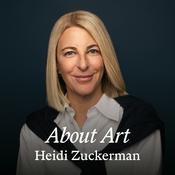 Descarga gratuita en la App Store
radio.es
Sleep timer
Favoritos
237 episodios
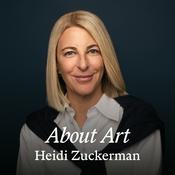
Episode 238: You Have to Be Willing to Be Betrayed by Your Own Taste | Roberta Smith | About Art Special
03/11/2026 | 1 h 29 minFor this special extended episode of About Art, Heidi Zuckerman sits down with Roberta Smith for an expansive conversation about looking, judgment, beauty, pleasure, criticism, marriage, retirement, and what it means to spend a lifetime paying attention to art.
For more than 50 years, Roberta Smith has been one of the defining voices in American art criticism. She joined The New York Times in 1986 and became its first woman chief art critic before retiring in 2024. Her path began with the Whitney Independent Study Program, working with Donald Judd, and discovering a vocation that would place her in conversation with generations of artists and audiences.
Roberta describes this conversation as her “exit interview,” and she and Heidi take their time. They discuss how to know what you think when you stand before a work of art, why looking requires rigor, and how encountering unfamiliar work can overturn even deeply held convictions. Roberta reflects on outsider art, Philip Guston, Lee Krasner and Jackson Pollock, the changing art world, and the responsibility of critics, curators, and dealers.
They also explore the language of criticism, the power of writing for a public audience, the importance of passion in curating, and why beauty, taste, and pleasure deserve to be taken seriously. Roberta speaks candidly about gender, her marriage to fellow critic Jerry Saltz, the loss of a professional identity after retirement, and the possibility of finding a new relationship to the work she loves.
At the heart of the conversation is Roberta's conviction that looking is an active, transformative experience—and that we must remain willing to be surprised, challenged, and changed by art.
“Pleasure is its own form of knowledge.”Episode 237: The Life That We Create | Hunter Biden
27/10/2026 | 41 minArtist and writer Hunter Biden joins Heidi Zuckerman for a conversation about making art, confronting fear, finding beauty, and the difference between the life that happens to us and the life we create.
Hunter has been drawing and making things since childhood, although painting became the center of his life much later. He talks about the daily practice that began during his recovery, the materials he first worked with, and how showing up at his painting table each morning gradually changed his relationship to himself and the world around him.
He and Heidi explore the difference between making art and sharing it, and why revealing something deeply personal can require a different kind of courage. Hunter reflects on the fear that shaped many of his earlier decisions, the freedom he experiences when painting, and what it means to choose how he reveals himself after so much of his private life has been exposed publicly.
Their conversation also considers the distinction between art and therapy, the unexpected joy and color that emerge in his work, and the ways mistakes can become the most beautiful parts of a painting.
They discuss Mark Rothko, mythology, universal truth, and the possibility that art connects us to experiences and emotions extending far beyond our individual lives.
Ultimately, Hunter describes how painting allows him to transform the weight of the past into material for creation, remain present, and build a life around something that gives him purpose and joy.Episode 236: Nature Is Their AI | Refik Anadol
20/10/2026 | 52 minArtist Refik Anadol joins Heidi Zuckerman for a conversation about art, nature, memory, imagination, and the new forms of creativity made possible through technology.
Refik describes data as an artistic material—a way of giving form to memories and information that would otherwise remain invisible. He and Heidi talk about his early fascination with computers, his desire to make the invisible visible, and the role dreaming and imagination play in his work.
Their conversation moves deeply into the natural world. Refik shares his experiences with the Yawanawa people in the Amazon and a profound idea offered to him there: for them, nature is their AI—a living intelligence humans have not yet fully understood. He considers whether technology might now help us listen more closely to the natural world rather than move further away from it.
They also discuss an extinct Hawaiian bird whose final recorded song appears in DATALAND, his personal connection to memory after losing his uncle to Alzheimer’s, what it means to collaborate with a machine, and the responsibility artists have to help us see differently.
At the center of Refik’s work is a belief in art’s ability to transform perception—and his hope that what we make can leave meaningful memories behind.Episode 235: Weird and Wonderful | Ryan Stanier
13/10/2026 | 53 minRyan Stanier joins Heidi Zuckerman for a conversation about access, permission, play, and what happens when we question the ways people have traditionally encountered art.
Ryan founded The Other Art Fair after watching artist friends struggle to find meaningful opportunities to show and sell their work. After 15 years and 100 fairs, he stepped away and eventually began asking what he would do differently if he started again.
His answer is Fair Play, a new artist-led fair built around a different economic model and a belief that encountering art can also be social, surprising, and fun.
Ryan and Heidi talk about why galleries and art fairs can still feel intimidating, how to break down barriers to entry, and the difference between telling people they are welcome and creating an environment in which they actually feel free to participate.
They also share stories about nudity, tattoos, defacing art, unexpected experiences, and the importance of creating spaces for adults to play.Episode 234: How Do You Learn to Love? | Rashid Johnson
06/10/2026 | 1 h 2 minArtist Rashid Johnson joins Heidi Zuckerman for a deeply personal conversation shaped by their long friendship and history of collaboration.
They talk about the difference between doing and being, and Rashid’s growing belief in the importance of becoming what he calls a “pauser”—someone willing to make room for patience, reflection, and even idleness in a culture that continually rewards action.
Rashid reflects on success and the difficulty of allowing ourselves to acknowledge when we are genuinely good at something. He questions the performance of humility and considers honesty as a more useful measure: being able to recognize both what we do well and where we fall short.
Their conversation moves through anxiety, freedom, peace, joy, regret, failure, middle age, parenthood, and love. Rashid talks about learning to understand anxiety as a tool rather than simply a condition, why joy feels more achievable to him than happiness, and why love and peace contain far more complexity and rigor than we sometimes allow them.
They also discuss Casa Gràcia, the residency Rashid helped create in Menorca, and what becomes possible when artists and writers are given time and space without the expectation of producing an outcome.
Más podcasts de Arte





Podcasts a la moda de Arte













Acerca de About Art
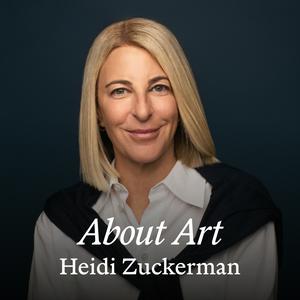
Heidi Zuckerman is a globally recognized voice in contemporary art and a passionate believer in how art can make life more better. On her podcast About Art, she has real, inspiring conversations with people she finds interesting—artists, collectors, creatives, and more—about their lives, their values, and why art matters. It’s about living artfully, seeing differently, and finding joy and connection through art—wherever you are on your art journey.
Sitio web del podcastEscucha About Art, The New Yorker: Fiction y muchos más podcasts de todo el mundo con la aplicación de radio.es
Descarga la app gratuita: radio.es
- Añadir radios y podcasts a favoritos
- Transmisión por Wi-Fi y Bluetooth
- Carplay & Android Auto compatible
- Muchas otras funciones de la app
Descarga la app gratuita: radio.es
- Añadir radios y podcasts a favoritos
- Transmisión por Wi-Fi y Bluetooth
- Carplay & Android Auto compatible
- Muchas otras funciones de la app
About Art
Escanea el código,
Descarga la app,
Escucha.
Descarga la app,
Escucha.
 España

