

Escucha gratis este podcast en la aplicación: Descarga gratuita en la App Store
radio.es
Sleep timer
Favoritos
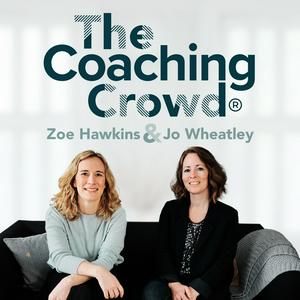
The Coaching Crowd® Podcast with Jo Wheatley & Zoe Hawkins
Jo Wheatley and Zoe Hawkins
Último episodio
256 episodios

How Quickly can I Train as a Coach?
20/07/2026 | 20 minHow quickly can you train as a coach without compromising the quality, depth and credibility of your learning?
It is one of the questions we are asked most often by people considering coach training. On the surface, it sounds like a practical question about dates and deadlines. Underneath it, there is often a much bigger story.
Many people have been thinking about becoming a coach for several years. They have researched courses, imagined a different career and questioned whether coaching could become part of their future. By the time they finally decide to take action, they are ready to begin immediately.
We understand that feeling. Zoe reflects on how she can spend a long time thinking through a decision, yet once she has made it, she wants everything to happen straight away. Jo shares a different perspective. When she trained as a coach, she wanted a rigorous and challenging programme that gave her enough time to absorb the experience and grow through it.
In this episode, we explore the different routes available for becoming a qualified coach and explain how long each coaching qualification can take.
For someone seeking foundational coaching skills, an ILM Level 3 Certificate in Coaching can potentially be completed in as little as three months. It provides a recognised coaching qualification and can be a strong route for people who want to introduce coaching into an existing role, develop their communication skills or explore coaching before committing to a deeper programme.
The Level 3 route can also work well for professionals who already support people in another capacity. This could include counsellors, teachers, nurses, physiotherapists, driving instructors or practitioners working in wellbeing and personal development. They may already have considerable experience working with people and want to add a structured coaching approach to their existing skills.
For those wanting to become an independent coach and support clients through more complex personal or professional change, an ILM Level 5 or Level 7 coaching qualification may be more appropriate.
These programmes offer a deeper, highly experiential coach training experience. Learners are coached regularly, practise their coaching skills throughout the programme and work with a larger number of practice clients. The training explores areas such as mindset, identity, beliefs, values, emotions and sustainable behavioural change.
The fastest completion time for the Level 5 programme has been around nine months, while the Level 7 programme has been completed in approximately twelve months. More commonly, learners complete Level 5 in around twelve to eighteen months and Level 7 in approximately sixteen months to two years.
The length of coach training depends on several factors. The format of the programme matters, as weekly evening sessions will create a different timeline from intensive full-day training. The availability of practice clients also plays a part, along with how many coaching relationships a learner feels able to manage alongside work, family and other commitments.
There is flexibility within the process. Learners generally have up to three years to complete their qualification, and additional support may be available when unexpected life events affect their progress. The aim is not to force every learner through the same timeline, but to provide a pathway that allows them to complete their coaching qualification in a sustainable way.
We also discuss an important misconception: you do not necessarily need to wait until every assignment has been completed before beginning to develop your coaching business.
While learners are building their coaching hours, they can start exploring their message, audience, services, branding and pricing. Practice clients may ask to continue working together or recommend the coach to someone else. With the right insurance, ethical boundaries and transparency about where they are in their training, learners may begin taking paid clients during their qualification.
The real question is therefore not only, "How quickly can I train as a coach?"
It is also:
What type of coaching do I want to offer?
How deeply do I want to develop my skills?
What learning environment will help me thrive?
How can I begin creating my future while I am still training?
Speed matters, particularly when you feel ready for change. However, choosing the fastest coaching course is not always the best strategic decision. The right programme should reflect the type of coach you want to become and the clients you hope to support.
One of the most interesting things we see is that people often begin their training eager to qualify quickly. Once they are immersed in the programme, meeting other coaches and experiencing their own personal development, many of them no longer want to rush.
Coach training can become far more than a professional qualification. It can reshape how you listen, communicate, lead, think and relate to the people around you.
You can begin training as a coach as soon as you make the decision and enrol. The length of the journey will depend on the route you choose, but the learning and transformation can begin from day one.
Timestamps
00:00 How quickly can you qualify as a coach?
00:54 Balancing speed, credibility and depth
02:13 Why people delay the decision and then want to move quickly
03:36 The ILM Level 3 coaching qualification
05:41 Practice clients, supervision and flexible learning
08:04 The deeper experience of Level 5 and Level 7 training
08:52 Typical completion times for each qualification
11:14 Building coaching hours around work and family
11:48 Extensions, unexpected life events and learner support
13:02 Building a coaching business while training
15:26 Why shortening the timeline should not reduce quality
15:37 How coach training begins from the moment you enrol
17:51 Personal transformation during coach training
19:22 Choosing the right coaching qualification for your goals
Key Lessons Learned
An ILM Level 3 Certificate in Coaching can potentially be completed in around three months.
Level 3 training is well suited to people seeking foundational coaching skills or adding coaching to an existing profession.
Learners wanting to offer transformational coaching as an independent practitioner may benefit from a Level 5 or Level 7 qualification.
A Level 5 qualification commonly takes around twelve to eighteen months, while Level 7 may take approximately sixteen months to two years.
Course format, personal capacity and the availability of practice clients can significantly affect the completion timeline.
Coach training should be selected according to the type of coaching you want to offer, rather than speed alone.
Learners can begin developing their coaching business, services and positioning while completing their qualification.
Ethical practice, appropriate insurance and transparency are essential when beginning to work with paying clients during training.
A coaching qualification can create personal transformation as well as professional development.
Many learners begin wanting to qualify quickly but later value having more time to absorb and enjoy the experience.
Keywords:
how quickly can I train as a coach, how long does it take to become a coach, coach training, coaching qualification, become a qualified coach, coaching certification UK, accredited coaching course, ILM Level 3 coaching, ILM Level 5 coaching, ILM Level 7 coaching, transformational coaching, professional coach training, start a coaching business, coaching practice clients, online coaching qualification,How is Executive Coaching Different?
13/07/2026 | 26 minWhat changes when the person being coached is responsible not only for their own performance, but also for the direction, culture and future of an entire organisation?
Executive coaching uses the same core coaching competencies as other forms of coaching, but the context is often more complex. Senior leaders may be navigating organisational change, board relationships, stakeholder pressures and strategic decisions while also experiencing uncertainty, reduced confidence or questions about their future.
This is why executive coaching often becomes a whole-person experience. Senior leaders have few places where they can speak honestly without being expected to already have the answers. Coaching offers a confidential space to slow down, reflect and explore how leadership responsibilities are affecting identity, wellbeing, relationships and sense of purpose. It can also involve a three-way relationship between the coach, the client and the sponsoring organisation, requiring clear agreements around confidentiality, objectives and outcomes.
Executive clients are often highly capable action takers, so coaching is not always about creating another action plan. Progress may come through challenging assumptions, separating facts from interpretations and identifying the patterns shaping how a leader thinks, communicates and responds under pressure. The coach may move between coaching, mentoring and acting as a thought partner, while continuing to support the client's own thinking and decision-making.
In this episode, we also explore ambiguity, burnout, organisational systems and the knowledge that can support coaches working at this level, including leadership psychology, group dynamics, power and authority. We discuss how the ILM Level 7 qualification can prepare coaches to work not only with chief executives and board directors, but also with senior leaders responsible for significant teams, budgets and organisational outcomes. Executive coaching may take place at the highest levels of an organisation, but at its heart it remains deeply human.
Timestamps:
00:01 Welcome and episode introduction
00:55 The similarities and differences in executive coaching
01:30 Moving beyond performance metrics and strategy
03:14 Why executive coaching requires a whole-person approach
04:00 Who executive coaching is for
04:35 Organisational change, politics and stakeholder dynamics
06:17 Self-worth and identity outside the organisation
06:54 How leadership changes can surface insecurity
08:00 Becoming a thinking partner for senior leaders
09:22 Why executives may not need traditional accountability
09:51 Coaching the individual within the wider system
11:39 Identity, influence and leadership agency
12:20 The ripple effect of coaching across teams
13:31 Moving between coaching, mentoring and thought partnership
15:50 Three-way contracting and organisational sponsorship
17:51 Why executive coaching engagements are often longer
20:09 Ambiguity, paradoxes and complex decision-making
22:21 The human reality behind executive leadership
23:35 Burnout, reflection and constructive challenge
25:00 Leadership psychology, systems and group dynamics
27:03 Why executive coaching can be so rewarding
27:40 Who the ILM Level 7 qualification can prepare you to coach
29:00 Finding the right coaching qualification
Key Lessons Learned:
The core coaching competencies remain the same, but executive coaching takes place within a more complex organisational context.
Executive coaching often focuses on the whole person because leadership responsibilities affect identity, confidence, wellbeing and relationships.
Senior leaders frequently need a confidential thinking space more than they need another action plan.
Executive coaches must be able to move between the individual client's experience and the wider organisational system.
Three-way contracting requires clear agreements around confidentiality, objectives, reporting and the expectations of the sponsoring organisation.
Executive clients often bring challenges involving ambiguity, competing priorities, political dynamics and decisions with far-reaching consequences.
Constructive challenge can help leaders identify assumptions, explore alternative perspectives and develop greater flexibility in their thinking.
A coach does not need to be an expert in the client's technical field, but knowledge of leadership psychology, group dynamics and organisational systems can strengthen the coaching relationship.
Executive coaching can create a ripple effect because leaders often take ideas and insights from coaching back into their teams.
Executive coaching is not limited to chief executives. It can include anyone with significant responsibility for people, budgets and organisational outcomes.
Keywords:
executive coaching, executive coach, leadership coaching, senior leadership coaching, executive coaching qualifications, ILM Level 7 coaching, coaching senior leaders, organisational coaching, leadership development, executive presence, systems thinking in coaching, three-way coaching contract, coaching in organisations, leadership identity, coaching organisational change, executive wellbeing, coaching and burnout, coaching skills for leaders, transformational coaching, coaching qualifications,
Links and Resources:
Find the right coaching course quiz: www.mycoachingcourse.com
Book a call about the ILM coaching courses: www.igcompany.com/ILMCallHow to Coach Boundaries
06/07/2026 | 25 minWhat happens when a coaching client does not realise that the frustration, resentment or overwhelm they are carrying is actually pointing towards a boundary that has been crossed?
In this episode of The Coaching Crowd Podcast, we explore how to coach boundaries in a way that feels practical, ethical and deeply human. Boundaries can sound simple on the surface, but in coaching conversations they often reveal something much more complex. They connect to values, relationships, communication, emotions, beliefs, burnout, people pleasing and the way clients understand their own needs.
We begin by reflecting on what boundaries really are. We describe them as the guidelines that help other people understand how to be in relationship with us. They communicate what we are comfortable with, what we are not comfortable with, how we want to be treated and what matters to us. Yet many of us rarely define our boundaries clearly, even for ourselves.
Throughout the conversation, we explore why boundaries show up so often in coaching. A client may come to a session saying their manager keeps giving them unrealistic deadlines, or that a friend, partner or family member is asking too much of them. They may not use the word boundaries at all. Instead, they may talk about feeling angry, resentful, exhausted, overwhelmed or close to burnout. As coaches, these emotional cues can help us gently notice where a boundary may have been crossed.
We also discuss the different types of boundaries that may be relevant in coaching. These include communication boundaries, emotional boundaries, time boundaries, physical boundaries, energetic boundaries and professional boundaries. Breaking boundaries down in this way can help clients move away from a broad, abstract concept and begin to understand what is actually happening in their day to day lives.
A central theme in this episode is the idea of a boundary audit. What boundaries does the client know they have? Which boundaries have they never consciously established? Who knows about those boundaries? So much conflict and confusion can arise because boundaries are assumed rather than communicated. We may expect others to behave as we would, only to feel hurt or frustrated when they do not.
We also explore the reality that setting a boundary can create change in a relationship. If a client has always been available after work, always said yes, or always taken responsibility for other people's needs, then communicating a new boundary may come with a cost or consequence. Coaching can provide the safe space needed to explore those consequences, prepare for them and understand what support the client may need.
Another important part of the conversation is the difference between boundaries and control. A boundary is something we set for ourselves. It clarifies what we will allow, what we will not allow and what action we may take if that boundary is crossed. Control, on the other hand, is about trying to dictate what another person must do. Helping clients understand this distinction can be powerful, especially when they are navigating complex relationships or workplace expectations.
We also talk about permeable boundaries. Some boundaries are firm, while others may be more flexible depending on the situation. For example, a client may have a boundary around not working in the evening, but occasionally choose to respond to something because it feels right in that moment. This can be useful, but it can also create confusion or drift. Coaching can help clients explore whether they are acting from choice, pressure, fear or habit.
Towards the end of the episode, we share coaching questions that can support boundary exploration. Questions such as "What boundary are you currently avoiding?", "What are you protecting?" and "What would be the hardest boundary for you to enforce?" can help clients connect with what they need. We also explore the use of metaphor and visual thinking, helping clients imagine boundaries as walls, screens, dotted lines, protective bubbles or something entirely personal to them.
This episode is a reminder that coaching boundaries is rarely about giving clients a script for saying no. It is about helping them understand their values, recognise their emotional signals, explore their beliefs, process the discomfort and build the confidence to uphold what matters to them. Healthy boundaries create clarity, safety and more sustainable relationships, both personally and professionally.
Timestamps
00:00 | Introduction to coaching boundaries
00:06 | Why boundaries are showing up in coaching conversations
00:24 | What do we mean by boundaries?
01:34 | Defining boundaries for ourselves
02:10 | How to recognise when a boundary has been crossed
03:41 | Communication preferences and boundary breaches
04:45 | Different types of boundaries
06:40 | Using a wheel of life style approach for boundaries
07:23 | The idea of a boundary audit
08:40 | How assumed boundaries create confusion
09:42 | Communicating boundaries in relationships
10:30 | The cost and consequence of creating a new boundary
11:19 | Signs a client may need stronger boundaries
12:20 | Boundaries, people pleasing and burnout
13:38 | Values, needs and emotional reactions
14:25 | Temporary, flexible and permeable boundaries
15:57 | How permeable boundaries can create confusion
17:28 | The risk of boundary drift
18:20 | Boundaries versus control
19:20 | Upholding boundaries and managing consequences
20:13 | Beliefs that make boundaries difficult
21:55 | Shame, difficulty and emotional safety
22:43 | Coaching questions for boundary exploration
23:28 | Exploring hard and achievable boundaries
24:57 | Using metaphor and visual coaching tools
26:57 | Emotions Coaching Practitioner training
Key Lessons Learned:
Boundaries are guidelines that help people understand how to be in relationship with us.
Clients may not name boundaries directly. They may present with resentment, anger, overwhelm, burnout or people pleasing.
A boundary audit can help clients identify which boundaries they already have, which ones they have not communicated and where confusion is arising.
Boundaries are often linked to values. When a value or need is not honoured, the client may experience a strong emotional reaction.
Healthy boundaries create clarity and safety, rather than pushing people away.
Permeable boundaries can be useful, but they can also create confusion if the client is not clear on when and why they flex them.
Coaching around boundaries often involves exploring cost, consequence, beliefs and emotional discomfort.
Boundaries are not the same as control. A boundary is about what the client will allow or choose, not about forcing another person to behave differently.
Clients may feel shame when they struggle to uphold a boundary, so coaches need to create a safe and non judgemental space.
Visual metaphors can help clients explore boundaries in a more embodied and creative way.
Keywords:
How to coach boundaries, Coaching boundaries, Boundary coaching, Healthy boundaries, Emotional boundaries, Professional boundaries, Communication boundaries, Time boundaries, People pleasing and boundaries, Coaching questions for boundaries, Values and boundaries, Boundaries versus, control, Emotions coaching, Coaching clients with overwhelm, Coaching burnout, Coaching emotional wellbeing,
Links and Resources:
Emotions Coaching Practitioner Training: https://igcompany.com/emotions-coachingHow To Find Coaching Clients
29/06/2026 | 18 minWhat if finding coaching clients is not the biggest barrier to becoming a coach, but one of the most powerful parts of the learning process?
In this episode of the podcast, we explore one of the most common questions we hear from people who are training to become coaches, thinking about starting a coaching qualification, or wondering how they will complete their coaching practice hours: where do I find coaching clients?
We know this question can bring up a lot of anxiety. Before someone begins a coaching qualification, it can feel as though finding clients will be the hardest part. There may be worries about asking people, not knowing where to look, feeling visible online, or wondering whether anyone will actually want coaching from someone still in training. Yet, in our experience, this fear rarely becomes the reality.
Throughout the episode, we talk through the practical numbers first. For a Level 3 coaching certificate, you may need two clients. For a Level 5 coaching diploma, you may need around six clients. For a Level 7 senior and executive coaching qualification, you may need around eight clients. When we put it like that, the process begins to feel much more manageable. It is not about finding dozens of people. It is about finding the right people, creating a strong enough pool, and being prepared for the fact that some clients may not complete all their sessions.
We also reflect on how powerful your existing network can be. Your cohort, friends, colleagues, workplace, LinkedIn connections, Facebook groups, local community groups, professional networks and voluntary organisations can all become potential places to find coaching clients. The key is not to hide your coaching journey. It is to share it from the beginning, allow people to follow your development, and then clearly invite the right people to come forward when you are ready to begin coaching.
A big part of the conversation is about confidence and specificity. If you are looking for coaching clients, it helps to explain who you want to support and what kind of coaching opportunity you are offering. For example, if you are training at senior or executive level, you might want to coach leaders who are new in role, navigating change, or developing confidence in leadership. When people can see themselves in your invitation, they are much more likely to reach out.
We also speak about the value of using your workplace, not only as a source of clients but as a way of bringing coaching skills back into your organisation. Even if you are funding your own coaching qualification, your employer may still benefit from your development. Coaching is a leadership skill, and offering coaching across different teams can create a genuine win for both you and the organisation.
The episode also opens up the idea that coaching clients can be found in places that matter to you personally. Local charities, hospices, GP surgeries, animal shelters, community groups, business networks and professional associations may all include people who would deeply value the opportunity to experience coaching. This is where finding clients becomes more than a qualification requirement. It becomes part of stepping into the identity of being a coach.
What we came back to again and again is that finding coaching clients is about being visible, asking clearly, asking more than once, and being willing to move beyond your comfort zone. There are opportunities for coaching everywhere. The task is to notice them, speak about what you are offering, and trust that people are often far more open to coaching than you might expect.
For anyone training to become a coach, this episode is a grounded reminder that you are not on your own. You have networks, cohorts, communities and resources around you. Finding clients does not need to be the reason you hold back from coaching training. It can become one of the first real steps into practising, learning and becoming the coach you are developing into.
Timestamps
00:00: Introduction to finding coaching clients
We introduce the episode and the common concern many trainee coaches have about finding practice clients.
00:58: How many coaching clients do you need?
We break down the coaching practice requirements for Level 3, Level 5 and Level 7 coaching qualifications.
02:00: Why you may need extra clients
We explain why it is helpful to have additional potential clients in case someone cannot complete all sessions.
02:30: Using your coaching cohort
We explore how cohort swaps and referrals can help trainee coaches find suitable practice clients.
03:00: Sharing your coaching journey
We discuss why sharing your learning from day one can build visibility and trust across your network.
04:15: Using LinkedIn and your wider network
We talk about LinkedIn, social media and asking your network to connect you with people who may benefit from coaching.
05:34: Being specific about who you want to coach
We explain why clarity around your ideal coaching client makes it easier for people to reach out.
06:56: Asking for help and posting more than once
We reflect on the importance of perseverance, visibility and asking people to comment or share your posts.
07:54: Finding clients through The Coaching Crowd Facebook group
We share how coach matching posts can support trainee coaches and people seeking pro bono coaching.
09:11: Finding coaching clients at work
We explore how your workplace can become a valuable and appropriate source of coaching clients.
11:36: Creating variety in your coaching portfolio
We discuss why it helps to coach people from different departments or areas of an organisation.
12:14: Local groups and business communities
We look at local Facebook groups, business networks, professional communities and regional meetings as useful sources of clients.
14:48: Coaching in causes and communities you care about
We explore how charities, hospices, GP surgeries, animal shelters and community organisations may offer meaningful coaching opportunities.
17:00: Coaching peers and previous learners
We discuss the value of coaching others in your cohort or people who have previously trained and now want coaching again.
18:18: Final reflections and coaching course quiz
We close by reassuring listeners that finding clients does not need to be an obstacle and signpost the coaching course quiz.
Key Lessons Learned
Finding coaching clients often feels more daunting before training begins than it does once you are actually on the journey.
The number of clients needed for coaching practice is usually more manageable when you break it down clearly.
Your coaching cohort can be one of the strongest sources of client referrals, especially when everyone contributes to the pool.
Sharing your coaching journey early helps people understand what you are learning and builds trust before you ask for clients.
LinkedIn can be a powerful place to attract coaching clients, but visibility takes consistency rather than relying on one post.
Being specific about who you want to coach helps potential clients decide whether they are a good match.
Asking your network to comment, share or introduce you to others can significantly increase your reach.
Your workplace can provide valuable coaching opportunities, especially when framed as leadership development and organisational benefit.
Local communities, business groups, charities and professional networks can all provide meaningful opportunities to practise coaching.
Finding clients is part of becoming a coach because it asks you to step into confidence, visibility and professional identity.
Links & Resources
Coaching course quiz: www.mycoachingcourse.com
Keywords
how to find coaching clients, finding coaching clients, coaching clients, trainee coach, coaching qualification, coaching practice hours, coaching diploma, coaching certificate, Level 5 coaching diploma, Level 7 coaching qualification, pro bono coaching, coaching training, become a coach, coaching cohort, LinkedIn for coaches, coaching clients on LinkedIn, coaching business, coaching practice, executive coaching, leadership coaching, coach matching, coaching course,5 Reasons To Train In Group and Team Coaching
22/06/2026 | 18 minWhat becomes possible for us as coaches when we move beyond the privacy of one to one conversations and begin working with the energy, complexity, and potential of groups and teams?
In this episode of The Coaching Crowd podcast, we explored why so many coaches are choosing to train in group and team coaching, and why this area of coaching practice feels increasingly relevant in today's professional landscape.
We wanted to bring this conversation to the podcast because coaching is no longer limited to one to one development conversations. More organisations, leaders, teams, and individuals are seeking collective development experiences. They want spaces where people can learn together, reflect together, challenge one another, and feel part of something more connected.
That matters because so many people are experiencing disconnection, pressure, and exhaustion. Group coaching and team coaching can create powerful spaces where people feel seen, heard, and supported by others who may be facing similar questions or challenges. In a professional context, this also gives coaches the opportunity to work more systemically, supporting culture, communication, leadership development, and organisational change at scale.
During the conversation, we reflected on the size of the opportunity for coaches. Group and team coaching are not new, but more coaches are now asking how they can broaden their work, move into organisations, support teams, run development programmes, and offer more than individual coaching sessions. For coaches who have mainly worked one to one, this shift can feel exciting, but also intimidating.
We spoke about how group dynamics and team dynamics are far more complex than individual coaching. When you move into a one to many setting, there are more relationships, expectations, emotions, roles, and patterns in the room. This means coaches need more than confidence. They need structure, skill, presence, and an understanding of the psychodynamics that can emerge when people come together.
One of the key reflections from this episode was that training in group and team coaching can benefit you even when you are not yet sure whether you want to specialise in this area. It develops your systemic thinking. It helps you see your one to one coaching clients as part of wider systems, including families, teams, organisations, communities, and cultures. That naturally expands the quality of the questions you ask and the way you support clients to understand themselves.
We also explored how training in this area can open doors. Many coaches begin with one to one coaching in an organisation and then get asked whether they can support a team, design a programme, facilitate a workshop, or help with a leadership development initiative. Those moments can be exciting, but they can also create doubt. Having training behind you can give you the confidence, credibility, and practical tools to say yes to those opportunities.
Another important theme was the need for coaches to think strategically about their business. Group and team coaching can help create more scalable offers, more variety, and more routes into organisational contracts. It can sit alongside one to one coaching, leadership development programmes, workshops, internal coaching roles, and wider organisational development work.
We also reflected on the human nature of this work. Modern coaching is not only about performance. It is relational, emotionally intelligent, and systemic. In a world where artificial intelligence is changing how people work, human relationships are becoming even more important. Knowledge may be increasingly available, but connection, trust, culture, and shared understanding still require human presence.
That is why group and team coaching feels so valuable. It supports people to understand how they relate, communicate, collaborate, and make progress together. It also gives coaches the chance to engage with the living, breathing reality of organisational culture and human behaviour.
In the episode, we also shared more about our Group and Team Coaching programme, including the five phases that sit at the heart of the course:
Grounding and Gathering, where we explore how to set the work up for success and orientate people into the coaching experience.
Roles and Responsibilities, where we consider the role of the coach and the roles that people naturally take up in groups and teams.
Options and Opportunity, where we explore coaching methodologies, practical activities, and ways to work creatively with groups and teams.
Union and Understanding, where we look at group dynamics and the complexity of human behaviour in collective spaces.
Presence and Progress, where we focus on closure, endings, progress, sustainability, and how groups and teams recognise and carry forward change.
We also discussed the mindset of a group and team coach, because this is emotional work. How we resource ourselves, what we believe about groups, and how we manage our own presence will shape the quality of the work we offer.
This episode is for coaches who are curious about expanding their practice, leaders and HR professionals who already work with groups and teams, and anyone who wants to build more confidence in facilitating meaningful collective development.
Ultimately, group and team coaching is not an either or choice. It can sit beautifully alongside one to one coaching. It can widen your impact, strengthen your coaching practice, create new business opportunities, and help you work with the rich complexity of people, culture, and systems.
Timestamps:
00:00: Welcome to The Coaching Crowd podcast
00:06: Why so many coaches are training in group and team coaching
00:38: Five reasons to consider group and team coaching
01:58: The size of the opportunity for coaches
03:59: How group and team coaching enhances one to one coaching
05:52: Building confidence to pitch group and team coaching work
06:56: Organisational contracts, leadership development, and scalable offers
08:22: Why group and team coaching requires specific training
09:36: The relational, emotional, and systemic nature of modern coaching
10:02: How AI and changing workplaces are influencing team dynamics
10:44: Overview of the Group and Team Coaching programme
11:10: Grounding and Gathering
11:45: Roles and Responsibilities
12:16: Options and Opportunity
12:46: Union and Understanding
13:06: Presence and Progress
14:00: Mindset and business development for group and team coaches
15:16: Why group and team coaching can be energising and valuable
16:13: Facilitated programme structure and how to join
Key Lessons Learned:
• Group and team coaching allows coaches to create impact beyond one to one conversations by working with collective learning, shared reflection, and systemic change.
• Training in group and team coaching can strengthen your one to one coaching because it helps you see clients within the wider systems they belong to.
• Group dynamics and team dynamics are more complex than individual coaching, so coaches need specific skills, structure, and confidence to work well in these spaces.
• Organisations are increasingly investing in collective development because workplace culture, relationships, communication, and leadership are changing rapidly.
• Group and team coaching can open doors to organisational contracts, leadership development programmes, workshops, internal coaching roles, and more scalable coaching offers.
• Effective onboarding is crucial because how a group or team enters the coaching experience shapes the safety, clarity, and outcomes of the work.
• Human presence, emotional intelligence, and relational skill remain essential in group and team coaching, especially as AI continues to reshape how people work.
• Group and team coaching can bring more variety, energy, and strategic growth into a coaching business.
• The work is not only for qualified one to one coaches. It can also support leaders, HR professionals, learning and development practitioners, and organisational development specialists.
• Group and team coaching is not a replacement for one to one coaching. It can sit alongside it as a powerful extension of your coaching practice.
Keywords:
group coaching, team coaching, group and team coaching, coaching training, coach training, coaching CPD, one to one coaching, coaching skills, systemic coaching, organisational coaching, leadership development, team development, group dynamics, team dynamics, ,coaching practice, coaching business, coaching programme, emotional intelligence in coaching, workplace coaching, coaching for organisations,
Links & Resources
Group and Team Coaching course: https://igcompany.com/group
Más podcasts de Carrera
 Loentiendo: derecho laboral y empleoCarrera, Economía y empresa
 IPP PODCAST (OFICIAL)Carrera, Economía y empresa
 MENTOR360Carrera, Economía y empresa, Educación, Empresa, Superación personal
 A Bit of OptimismCarrera, Economía y empresa, Educación, Superación personal
 Negociación desde CeroCarrera, Economía y empresa
 LaboralDia | Derecho LaboralCarrera, Economía y empresa
 The Burnouts with Phoebe & SophiaCarrera, Economía y empresa, Educación, Empresa, Superación personal
 Think Fast Talk Smart: Communication TechniquesAprendizaje de idiomas, Carrera, Economía y empresa, Educación, Humor, Improvisación
 The ONE ThingCarrera, Economía y empresa
 Sergio Fernández (OFICIAL)Carrera, Economía y empresa
Podcasts a la moda de Carrera
- The ONE ThingCarrera, Economía y empresa
 Psychology at Work | Career Success, Leadership, Communication SkillsAdministración, Carrera, Economía y empresa, Educación, Superación personal
 別人的工作最有趣Carrera, Economía y empresa
- The Burnouts with Phoebe & SophiaCarrera, Economía y empresa, Educación, Empresa, Superación personal
- Negociación desde CeroCarrera, Economía y empresa
Acerca de The Coaching Crowd® Podcast with Jo Wheatley & Zoe Hawkins
The Coaching Crowd® Podcast is a weekly podcast for compassionate, courageous leaders, HR professionals and high achievers who are passionate about helping others to find alignment in their lives through coaching, and who are thinking of training and developing as a coach. Hosted by Zoe Hawkins and Jo Wheatley, Founders of Global Coaching Training Company "In Good Company", based in the UK, (https://www.igcompany.com). Zoe and Jo are Master Accredited, Award Winning and Multi Award Nominated coaches, coach trainers and coach supervisors. They are authors of the best selling book 'Deciding to Coach: The Mindset & Business Strategy For Aspiring Coaches'.
Each episode focuses on a different element of what it is to be a coach and you'll listen in as Zoe and Jo discuss the topic through different lenses. You'll discover practical tools and resources you need to support your coaching as you learn all about becoming a qualified and certified coach. This podcast is a go-to resource for learning more about coaching and the mindset needed to be a world class coach. You'll learn how to enable clients to truly know who they are, what their hearts call for and how to understand their values, beliefs and unconscious needs. Coaching goes beyond professional success and personal fulfilment and focuses on supporting everyday mental health. As you learn more about coaching, you learn to coach yourself.
You are In Good Company with The Coaching Crowd®. In Good Company offers accredited coaching qualifications for individuals and organisations around the world, as well as ground breaking accredited CPD for coaches such as the trade marked Emotions Coaching Practitioner Training. You can join our courses and learn more about our communities here www.igcompany.co.uk and take our free quiz to find out which coaching course is right for you www.mycoachingcourse.com.
Sitio web del podcastEscucha The Coaching Crowd® Podcast with Jo Wheatley & Zoe Hawkins, Loentiendo: derecho laboral y empleo y muchos más podcasts de todo el mundo con la aplicación de radio.es
Descarga la app gratuita: radio.es
- Añadir radios y podcasts a favoritos
- Transmisión por Wi-Fi y Bluetooth
- Carplay & Android Auto compatible
- Muchas otras funciones de la app
Descarga la app gratuita: radio.es
- Añadir radios y podcasts a favoritos
- Transmisión por Wi-Fi y Bluetooth
- Carplay & Android Auto compatible
- Muchas otras funciones de la app

The Coaching Crowd® Podcast with Jo Wheatley & Zoe Hawkins
Escanea el código,
Descarga la app,
Escucha.
Descarga la app,
Escucha.
 España