
Escucha gratis este podcast en la aplicación: Descarga gratuita en la App Store
radio.es
Sleep timer
Favoritos
122 episodios
Brown WBB Coach Jason Pellum: From UConn Walk-On With Two National Championship Teams to Coaching, Learning in the Fire, and Player Development Built on Decisions
09/10/2026 | 58 minThis episode features Jason Pellum, assistant coach and recruiting coordinator for Brown University Women’s Basketball, whose path into coaching is unlike almost anyone’s. Jason barely played high school basketball, hit a late growth spurt in college, and walked into an open campus tryout at UConn with nothing to lose — and made it. That launched a run as a practice player for UConn men’s basketball during their 2014 national championship season and for Geno Auriemma’s 2016 national champion women’s program, along with stints on the 2016 USA Olympic practice squad and as a practice player for the Connecticut Sun. From there he moved into coaching as a video intern at UConn, then worked his way up at Boston University from video coordinator to director of operations to assistant coach before landing at Brown.
The conversation explores what it’s like to learn the game “thrown into the fire” as a scout player, what Jason took from Kevin Ollie’s energy and Geno’s obsession with detail, and why automating your daily routine frees you up to handle the hard moments. Jason shares practical career advice for young coaches — be a star in your role, tell people your goals, and put in the time outside your nine-to-five — before diving into his player development philosophy. He and Tyler dig into the Inner Game of Tennis, chasing a feeling over technical shooting cues, a simple “don’t land in front of the three-point line” constraint that fixed a wing’s transition three, how Brown builds decision-making and individual constraints into every group workout, and how the staff uses player development plans to guide players through the off-season.
Timestamps
12:18 — Intro and guest background
13:52 — Life as a UConn practice player
15:04 — Barely playing in high school and making UConn at an open tryout
16:58 — Learning the game as a scout player: sink or swim
18:14 — Learning X’s and O’s on the women’s side under Geno Auriemma
20:50 — Lessons from Kevin Ollie and Geno
24:12 — Automating your day to reduce decision fatigue
28:24 — Starting as a video intern at UConn
30:09 — Learning to watch film and give your coach what they need
33:40 — Being a star in your role while still growing
34:13 — Why you should tell people your goals
38:03 — Putting in the time outside your nine-to-five
40:43 — Player development influences: Keith Porter and Brianna Finch
43:45 — Brown’s department-wide buy-in to CLA
45:57 — The Inner Game of Tennis: learning happens in discomfort
47:09 — Getting thrown into the fire as a coach: running BLOB offense
48:11 — Feel images and learning by watching
50:10 — Chasing a feeling over technical shooting cues
53:42 — “Don’t land in front of the three-point line”: fixing a transition three
55:32 — Coaching ego and using fewer words
56:41 — Decision-making in every Brown group workout
57:58 — Manipulating constraints in live play
1:00:29 — Playing free: creating advantages through principles of play
1:02:41 — Taking away tendencies to widen a player’s options
1:03:31 — “Constrain to afford”
1:04:52 — Player development plans and the three anchors
1:05:36 — The “curse of the Ivy”: trusting players in the off-season
1:07:18 — Self-scouting reports for players and staff
1:09:51 — Where to find Jason and closing thoughts
Resources & Links
Free Resources: https://byanymeanscoaches.com/resources
Claim 10% off Platform: https://platform.byanymeanscoaches.com/?ref=tc
Books: https://byanymeanscoaches.com/blueprint-book
Retreat: https://byanymeanscoaches.com/retreats
If you enjoyed this conversation with Jason Pellum, check out these episodes next:
Ryan Marchand’s Journey From Video Coordinator to Professional Head Coach
https://www.buzzsprout.com/1911095/episodes/19741873-ryan-marchand-s-journey-from-video-coordinator-to-professional-head-coach
Jae Taft (@coachjaetaft) Talks Coaching Girls/Women With Confidence Not Fear, Journey From One Client To Her Own Facility, The Mental Game And Much More!
https://www.buzzsprout.com/1911095/episodes/19742065-jae-taft-coachjaetaft-talks-coaching-girls-women-with-confidence-not-fear-journey-from-one-client-to-her-own-facility-the-mental-game-and-much-more
G-League, Capital City Go-Go, Coach Max Hooper: Talks Elite Shooters, Player Development At The Highest Level, Using The CLA, Coaching In The G-League and more
https://www.buzzsprout.com/1911095/episodes/19741713-g-league-capital-city-go-go-coach-max-hooper-talks-elite-shooters-player-development-at-the-highest-level-using-the-cla-coaching-in-the-g-league-and-moreJae Taft (@coachjaetaft) Talks Coaching Girls/Women With Confidence Not Fear, Journey From One Client To Her Own Facility, The Mental Game And Much More!
16/09/2026 | 57 minThis episode features Jae Taft, founder of Vision Basketball Academy in Denver, Colorado, and a player development coach who trains young female athletes with a faith-based mentorship approach. Jae opens up about her college playing career — a promising freshman start at an NAIA program derailed by illness and lost playing time, followed by a transfer to a Division II school that only deepened a cycle of trying to "prove herself." That pressure eventually led her to step away from the game entirely. When COVID hit, a conversation with her father sparked the idea to launch an online training business; she started with a single client over FaceTime and has since grown that into a full gym and a growing online presence.
The conversation covers a lot of ground: how Jae rebuilt her identity outside of basketball performance; why the coaching pivot felt like a less natural path for her as a woman than it often does for men; and her core training philosophy of "teaching skills, not drills," built around live, representative play rather than isolated reps. She and Tyler dig deep into gender differences in coaching — the concept of giving young female athletes "permission" to play freely and make mistakes, what it takes for a man to coach women and girls well, and how creating a genuinely safe environment gets the best out of any athlete. She closes by sharing the real, unfiltered challenges of entrepreneurship — imposter syndrome, comparison, and financial risk — along with concrete advice for anyone looking to open their own training facility.
Timestamps
15:46 — Intro and guest background
16:57 — Jae's NAIA-to-D2 transfer story begins
17:47 — Freshman year: promised the point guard job, then got sick
19:19 — Transfer to D2; the pressure to prove herself continues
20:19 — Stepping away from basketball during COVID
21:19 — Her dad's idea: launching an online training business 2
2:28 — Landing her first client
22:58 — Where the "need to prove myself" mindset came from 2
6:48 — Finding identity beyond basketball performance
28:49 — Why coaching is a less natural pivot for women than men
31:04 — Faith, family, and stepping into the calling
35:05 — From one online client to owning a gym in Denver
35:58 — Coaching influences: "teach skills, not drills"
37:12 — Game development training vs. drill mastery
39:20 — Why representation matters more than isolated reps
40:58 — Gender differences in coaching: freedom vs. robotic compliance
45:30 — Where the need for "permission" comes from
48:02 — Girls get coached too much, and rarely get free play
50:55 — Should men coach women and girls?
53:28 — Understanding emotional differences in coaching young women
55:16 — Giving players permission to make mistakes
57:15 — The core principle: be a good person, care about the athlete
59:36 — Transitioning to the entrepreneurship conversation
1:00:17 — Imposter syndrome as a gym owner
1:01:20 — Dealing with comparison to other trainers
1:02:39 — The financial risk of going independent
1:04:13 — Trusting the calling through "valley seasons"
1:07:25 — Actionable advice for opening a gym
1:10:39 — Where to find Jae and closing thoughts
Resources & Links
Free Resources: https://byanymeanscoaches.com/resources BAM Coaches Platform: https://platform.byanymeanscoaches.com/#/platform Books: https://byanymeanscoaches.com/blueprint-book
If you enjoyed this conversation with Jae Taft, check out these episodes next:
Gabe Macias (@gametimeelitetraining) talks skills training, building a clientele, finding a gym, creating a culture and more https://www.buzzsprout.com/1911095/episodes/10554225-gabe-macias-gametimeelitetraining-talks-skills-training-building-a-clientele-finding-a-gym-creating-a-culture-and-more
BJU MBB Tony Miller on Culture, Analytics, Player-Led Basketball and Shot Selection https://www.buzzsprout.com/1911095/episodes/19459642-bju-mbb-tony-miller-on-culture-analytics-player-led-basketball-and-shot-selection
G-League Coach of the Year, Vitor Galvani, on Why Player Development Isn't Linear, G-League Practices, Being Where Your Feet Are and Much More https://www.buzzsprout.com/1911095/episodes/19047395-g-league-coach-of-the-year-vitor-galvani-on-why-player-development-isn-t-linear-g-league-practices-being-where-your-feet-are-and-much-moreRyan Marchand's Journey From Video Coordinator to Professional Head Coach
09/09/2026 | 1 h 6 minThis episode features Ryan Marchand, a head coach whose career has taken him from an unpaid coaching internship in the G League's earliest days to head coaching jobs across Vietnam, Taiwan, and Japan. After graduating from San Jose State and getting rejected by every D1 program he applied to, Marchand broke in through a Bakersfield Jam internship during the NBA lockout, then spent seven-plus years cycling through lower-level NBA and G League video and assistant roles — including turning down a paid Minnesota Timberwolves video job and instead working for free under Bill Peterson with the Erie Bayhawks just to get on the floor as a coach. Since COVID, he's built his career overseas, taking his first head coaching job in Vietnam and coaching most recently in Taiwan and Japan.
The conversation covers a lot of ground: breaking out of the "just a video guy" label early in his career; how working with a performance psychologist for the past four years has shaped both his coaching and his life; and how he builds team identity and a shared language across wildly different rosters, cultures, and rule sets. From there, Marchand dives into the tactical side — contrasting NBA and international rules on spacing and post play, the non-traditional stats his teams track (paint touches, deflections, closeout/contain rates), and how he sets team goals from day one. He closes with a detailed breakdown of his fast-paced offensive philosophy — from D'Antoni-inspired possession pacing to transition spacing, respacing after drives, option cutting, and giving skilled players the freedom to read and adapt within structure.
Timestamps
00:00 — Pre-show catch-up: Ryan's Taiwan/Japan schedule and off-season
02:09 — Checking in on interview boundaries and international coaching restrictions
04:41 — Intro and guest background
05:30 — Ryan's path from D1 rejections to a Bakersfield Jam internship and Timberwolves video job
07:57 — The "tech nerd" label and breaking out of the video coordinator box
10:59 — Betting on himself: working for free under Bill Peterson, then landing the Iowa Wolves assistant title
14:16 — Perspective on developing staff now as a head coach
17:33 — The "two teams": empowering players and coaches without confusing empowerment for delegation
19:28 — Working with a performance psychologist
22:43 — Building a team's on-court identity across different countries and rule sets 26:09 — NBA vs. international rules: spacing, defensive three, and post-up overuse 28:38 — Where analytics fit into coaching decisions
33:05 — Tracking paint touches in the G League and beyond
35:04 — Tracking deflections and hands-up defensive activity
35:59 — Tracking closeout/contain percentages on downhill drives
39:03 — Setting team goals from day one (the Belichick approach)
42:05 — D'Antoni's "7 seconds or less" and the 7-10-7 possession framework
43:15 — Practice drills using shortened shot clocks to force pace
44:56 — Tyler's inverted transition-incentive drill from a college coaching stop 46:43 — "Kill them with layups": transition spacing and shooting bigs
50:19 — Respacing after a drive
51:57 — Cutting to space vs. cutting to the basket
53:21 — Option cutting and giving players freedom to read the defense
55:26 — Countering defenses with no defensive three-second rule overseas
58:53 — Don Nelson's offensive framework and ball movement for rebounding position
1:00:45 — Developing adaptable, conceptual players
1:02:17 — Why live reps outweigh individual work, small-group work, and film 1:03:11 — Giving players freedom within coverage (Steph Curry screen example) 1:05:47 — Trusting player instincts (Jrue Holiday example)
1:08:26 — The give-and-take of coaching adaptable players
1:09:47 — Closing thoughts and where to find Ryan
Resources & Links
Free Resources: https://byanymeanscoaches.com/resources BAM Coaches Platform: https://platform.byanymeanscoaches.com/#/platform Books: https://byanymeanscoaches.com/blueprint-book
If you enjoyed this conversation with Ryan Marchand, check out these episodes next:
Andrew Antelidze on Scouting, Tactics, and Earning Your Seat at the EuroLeague Table https://www.buzzsprout.com/1911095/episodes/19415404-andrew-antelidze-on-scouting-tactics-and-earning-your-seat-at-the-euroleague-table
G-League Coach of the Year, Vitor Galvani, on Why Player Development Isn't Linear, G-League Practices, Being Where Your Feet Are and Much More https://www.buzzsprout.com/1911095/episodes/19047395-g-league-coach-of-the-year-vitor-galvani-on-why-player-development-isn-t-linear-g-league-practices-being-where-your-feet-are-and-much-more
Alessandro Nocera on Building More Conceptual Players https://www.buzzsprout.com/1911095/episodes/19331880-alessandro-nocera-on-building-more-conceptual-playersG-League, Capital City Go-Go, Coach Max Hooper: Talks Elite Shooters, Player Development At The Highest Level, Using The CLA, Coaching In The G-League and more
02/09/2026 | 1 h 27 minThis episode features Max Hooper, a coach whose career has taken him from Division I shooting specialist to some of the highest levels of professional basketball. Hooper became a viral name in college basketball during the 2015–16 season at Oakland University, where he took 257 three-point attempts (shooting nearly 45%) while playing alongside NBA draft pick Kay Felder. Since then he's built a coaching résumé spanning Brewster Academy, an associate/video coordinator role with the Bubble-era Lakers, an assistant and head video coordinator stint with the Dallas Mavericks (including a 2022 Western Conference Finals run and a 2024 Finals appearance), and most recently a season as head coach of the Texas Legends in the G League. Hosts Tyler Clark and Coleman Ayers dig into his full journey as a player, shooting specialist, player development coach, and first-time head coach.
The conversation covers a lot of ground: what elite, high-volume shooting workouts actually looked like for Hooper in college; the "scientist vs. artist" spectrum of how great shooters think about their own mechanics; and the mental side of being a shooter — building the kind of bulletproof confidence that survives a cold streak. From there the discussion shifts to player development philosophy, with Hooper offering a detailed, practical breakdown of how he's applied the Constraints-Led Approach (CLA) at every level of his career — from freelancing with college players to justifying and "masking" CLA principles inside NBA and G League team structures. He closes by getting into an underexplored topic for head coaches: how to develop and empower your own coaching staff, especially in an environment like the G League where the roster (and sometimes the staff) turns over constantly.
Timestamps:
00:52 — Pre-show catch-up and Max's job search update
05:56 — Intro and guest background
07:51 — Max's 257-three-point-attempt season at Oakland
12:14 — The responsibility behind a shooter's green light
13:20 — A D1 shooter's daily training schedule
16:33 — Adding randomness and decision-making to shooting workouts
17:56 — Why even elite shooters still use cookie-cutter reps
19:33 — Learning from Korver, Duncan Robinson, Troy Daniels, Anthony Morrow, Klay Thompson
24:04 — The "scientist vs. artist" shooter archetypes
30:27 — Knowledge of vs. knowledge how; shooting coaches doing more harm than good
33:48 — Building a bulletproof shooter's mindset
39:36 — Leading the person first (Jamarion Sharp example)
42:52 — The emotional side of player development
44:08 — Building the Mavericks' player development structure
49:34 — Implementing CLA as a player, then as a coach
50:43 — Finding the "appropriate challenge point"
52:41 — Justifying player development methods at the NBA level
54:07 — Mavs example: "Luca passing" vs. "Kyrie passing" drills
55:15 — Translating CLA into NBA coverage language
56:23 — Blending CLA with player and coach buy-in
59:10 — Progressive constraints: bingo cards and scoring systems
1:01:00 — Meeting players where they're at with CLA
1:04:22 — Should the defense know the constraint?
1:05:12 — Intentional CLA vs. CLA as a buzzword
1:07:05 — Individualizing constraints within one group workout
1:08:19 — The three levels of CLA
1:09:08 — Team-wide constraints with the Legends
1:13:11 — Trusting players to think critically
1:16:27 — CLA in high-turnover (G League) vs. stable programs
1:20:10 — How much time a head coach should spend developing staff
1:22:27 — Building an onboarding process for new players
1:26:42 — Coaching adaptability under fast-changing circumstances
1:28:20 — The head coach as "the glue" of the organization
1:29:25 — Empowering young assistants (shoutout to Sharon Dorsey Walker, Doug Levy)
1:33:39 — Closing thoughts
Resources & Links:
Free Resources: https://byanymeanscoaches.com/resources BAM Coaches Platform: https://platform.byanymeanscoaches.com/#/platform Books: https://byanymeanscoaches.com/blueprint-book
If you enjoyed this conversation with Max Hooper, check out these episodes next:
G-League Coach of the Year, Vitor Galvani, on Why Player Development Isn't Linear, G-League Practices, Being Where Your Feet Are and Much More https://www.buzzsprout.com/1911095/episodes/19047395-g-league-coach-of-the-year-vitor-galvani-on-why-player-development-isn-t-linear-g-league-practices-being-where-your-feet-are-and-much-more
Individualizing Group Workouts https://www.buzzsprout.com/1911095/episodes/19111270-individualizing-group-workouts
What Science Says About Shooting Through Fatigue https://www.buzzsprout.com/1911095/episodes/19032348-what-science-says-about-shooting-through-fatiguePrime, Don't Just Warm Up: A Guide to The First Ten Minutes of Your Session
24/08/2026 | 33 minIn this solo episode, Coleman Ayers challenges the basketball world's obsession — and oversimplification — of pre-practice and pre-game warm-ups, arguing the term itself undersells what those first 10-15 minutes can accomplish. Coleman makes the case for reframing "warm-ups" as "primers," explaining that language shapes how coaches, players, and parents perceive and invest in that time. He breaks priming down into three distinct categories — resistance, coordination, and cognition — and unpacks the neuroscience behind each one.
Coleman walks through why resistance-based primers (like partner pushing battles) trigger a fight-or-flight response that gets athletes physically primed far faster than traditional jogging or static stretching, why coordination-based primers should feel intentionally awkward to activate the cerebellum's prediction-error system, and why cognitive primers — built around decision-making and dual-task loading — tune athletes' focus rather than just their arousal. He closes by tying all three together through the lens of the inverted-U arousal curve, offering coaches a practical framework for dosing primers based on the task, the athlete, and whether it's a practice day or a game day.
Timestamps
00:00 – Intro and rant on the word "warm-ups"
00:42 – Why "primer" is a better term than "warm-up"
01:50 – Language matters: primer vs. warm-up connotations
03:05 – Limitations of the standard dynamic warm-up
04:28 – Introducing the three primer categories: resistance, coordination, cognition
05:26 – Category 1: Resistance primers explained
06:13 – The science: threat signal and adrenal response
07:25 – Why the body reacts to force, not social framing
09:05 – Habituation and the need for novelty
09:37 – Instability and unpredictability vs. static resistance tools
11:26 – Time efficiency of resistance-based priming
12:55 – Long-term training effects of resistance primers
14:03 – Intermuscular coordination under unpredictable load
14:51 – Arousal as an inverted U: matching primer type to task
17:06 – Practical guidance: dosage on game days vs. practice days
18:04 – Category 2: Coordination primers explained
19:17 – Co-contractions and the "parking brake" effect
20:55 – Reciprocal inhibition and rhythmic movement
21:31 – The cerebellum as a forward-prediction model
23:41 – Why awkwardness is the sign of a good coordination primer
24:31 – Analogy: driving a familiar route vs. a new one
25:39 – Practical coordination primer examples
26:45 – Category 3: Cognitive primers explained
27:31 – The locus coeruleus and "tuning the radio" analogy
28:59 – Decision points and why most warm-ups skip them
29:29 – Dual-task loading as a diagnostic and training tool
32:16 – Individualizing primers by athlete archetype
33:00 – Closing thoughts and where to learn more
Resources & Links
Free Resources: https://byanymeanscoaches.com/resources
BAM Coaches Platform: https://platform.byanymeanscoaches.com/#/platform
Books: https://byanymeanscoaches.com/blueprint-book
If you enjoyed this episode, here's three more that we think you may like!
The Science Behind How We ACTUALLY Learn
Another Coleman solo deep dive into the neuroscience of motor learning — pairs naturally with the cerebellum/prediction-error concepts covered in the coordination primer section.
https://www.buzzsprout.com/1911095/episodes/19384708
What Science Says About Shooting Through Fatigue
Coleman breaks down a research study on how fatigue disrupts coordination and timing — a direct extension of the coordination-primer science in this episode.
https://www.buzzsprout.com/1911095/episodes/19032348
Degrees of Freedom: The Hidden Key to Better Basketball Coaching
A Coleman solo episode on motor learning and coordination that complements the "freezing/unfreezing" ideas touched on in the coordination primer discussion.
https://www.buzzsprout.com/1911095/episodes/19111236
Más podcasts de Basquetbol






Podcasts a la moda de Basquetbol


Acerca de The By Any Means Coaches Podcast
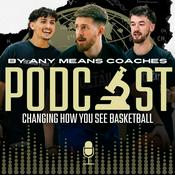
The By Any Means Coaches Podcast: Exploring the Science, Art, and Culture of Modern Coaching. The BAM Coaches Podcast takes coaches inside the evolution of player development. Grounded in modern skill acquisition science and Constraints-Led Approach but guided by balance and context. Hosts Coleman Ayers, Tyler Clark, and Alex Silva dive into how athletes truly learn - across cultures, systems, and environments. Each episode unpacks the intersection between science, experience, and intuition, equipping coaches to build players who think, adapt, and thrive anywhere in the world.
Sitio web del podcastEscucha The By Any Means Coaches Podcast, MassiveBall (Tu Podcast NBA en Español) y muchos más podcasts de todo el mundo con la aplicación de radio.es

Descarga la app gratuita: radio.es
- Añadir radios y podcasts a favoritos
- Transmisión por Wi-Fi y Bluetooth
- Carplay & Android Auto compatible
- Muchas otras funciones de la app
Descarga la app gratuita: radio.es
- Añadir radios y podcasts a favoritos
- Transmisión por Wi-Fi y Bluetooth
- Carplay & Android Auto compatible
- Muchas otras funciones de la app
The By Any Means Coaches Podcast
Escanea el código,
Descarga la app,
Escucha.
Descarga la app,
Escucha.
 España

